
‘This presents both a challenge and an opportunity to improve the quality of journalism’
The relationship with advertising, the enduring strength of print, and the relationship with social media and new technologies: the future of fashion media according to Giacomo Moletto

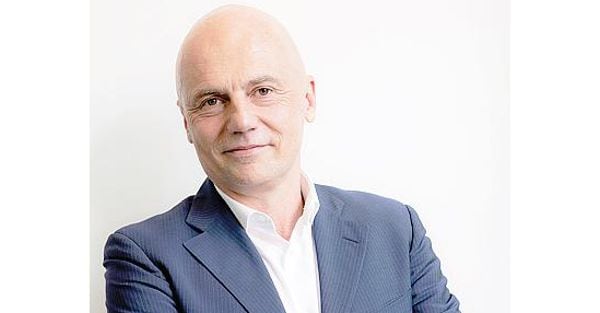
Giacomo Moletto’s optimism is, one might say, rationally infectious: born in 1969, a graduate of Bocconi University, the CEO of Hearst Italia neither resorts to hyperbole nor tries to come across as a charismatic leader. He does not display a forced enthusiasm, as is sometimes the case with fashion executives (and others). Married to an Englishwoman, he divides his time between Milan and London but – it seems almost a miracle – does not pepper his answers with English terms, except when they are truly untranslatable.
He describes himself as a ‘black belt in the “glass half full” philosophy’, but it is clear that every positive view he expresses on editorial and even geopolitical matters is the result of careful reflection and sound intuition, rather than a forced attempt to persuade those he is speaking to. He has earned the trust of the American leadership of the Hearst Group through his track record: in 2025, the revenues of the Italian subsidiary – which comprises magazines, Hearst Global Services’ advertising sales operations and the Hub for luxury advertising for the Italia, France and Switzerland, reached nearly 78 million euros, remaining broadly stable compared with 2024, whilst EBITDA and EBIT grew by 12.74 per cent and 15.65 per cent respectively, to 3.7 and 3 million euros.
The publishing industry has been undergoing a profound transformation for decades, alongside declines in sales and profitability. What is your secret?
“Hearst, too, has had to make difficult choices to tackle what I have no hesitation in calling the post-Covid crisis. In 2021, the Italian subsidiary implemented a scheme of early retirement and voluntary redundancies, which led to a 50 per cent reduction in the workforce at the time. But then came investments in new skills, the expansion of our portfolio of publications, the revamp of existing titles, and a thorough re-evaluation of how to integrate print editions with digital versions and the best way to create content for social media. We must not betray the soul of a ‘print-native’ magazine, which is why we have also improved the quality of the paper and the printing. Content that is ‘digitally native’, on the other hand, must be equally rich in personality: a strategy based on content that has also paid dividends in terms of advertising revenue. In Italia, 60 per cent comes from print and 40 per cent from digital, and even in the United States, print still prevails, albeit by a narrow margin.”
Daily newspapers are still searching for a model for integrating print and digital; what can they learn from magazines?
“I don’t feel I can give advice or lectures to anyone, not least because magazines have an objective advantage: print editions, especially for monthly publications, can afford the luxury of not having to chase the news; readers don’t expect breaking updates. It’s different for daily newspapers: every day, every hour, I imagine, journalists face the dilemma of how to convey information and how to differentiate print content from digital content.”
Hearst Italia has a dual identity, as both a pure publisher and an advertising agency. How do you avoid undue conflicts of interest?
«Particularly in our case, given that most of Hearst’s publications focus on fashion, luxury, lifestyle and wellbeing, the situation is, in a sense, the reverse of what I was saying about daily newspapers. John Fairchild, publisher and editor-in-chief of WWD for over 30 years and founder of W magazine, theorised about the separation of editorial and advertising content, drawing a parallel with the separation of church and state. He officially stepped down from his role in 1996, in the pre-digital era, but right up until his death in 2015, he remained a keen observer of the fashion publishing industry and the rise of social media. I do not know whether he had changed his mind over time, at least in part, but one fact is indisputable: newspapers cover everything, and the majority of advertisers are not from the fashion sector. In our case, to return to the metaphor, it is as if the Church were to talk about the State and vice versa, because most of our advertisers are from the fashion, lifestyle and cosmetics sectors – which are also our main editorial themes. We need intellectual honesty, transparency and common sense, not least because the trust of our readers and digital users is at stake. It’s a difficult balance to strike, and there’s plenty of scope for error, but we’re fully committed to getting it right. We give journalists the freedom to do their job, and the same applies to those who handle advertising.’


