Fassi: ‘Greater risk-sharing between the trade fair and the galleries is essential’
A five-year period as Artissima’s artistic director comes to an end. The changes, the legacy, the decisions and what still lies ahead

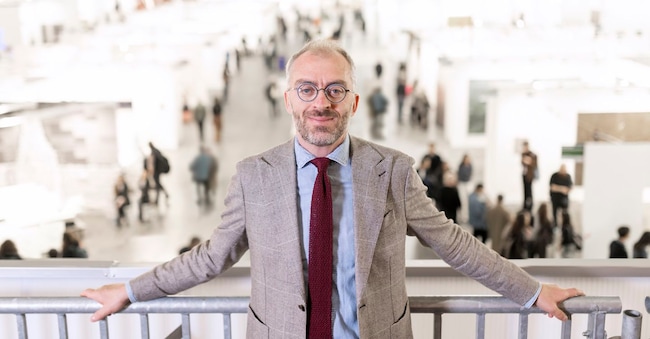
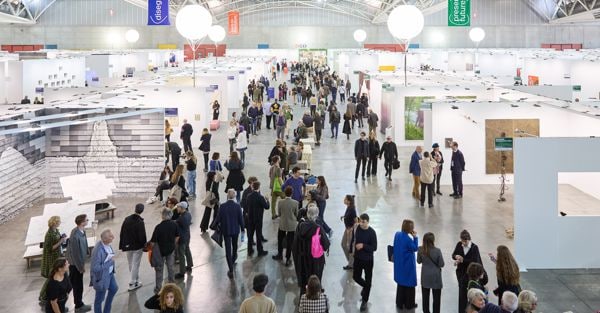
In a few days’ time, Turin will once again take centre stage on the international contemporary art scene with the 33rd edition of Artissima, which was first held in 1994. The 2026 edition, entitled “Fancy: A Flexible, Acrobatic Body”, also marks the end of Luigi Fassi’s five-year tenure as the fair’s artistic director. Five years during which the art world has had to contend with rising costs, greater caution on the part of galleries and increasingly fierce international competition. Against this backdrop, Artissima has focused on its curatorial identity, research and emerging artists, whilst seeking to strengthen its relationships with collectors and institutions.
With Fassi, we looked back at the decisions made during his tenure, the relationship between research and the market, the role of awards, and the conditions necessary for art fairs to continue offering value to galleries, beyond the realm of sales. And we looked to the future: that of Artissima and that of its director, who is preparing to bring this chapter to a close without yet revealing his next steps.
This edition marks the end of your five-year tenure at the helm of Artissima. Which changes do you consider most significant?
The assessment of these five years is linked above all to the evolution of our relationship with galleries, collectors and institutions. Artissima started from a solid position, with a strong curatorial identity and an already significant programme of engagement with collectors. I have sought to consolidate these strengths, adapting them to a market that has since become more complex and in which galleries have ever less scope to take risks without seeing concrete prospects.
We have invested heavily in building direct relationships with galleries, seeking to gain a deeper understanding of their business models, needs and the context in which they operate. At the same time, we have worked to broaden the scope of collecting and make it more international, recognising that a fair featuring galleries from 35 countries – as in this edition – cannot rely solely on an Italian audience. The programme aimed at collectors and the involvement of groups of Patrons, supporters and Friends of international museums are steps in this direction.
Another significant change concerns our relationship with institutions. Over the past few years, I have sought to strengthen our dialogue with museums, foundations and Kunsthalles, involving curators and institutional representatives in projects that could yield tangible benefits for the galleries and the artists they represent. I also believe that, over the past five years, the value of Artissima’s specialisation has become increasingly clear. In an ever more competitive art fair landscape, we have chosen to focus on contemporary and ultra-contemporary art, whilst maintaining our focus on younger galleries and emerging artists. This is a defining feature of our identity, but also a way of offering the international public a recognisable programme and of contributing to the internationalisation of Italian galleries and artists.