
'It's not with the Caivano decree that everything is solved, we have to do the rest'
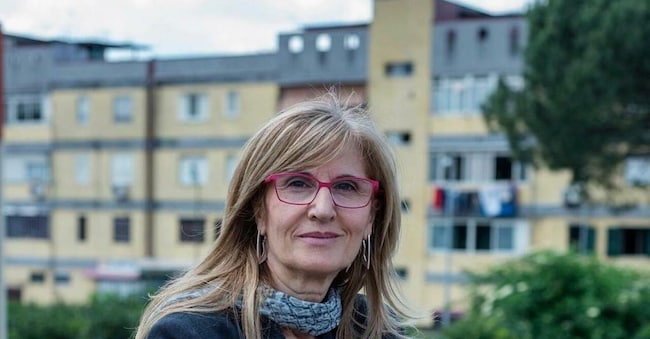
One year after the government measure, we met with the headmistress of a school in the Green Park, Eugenia Canfora

4' min read
4' min read
The Caivano decree turns one year old. And school leaders tell us that yes, reports to the mayor and social services have increased, but in difficult areas, in the so-called 'border schools', threats are of no use, or at least not enough. Before the decree, families who did not send their children to school at compulsory school age (16) risked a fine of just EUR 30. Now, with the new regulations, school managers have a duty to report the names of children and young people who do not show up. Families face up to two years' imprisonment, reduced to one year if attendance is one quarter of the annual hours, and risk losing the right to the inclusion allowance.
And so it is there that we go, to the Caivano that gave its name to the decree. For wa<< we went to the metropolitan area of Naples, sadly known for the rape of the two little girls in the summer of 2023, which ignited the government's attention. Prime Minister Meloni also visited the area, funding has arrived and an extraordinary commission has been set up for redevelopment and redevelopment.
In Campania, the school dropout rate is 16 per cent. In the metropolitan area of Naples, in the school year 2023/24 there were 3,340 reports of non-attendance at school: of these, as many as 727 came to the attention of the judicial authorities because, following warnings from the mayors, the children did not return to school. In Caivano alone, 112 reports were made by school headmasters.
"The government wanted to give a signal, it did what it could, but the rest is up to us on the ground. If the school is 'broken', there is someone who, when it is delivered in perfect condition, does not know how to maintain it,' says Eugenia Carfora, headmistress of the Francesco Morano technical and hotel school, located in the centre of the Parco Verde in Caivano, one of Europe's largest drug dens. 'It is not with the arrival of a decree that problems are solved. You think that a law will arrive and as if by magic everything will go back to normal. Instead we imagine laws, we perfect them with commas and dots, then you go to a classroom and you always find the same problems. It's not fear that makes a child come back to school, but the credibility of the system, the fascination that the school can exert on the child so that he never comes to say: 'I don't go to school any more'".
So for headmasters, the new regulations against early school leaving are one more tool, but they are not enough.
Brand connect


Newsletter Scuola+
La newsletter premium dedicata al mondo della scuola con approfondimenti normativi, analisi e guide operative
Abbonati