IO App

IT-Wallet expands: 200 documents coming into the digital purse

The upgrade enhances the digital management of personal documents, facilitating access to and use of public services through a single platform

by Antonio Larizza

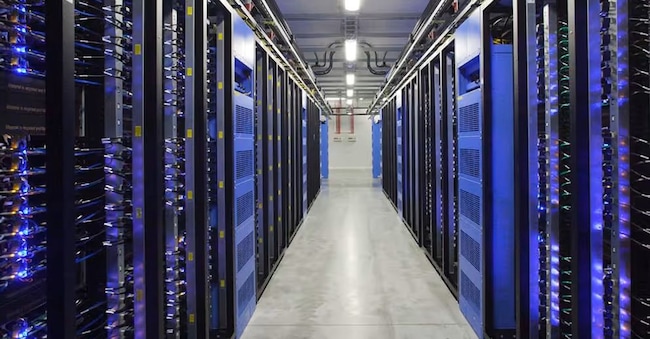
L’interno del data center dello stabilimento di Foggia dell’Istituto poligrafico e zecca dello Stato

3' min read

Translated by AI
Versione italiana

3' min read

Translated by AI
Versione italiana

After filling our pockets for 98 years, the Istituto poligrafico e zecca dello Stato (Ipzs) is ready to empty them. The IT-Wallet project - the digital wallet that the Institute develops and manages within the IO app - is ready for an evolutionary leap. Launched experimentally in 2024 to give Italians a guaranteed and secure digital identity, it has been available to all app users since December. A few weeks ago, the service passed the 10 million activation mark, with 17.3 million documents uploaded.

Ten million Italians have therefore already taken at least one of the three documents that can now be loaded onto the IO app out of their pockets forever: their driving licence, health card and European disability card. To use them via smartphone in the physical world.

Loading...

After this start, the digital purse is set to fill up without swelling. When fully operational, more than 200 credentials will be available on IT-Wallet. These include educational qualifications, certificates of school attendance and enjoyment of political rights, proof of residence, Isee certificates, voter registration, voter cards, civil servant badges, special driving licences, social and employment records and proof of age, with which to prove one's age - for example to access a website - without providing personal data.

L’incisione a laser di una carta di identità

The difference, compared to Spid, is that now the digital identity stops living only online. 'The strength of the IT-Wallet with respect to digital identity tools,' explains Antonio Gentile, head of product engineering at Ipzs, 'is precisely this: it can be used in a hybrid manner, i.e. also in the physical world. Already today, the virtual driving licence saved on the IO app can be shown at a checkpoint and the health card made of bits used to access benefits and services.

A paradigm shift introduced with the new European eIDAS 2 regulation, designed to give citizens the ability to store interoperable data and credentials in an app. Paving the way for the European digital identity. "In the area of document production, this has meant a shift from a factory dimension to that of a digital ecosystem. In Italia, Poligrafico has been entrusted with the task of building the core of this ecosystem, which will have to receive and securely make available data from over 200 authentic sources'.
The largest distributed digital database dedicated to the information of Italian citizens is being built around IT-Wallet. And it is precisely the institute that has been producing our documents for almost a century, that must now build the system that will take them from the wallet to the smartphone.

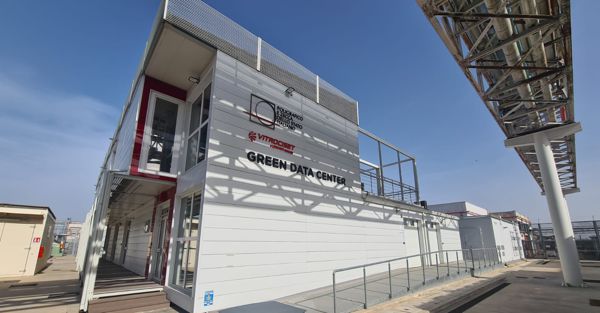
To lighten your pockets, you have to make the infrastructure heavier. Today, Ipzs has three data centres, two in Rome and one in Foggia. An infrastructure consisting of over 10 thousand systems - including servers, databases, virtualisation, storage, backup, network and security - with three petabytes of storage, 81 terabytes of Ram and 6 thousand CPUs. A fourth data centre is under construction in Rome. The Green Data Centre in Foggia, which was initially set up as a disaster recovery site, has also become an active node for the provision of services, including those related to the IT-Wallet digital purse.

Il green data center Ipzs di Foggia

Cybersecurity is the other side of dematerialisation. As far as the digital purse is concerned, it is managed by Ipzs. The development of the IO app, on the other hand, is the responsibility of PagoPA (now controlled by Poligrafico and Poste, with 51 and 49 per cent respectively). Operationally, the security of the data is guaranteed by the Cyber phisical security centre, armoured inside the headquarters in Via Salaria, Rome. From there, through screens that cover entire walls, the integrity of the digital ecosystem on which the data of millions of citizens pass is monitored 24 hours a day, 365 days a year. A sensitive target. "In 2025," says Alessandro Tarantino, director of Ipzs security & cyber defence, "we recorded 187 million attacks and attempted attacks. In the structure, which thanks to a sensor and video surveillance system also oversees the physical security of all Ipzs facilities, 41 people work, with skills ranging from computer engineering to artificial intelligence.

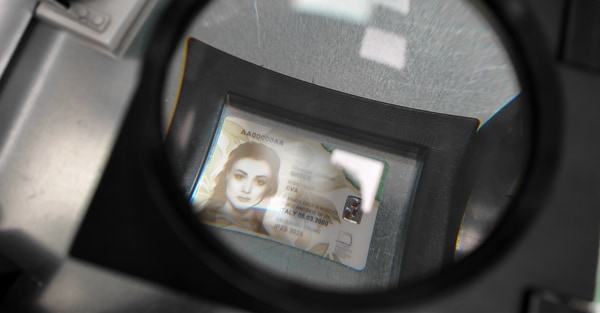
La prossima generazione di carta di identità elettronica sotto la lente

"In the midst of this digital transformation, supported with lucidity and determination by undersecretary Alessio Butti and the Department for Digital Transformation, we continue to be guarantors and custodians of public faith," explains Michele Sciscioli, Ipzs CEO, "and to do this we are changing. We are hiring young people with new digital skills. This process is only at the beginning and will have to be supported, also by introducing forms of remuneration linked to the new services'. Today, the Istituto Poligrafico e Zecca dello Stato has a turnover of around EUR 600 million a year, generated mostly through the production of traditional documents and security papers.

Copyright reserved ©
Loading...

Brand connect

Loading...

Newsletter

Notizie e approfondimenti sugli avvenimenti politici, economici e finanziari.

Iscriviti