
It-Wallet: free and paid digital services, here's what changes
Authentication only with Cie. Implementation and management of the public solution entrusted to Poligrafico and PagoPa. But private supplier solutions may also be created

4' min read
4' min read
Two implementing decrees and a package of guidelines to get Italy's It-Wallet off to a flying start: the drafts of the measures are ready and now before the various administrations, which have to give the green light.
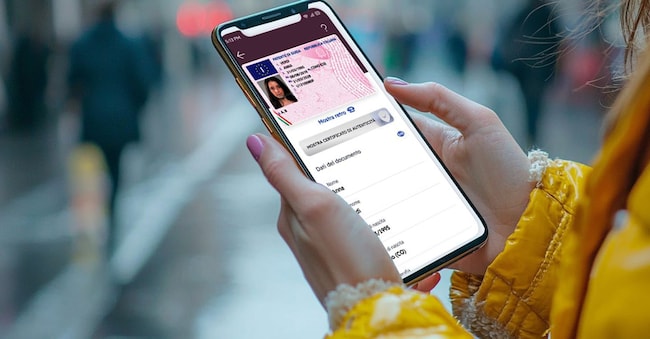
This is the so-called digital wallet, the system that will allow access to public and in the future also private services by facilitating the presentation and verification of one's digital identity. When fully implemented, the electronic identity card, considered more secure than Spid with reference to the standards of the European eIDAS regulation, will be the only digital identity for access.
There will be an experimental phase during which - in addition to the driver's licence, health card and European disability card, for which a digital version is already available on smartphones in a so-called pre-test phase - users who request them will be given priority to four other electronic certificates: the Isee; the qualification obtained and school enrolment; graduation and enrolment in a higher education institution; residence and voter registration.
Governance
.With Decree 19/2024, of which the two Prime Ministerial Decrees described in this article represent the implementation, the government entrusted the implementation of the It-Wallet System to two public companies, the Poligrafico dello Stato and PagoPa (the latter still in the process of coming under the joint control of the same Poligrafico and Poste Italiane). Among the various tasks assigned, the Poligrafico will have to issue electronic data certificates following authentication, which users will only be able to do through the high assurance level of the electronic identity card.
The public and private solution
.To recapitulate, through the IT-Wallet natural and legal persons will be able to directly present companies and public administrations with the information required to access services in the form of electronic certificates. Like a physical wallet, the IT-Wallet will contain documents in digital format to be shown when needed. With the project carried out by the Department for Digital Transformation (Ditd) of Palazzo Chigi, headed by Alessio Butti, Undersecretary for Technological Innovation, Italy aims to be ready, even ahead of schedule, for the entry into force of the European Digital Identity Wallet (EUDI Wallet). While Europe makes no explicit distinction, Italy has decided to provide for a public It-Wallet (in other words, the services we use as citizens) that has the IO app as its telematic access channel, and private It-Wallet solutions, in practice services that we access as 'consumers' and that can be provided by various providers. In the latter case, examples can be manifold: from banks to insurance companies, from car rental companies to energy and telephone providers (but also aggregators of different services and offers).


