World Cup

“It was a historic World Cup; football will never be the same again”

FIFA’s Chief Business Officer, Romy Gai, takes stock of the 2026 World Cup, which generated 11.5 billion in revenue, and explains how it has transformed the North American market and the business model for major events

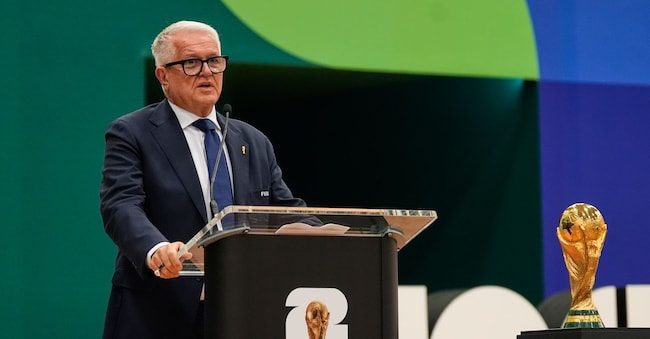
Romy Gai, direttore commerciale della FIFA, interviene durante la cerimonia di inaugurazione dell’International Broadcast Center lunedì 1 giugno 2026 a Dallas.  (Foto AP/Tony Gutierrez)

5' min read

Translated by AI
Versione italiana

5' min read

Translated by AI
Versione italiana

One day, one of the fibre-optic lines connecting our two Command Centres in Miami – which we use to manage the sporting side of things, namely the stadiums’ network connections and the entire technological infrastructure of the World Cup – went down. We later discovered that crocodiles had dug up and chewed through the cables. Fortunately for us, we had set up three backup lines for any emergencies. This incident gives an idea of what it meant to run the operation for this World Cup – the first to feature 48 teams – with 5,000 FIFA staff, 15,000 volunteers, 300,000 personnel across the 16 stadiums and 600 sites, including airports, hotels, team bases, training centres, and so on.”

Romy Gai, a former manager at Juventus between 1992 and 2006 and CEO of the UAE Football League, has been FIFA’s Chief Business Officer since 2022. Together with President Gianni Infantino, he has built this ‘machine’ and helped to make it work, creating a sporting event whose financial success is undeniable.

Loading...

Will there be a ‘before’ and an ‘after’ the 2026 World Cup in football and the sports industry?

Yes, I believe this World Cup will prove to be a milestone. You see, nobody expected the figures it has generated. Across 104 matches, there were nearly seven million spectators in the stadiums, with an average of 65,000 per match and a stadium occupancy rate of 99.7 per cent. There wasn’t a single country – starting with the United States, Canada and Mexico – where broadcasters didn’t record record viewing figures. In China and the Arab world, working hours and school timetables were adjusted to allow everyone to watch the matches. But I would also highlight a cultural shift: the North American market – the wealthiest – has finally discovered and come to understand football.

What do you mean?

From an aesthetic point of view, Americans and Canadians have begun to appreciate how it differs from ‘their’ sports. Basketball, American football, baseball and ice hockey offer moments of excitement and peaks of intensity. Football, on the other hand, is characterised by flows of play and ‘dormant’ phases that demand a different kind of attention. And this has been understood and embraced. Consequently, there has been an evolution in the model of entertainment. Furthermore, the unifying power of football has been recognised; in a divided nation and during such difficult times, it allows everyone to share a passion that defines their identity.

On the subject of entertainment models and the impact of this World Cup on football, much discussion has centred on the hydration break. Some have dismissed it as a commercial ploy by FIFA, whilst others have criticised its distorting effect as a fictitious time-out, effectively creating four-half matches.

These are the practical consequences. But FIFA’s decision to introduce the break was taken following the experience of last year’s Club World Cup, which was marred by the heat. FIFA is solely concerned with the health of the players. And clearly, the break must be applied to all matches, for the sake of fairness, even when weather conditions are not so extreme.

This is the first World Cup in which FIFA has been in charge of all aspects of the event’s revenue and costs. What has this entailed?

We have been in dialogue with the state authorities on security and customs matters, but following the joint venture with the organising committee in Qatar, from this edition onwards we have exclusive control over the World Cup’s income and expenditure. This has enabled us to maximise revenue and minimise inefficiencies. This four-year cycle will close with a turnover of 14 billion dollars, and FIFA has thus been able to increase the resources available to support its 211 member associations. And, I believe, this has also been evident on the pitch.

How?

The performances of the national teams making their debut, or those from Africa, which put on a fine display, also reflect the grassroots development programmes linked to FIFA Forward investments.

Investments are being called into question because of the political support they would generate for Infantino.

FIFA pursues social, sporting and, ultimately, economic objectives. You see, in my view, the World Cup isn’t just a tournament. It must also be a celebration; it must tell stories. And having so many teams – including those from small nations – who can dream of taking part and who then perform creditably once they get there – I’m thinking, for example, of Cape Verde – is a source of satisfaction and enriches the sporting spectacle.

A show that proved very popular with young people.

Indeed. We have sought to cater to their tastes and habits by promoting ‘multi-viewing’, connecting broadcasters with platforms such as YouTube and TikTok, and supporting them with our team of 400 creators, who – whether from the touchline or our London office – have produced unique content for a young audience that is typically less inclined to watch a match in its entirety. Here too, let me say, our operational flexibility and our constant support for our partners – whether sponsors or media organisations – in understanding and meeting their needs, made all the difference in achieving the targets we had set ourselves.

According to the harshest critics, the record revenues from television (over $5 billion), commercial partnerships ($3 billion), ticketing and hospitality (over $3 billion) are merely the result of the expansion to 48 teams and sky-high prices. 

As for ticket prices, I would say that they are in line with the North American market, where ‘dynamic’ pricing and certain price levels are the norm, as is the secondary market, which we have tried to keep under control to prevent scams. By 2030, prices may be different, as the target market shifts to Spain, Portugal, Morocco and South America. As for expansion, it does not automatically mean more revenue. Consider the free-to-air TV market, which has purchased between thirty and a maximum of forty matches. Programming slots are not unlimited.

So how serious is the plan to expand to 64 teams?

From the very first day of his presidency in 2016, Infantino has put the players, coaches and fans – the true owners of the game – at the centre of everything. That is why FIFA will now consult with all stakeholders to assess the situation. If this change is deemed to be beneficial for everyone, then we will proceed. Otherwise, we will draw on the experience gained here to do even better in the next edition, featuring 48 national teams.

Copyright reserved ©
Loading...

Brand connect

Loading...

Newsletter

Notizie e approfondimenti sugli avvenimenti politici, economici e finanziari.

Iscriviti

Tutto mercato WEB