Airlines

IATA: ‘It will take at least two years to bring jet fuel prices back to pre-crisis levels’

The airline association expects it to take a long time for things to return to normal, even if the Strait of Hormuz were to reopen tomorrow. Ticket prices are rising, but demand remains resilient

by Mara Monti

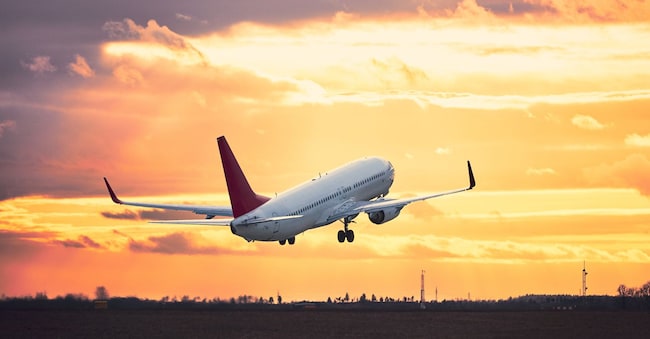
Airplane taking off from the airport runway at the sunset. Chalabala - stock.adobe.com

4' min read

Translated by AI
Versione italiana

Key points

4' min read

Translated by AI
Versione italiana

The signs of détente that have been emerging on the geopolitical front in recent days suggest the possibility of a gradual return to normality in global energy markets. However, according to the latest analyses from the aviation sector, even in the most favourable scenario, the recovery would be neither immediate nor straightforward.

In particular, even if the Strait of Hormuz were to reopen fully in the short term, it would take at least two years for the jet fuel market to return to pre-energy crisis price levels. This is the most optimistic forecast of the three scenarios outlined by the IATA (International Air Transport Association) in its latest report presented at the 2026 General Assembly.

Loading...

A sector under pressure, but still resilient

The association’s director general, Willie Walsh, struck a relatively cautious note when describing the industry’s current situation at his final meeting before taking the helm at IndiGo. According to Walsh, this is not a ‘crisis’ comparable to the pandemic, but rather a complex yet manageable phase for many airlines. During the Covid pandemic, he recalled, global air traffic had virtually ground to a halt; today, however, demand continues to grow, albeit more slowly, with an estimated annual increase of around 2.1%, even in the face of rising ticket prices. Nevertheless, Walsh acknowledged that an impact on demand is inevitable, albeit less severe than the most pessimistic forecasts made in previous months.

LA RIDUZIONE DELLE PRENOTAZIONI TRA 14 MAGGIO E IL 10 GIUGNO È STATA DEL 5,6%

20 febbraio 2026 - 10 giugno 2026. In percentuale

Loading...

The oil shock and the Strait of Hormuz

The situation regarding jet fuel is, however, particularly critical. The market has been hit by a supply shock following the closure of the Strait of Hormuz, one of the world’s main chokepoints for oil transit. The consequences were immediate and far-reaching: a reduction in Middle Eastern oil production of up to 45%, a 60% drop in crude oil exports and a decrease in tanker traffic of up to 80%.

Overall, global exports of refined products such as diesel, petrol and jet fuel have fallen by around 16–17% compared with the previous year. The regions most vulnerable are those heavily reliant on energy imports from the Persian Gulf. Europe, for example, imported around 24% of its requirements from the region, whilst in some parts of Africa the figure reached as high as 33%.

Jet fuel: the hardest-hit sector

Of the various energy products, aviation fuel has proved to be the most vulnerable to market imbalances. Its specific characteristics – high refining standards and lower substitutability compared to diesel and petrol – have amplified its volatility: the price rose from around $96 per barrel in November 2025 to a peak of $188 per barrel last April. During the same period, supply contracted by around 20–30%, whilst the so-called ‘crack spread’—the margin between the price of the refined product and crude oil—rose to around $70 per barrel, signalling significant tension between demand and refining capacity.

Fuel costs set to rise by 70%

In 2025, fuel accounted for around 27% of airlines’ total operating costs, with the average price of jet fuel at around $90 per barrel. According to estimates by the aviation analysis firm Cirium, based on IATA models for the sector’s profitability in 2026, every $1 per barrel increase in the price of fuel results in an increase of approximately $2.86 billion in the sector’s total expenditure. In a theoretical scenario, airlines’ profit margins would be wiped out when jet fuel reaches levels equivalent to around $76 per barrel (relative to Brent), compared to IATA’s base-case scenario of $62.

For 2026, the Association forecasts a 70% increase in airlines’ total fuel expenditure, assuming an average jet fuel price of around $152 per barrel. Despite this surge in costs, the sector remains profitable, albeit at half the levels forecast in December: $23 billion for 2026, roughly half of the $45 billion forecast for 2025 and well below previous forecasts of $41 billion.

Three scenarios for the future of the market

Given the high level of geopolitical uncertainty, IATA has developed three alternative scenarios to assess the evolution of the energy market and its impact on air transport.

“Low-case” scenario (unlikely but favourable)

The first is the ‘low-case’ scenario, which is highly unlikely to materialise: it envisages a swift diplomatic resolution and the full reopening of the Strait of Hormuz. In this case, the market would quickly return to pre-crisis levels, with a gradual fall in prices by the end of the year, and no structural effects beyond 2027.

Base-case scenario (fragile and uneven recovery)

The base-case scenario, involving a fragile and uneven recovery, is considered the most likely. The reopening of the Strait would take place gradually and intermittently from late July or August, with persistent geopolitical risks and high insurance premiums. In this context, prices would remain high until the end of the year; stabilisation would only occur in the course of 2028, with the market remaining sensitive to further supply disruptions.

“High-case” scenario (prolonged crisis)

Finally, the ‘high-case’ scenario (prolonged crisis): this is the worst-case scenario and assumes a prolonged or intermittent closure of the Strait of Hormuz for several years. In this case, the global energy system would be forced to adapt structurally to reduced supply. In this scenario, prices would remain persistently high and highly volatile, with continuous pressure on air transport costs and possible lasting effects on global traffic growth

Overall, the aviation sector currently finds itself in a state of precarious equilibrium: on the one hand, demand remains solid and is growing at a moderate pace; on the other, the energy landscape is characterised by high volatility and geopolitical risks that have a direct impact on the cost structure.

Even in the most optimistic scenario, the normalisation of the jet fuel market does not therefore appear to be either rapid or straightforward, but rather linked to a gradual easing of geopolitical tensions and a step-by-step rebuilding of global energy supply chains.

Copyright reserved ©
Loading...

Brand connect

Loading...

Newsletter

Notizie e approfondimenti sugli avvenimenti politici, economici e finanziari.

Iscriviti