
Ita-Lufthansa, negotiations in Brussels to avert price increases
Tug-of-war over the measures requested by the EU Commission to authorise the merger. The executive sees competition risks on some 20 international routes

3' min read
3' min read
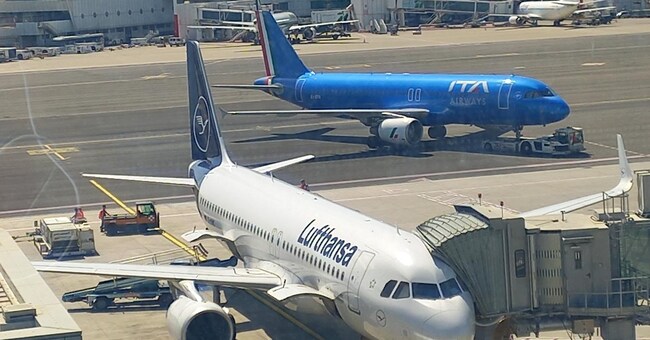
The tug-of-war between Frankfurt, Berlin and Brussels over the future of the merger between ITA Airways and Lufthansa is still uncertain. On the table are a series of measures requested by the European Commission to give the operation the go-ahead. In the run-up to the next parliamentary elections, the game is not trivial, especially as the travel conditions of many EU citizens will depend on the agreement.
According to information gathered here in Brussels, the latest meetings between the parties have served to clarify the subject of the dispute. In view of Lufthansa's already extensive presence in Europe, the European Commission is demanding that competition be maintained on routes between Italy and Lufthansa's hubs in Austria, Belgium, Germany and Switzerland, and that the dominant role of the alliance between Lufthansa, Air Canada and United on intercontinental routes be prevented. New measures are expected by next Monday.
At stake are some 20 routes between Italy, Europe and the rest of the world. On the European front, the focus is on Linate. On the one hand, Brussels wants a new competitor to enter the market on those routes that after the transaction would be exclusively or almost exclusively in the hands of Lufthansa and ITA. On the other it wants the German airline to get rid of more slots, giving them back to the airport pool so that they can be redistributed among competitors.
Brussels risks a 10% price increase
.The reasoning is twofold: the Commission wants both to increase competition on certain routes and reduce Lufthansa's weight at Linate (together with ITA, the new group would dominate the market with over 60% of traffic). According to Brussels' calculations, the risk otherwise is to see ticket prices rise by around 10%. About five million passengers per year are affected by the decision. As a reminder, Lufthansa also controls Brussels Airlines, Austrian and Swiss.
Behind the position taken by Brussels is the example of the Munich and Frankfurt airports, now dominated by Lufthansa. In 2022, the German company carried the most passengers in Europe (102 million). Andrea Collart, partner at Forward Global, the French consultancy, comments: 'The Commission wants to avoid harming consumers, which is why it must not lower standards. In other circumstances, as in the Siemens-Alstom affair, it has held firm'.


