
Ita2030 launches the Join project: 4,000 frail people already trained, 2,000 of them in employment
The association founded by members of the business community identifies the needs of companies and through a network of five non-profit organisations intercepts candidates, trains them and brings them to the company


3' min read
Key points
3' min read
The shortage of workers in Italy is an endemic problem that affects on average one out of every two profiles sought in our country. Taking the data from the latest Unioncamere Excelsior bulletin for May, it emerges, for example, that there is a need for 528,000 workers, mostly in the service sector and tourism in particular, but 47%, 248,000, are hard to find. A percentage that rises as specialisation, especially technical specialisation, rises. To respond to the employment needs of companies and to support the third sector, making a contribution to the inclusion of the most fragile, from 2019, the year of its inception, to date, the Ita2030 association has been carrying out various projects, including Join, which from 2022 to date, says president Marcello Giustiniani, 'has trained 4 thousand people and placed 2 thousand in the labour market. Ita2030 is an association made up of figures from the business community, and therefore the for-profit world, who have decided to make themselves available to the non-profit world to help third sector initiatives grow and network. In fact, the third sector in Italy is small and fragmented and needs to be supported'.
The national Join project network
.Join is one of Ita2030's main projects that aims to match the demand of companies with the availability of people on the margins and 'took shape from an initiative of Cometa and the Bonelli studio to support Ukrainian refugees in 2022,' Giustiniani recounts. 'In that case, people were profiled, trained, and then inserted into the work context. Today, there are five non-profit organisations and Cometa, which is active in Milan and Como, has been joined by Lai-Momo/Abantu, in Bologna, Next, which starts in Parma, JobClinic, in Rome and Florence, and Elis, also in Rome. The network of all these organisations has enabled the project to reach a national dimension with ITA2030 playing a coordinating role.
The supply-demand match
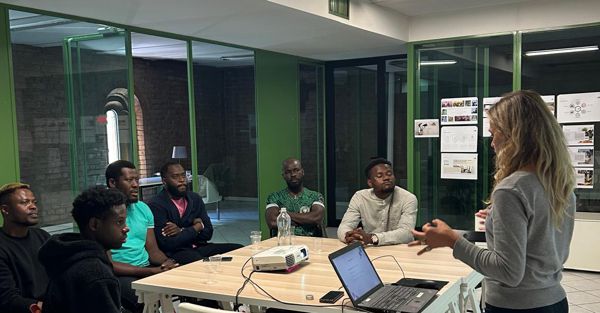
.In the case of Join, 'we start with the companies and their needs, while the organisations, thanks to their network, intercept the most suitable people to fill the roles sought and then train them, teaching them Italian, since there are 52 nationalities involved, civic education, and helping them with the bureaucratic formalities that mean, for example, how to open a current account, how to obtain the various documents. Only afterwards does the induction into the company take place,' explains business advisor Stefano Proverbio.
Driving licence and home
."At the moment the jobs that the people who have been placed are doing are simple and require only a few weeks of training, as they are mostly workers in commerce and tourism, but through Join we have two important projects in the pipeline to increase the possibilities for inclusion. The first is the facilitation of driving licences for migrants, because they are often required to work, while the second is a social housing project because on the one hand there is also a general issue of housing emergency and on the other hand for many trades it is necessary to live close to the workplace,' Proverbio continues.
The 52 nationalities involved
.Looking at the results achieved so far, at the moment 'people of 52 different nationalities have been involved,' says Giustiniani. 'Italians are a minority, while among the foreigners there are 51 nationalities, mainly Ukrainians, and then people from North and sub-Saharan Africa, Sri Lanka and Bangladesh. The project only involves regular migrants and is also meant to be a proposal for the structural integration of these people. In Italy there is a problem of demographic decline that cannot be solved with only contingent solutions. We think that a structural solution is necessary and that by giving migrants work it is easier to foster their integration'.

