Football and related topics

Italia ’90: when we hosted the World Cup (and played in it too)

Thirty-six years ago, the ‘Magical Nights’ of the last FIFA World Cup held here began. What we were like then and what has changed
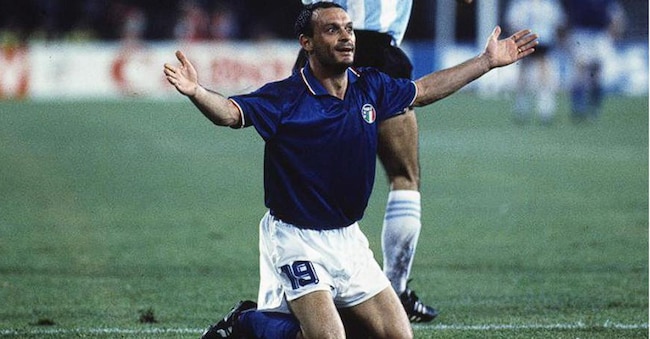
by Francesco Prisco

Totò Schillaci: con i suoi occhi sgranati è il volto simbolo di Italia ’90, ultimo Mondiale di calcio organizzato dall’Italia (ANSA)

6' min read

Translated by AI
Versione italiana

6' min read

Translated by AI
Versione italiana

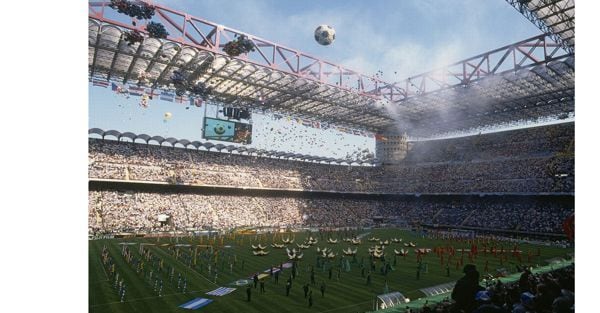
On that Friday afternoon, 8 June, San Siro looked like Toyland. A long procession of top models dressed in designs by Italy’s leading fashion houses, from Valentino to Missoni, welcomed the world, whilst two platinum-selling artists, Edoardo Bennato and Gianna Nannini, performed a lip-synched rendition of Un’estate italiana, the event’s official anthem, written by the most famous South Tyrolean on the planet. Sinner? Not at all, he wasn’t even born yet: Giorgio Moroder, with three Oscars and four Grammys to his name. Thus began Italia ’90, the last World Cup organised here in Italy.

Try explaining to Gen Z, Gen Alpha and the like that Italia was a footballing superpower; that ours was, as the saying goes, the most exciting league in the world, highly coveted by those we would now call top players; that Milan had just won the European Cup, Sampdoria the Cup Winners’ Cup and Juventus the UEFA Cup. Try explaining to them that ours was the seventh-largest economy in the world, the land flowing with milk, honey and baby pensions. Well yes, dear young people who are about to tune in to the third consecutive FIFA World Cup without the Azzurri: there was a time when we used to organise the World Cup. And, above all, we used to play in it right to the end. You’ve probably realised that something must have gone wrong over the last 36 years. In football and beyond.
Loading...

La cerimonia inaugurale di Italia ’90, l’8 giugno 1990

Let’s start with that Friday, 8 June, when the opening match – as is customary – pitted the defending champions, Argentina under Diego Armando Maradona, against the greatest player of all time – against Cameroon, led by ‘Grandad’ Roger Milla, a centre-forward whom some records list as 30 but who is actually at least 38. An immediate surprise: the ‘Indomitable Lions’ win by the narrowest of margins (goal by Omam-Biyik in the 67th minute) and embark on a journey that will take them all the way to the quarter-finals. What’s more: Cameroon is merely a foretaste of the football to come, the football of today where athletic strength is an indispensable prerequisite and, not surprisingly, the world’s top leagues are full of African players. From Hakimi to Salah, from Brahim Diaz to Osimhen. Italia ’90 brought with it several ‘geopolitical’ changes: it was the first World Cup after the fall of the Berlin Wall, the last featuring the Soviet Union, West Germany and Yugoslavia, which was heading towards a terrible civil war. The first in which Africa took centre stage, in fact.
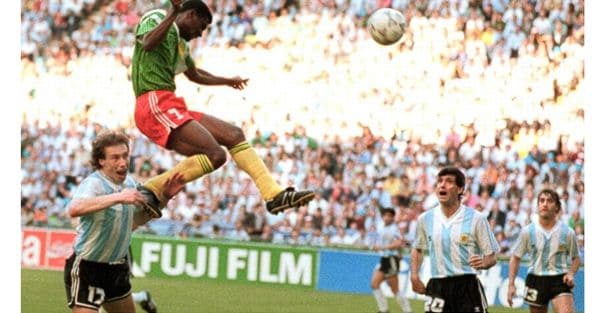
Il gol vittoria di Omam Biyik all’Argentina, nella partita inaugurale di Italia ’90

Argentina, by contrast, is losing much of its certainty. Not all of it, however: it remains clinging to the one true ‘D10s’, to his sublime moves, to his situational play. Maradona is still Maradona and, with Ferlaino’s Napoli, despite being sidelined, he has just won the Scudetto again. In the Albiceleste shirt, the most he can do is inspire Caniggia, a hard-working player at Atalanta. But that is enough, and that Argentina side becomes a problem for many: Lazaroni’s favourites Brazil, for example, are knocked out in the round of 16 (goal by Caniggia in the 81st minute). But above all, the team that had been tipped for the final victory. That is, us: Italia.
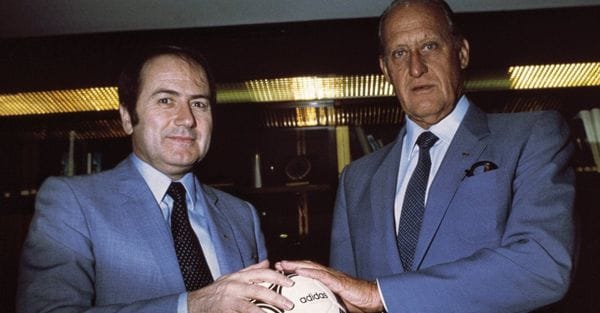
Da sinistra Sepp Blatter e Joao Havelange

And here we need to take a step back. At that point in history, world football was in the hands of two men: the Brazilian João Havelange, president of FIFA, and his all-powerful secretary, the Swiss Sepp Blatter. A system that was anything but transparent, which international prosecutors would investigate at length, without, however, securing any convictions. The very same system against which Maradona – who at the time was, so to speak, football personified – did not hold back with his accusations. The FIGC was in the hands of Antonio Matarrese of the famous Apulian family of builders who owned Bari, whilst the organising committee for Italia ’90 was headed by Luca Cordero di Montezemolo. Organising the World Cup cost us a fortune: between 5,000 and 6,000 billion old lire to refurbish stadiums and public works, compared to the 2,500 billion initially budgeted. The story is well known: it is characterised by unfinished projects, white elephants, things that could have been done better. A scenario to which we are now quite accustomed.
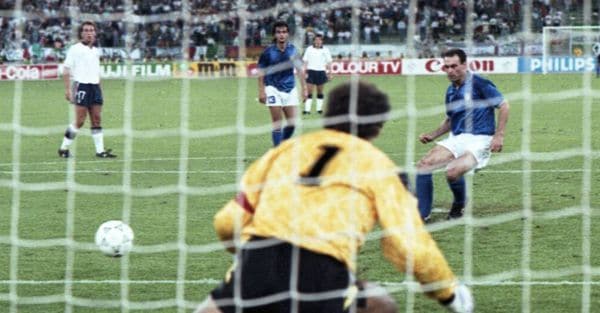
Schillaci in gol su rigore contro l’Inghilterra, nella finale terzo e quarto posto dei Mondiali ’90 (ANSA)

But in those days, none of this was apparent: there was a festive atmosphere, and Azeglio Vicini’s Italia – as is often the case when a major footballing power is hosting the World Cup – had a clear path to the final at the Stadio Olimpico. In a group featuring Austria, the United States and Czechoslovakia, they are bound to come out on top. There are a few minor surprises on the pitch, however. It is not Gianluca Vialli, the first-choice centre-forward and poster boy, but the substitute: that Totò Schillaci with the wild eyes called up almost on a whim. He was inspired by another player who started on the bench but would go on to achieve great things: Roberto Baggio. The round of 16 and quarter-finals went smoothly against Uruguay and Ireland. And so it was that the Azzurri faced their first real footballing opponent in the semi-finals: Maradona’s Argentina.

L’azione del gol di Caniggia a Napoli, nella semifinale di Italia ’90

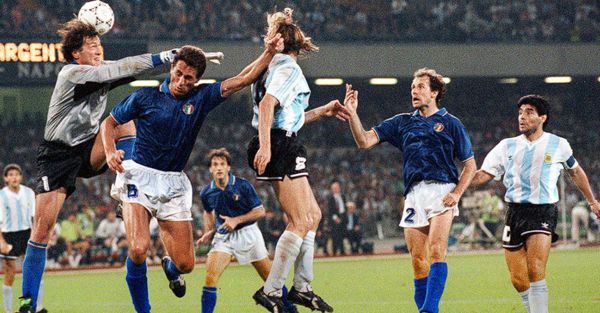
In Naples, where there is only one D10s. And he immediately stirs things up: “Italians only remember the Neapolitans once a year,” says Maradona on the eve of the match. Some are already calling for the semi-final to be moved to Turin, but in the end it is played at the San Paolo and Italia takes the lead, again through Schillaci (17’). In the 67th minute, however, Caniggia’s blond-haired header condemns us to extra time and then to penalties. From the spot, it ended 4-3 to the Albiceleste. All that was left for us was to dwell on the mistakes of Donadoni and Serena, whilst Brunone Pizzul delivered his relentless verdict: “Italia is out of Italia ’90».

Gli azzurri di Vicini si laureano terzi nella «finalina» di Bari (ANSA)

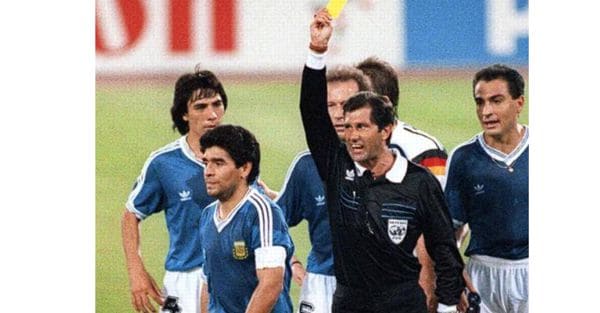
We finished third in our World Cup, after winning the third-place play-off 2–1 against England in Bari – home of the Matarrese family – at the magnificent Stadio San Nicola, designed by Renzo Piano. We do what we can, and we hold on tight to Totò’s big face in the tournament’s top scorer box and the class of the Divine Ponytail, which will come in handy at USA ’94. In Rome, for the real final against West Germany, Maradona turns up to find himself met first and foremost by boos during the national anthem, to which he responds by mouthing an unmistakable phrase (‘Hijos de puta!’). Then he faces some rather questionable refereeing from the Mexican Edgardo Codesal Méndez: a penalty not given to Argentina, a rather generous one for the Germans (converted in the 85th minute by Brehme), the sendings-off of Monzón and Dezotti. And, somewhat by chance, it is the star player Lothar Matthäus and the Kaiser Franz Beckenbauer who lift the World Cup.

Maradona nella finale di Italia ’90 (ANSA)

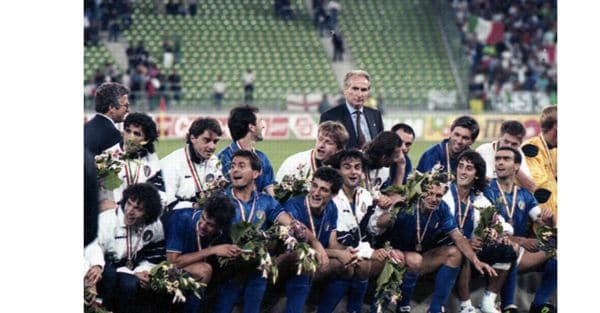
Italia ’90 draws to a close in true Puccini style with Luciano Pavarotti singing All’alba vincerò. We’re left with a slightly bitter taste in our mouths, but in the end we’re happy because we feel like the centre of the world, because Italia, in true Rossinian fashion, ‘everyone wants it, everyone seeks it’. We are happy, but it is a collective hallucination that even Woodstock lacked. Those Notti magiche seemed like the future, a New Year’s Eve of magnificent and progressive fortunes, but on closer inspection they were merely the final act of the 1980s, the era of ‘Milano da bere’, of yuppies and ‘major projects’ which, a couple of years later, would crash into the wall of Tangentopoli.

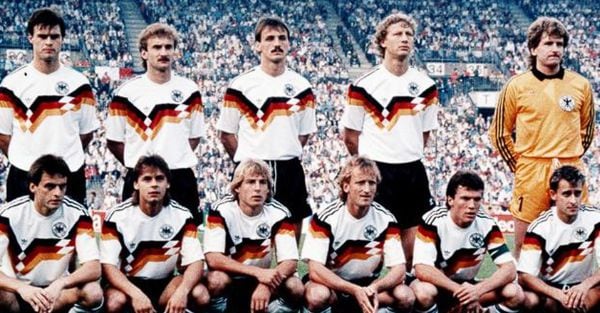
La Germania Ovest campione del mondo (ANSA)

In the VIP Stand at the Olimpico Stadium sit the President of the Republic Francesco Cossiga and the Prime Minister Giulio Andreotti. Because the 1990 World Cup in Italia seemed to represent the future, but it was merely the swan song of the First Republic. Amidst the furore of Calciopoli, our football system would still manage to win another World Cup (Germany 2006) and a European Championship (2021), but, grappling with the difficult transition from the figure of the patron-president to that of the entrepreneur-president, it will collapse in on itself. Thursday 11 June marks the start of the richest World Cup ever, a huge celebration involving 48 teams to be hosted across the United States, Canada and Mexico. We haven’t even been invited.

Copyright reserved ©
Loading...

Brand connect

Loading...

Newsletter

Notizie e approfondimenti sugli avvenimenti politici, economici e finanziari.

Iscriviti

Tutto mercato WEB