
Italia leads the EU in gas storage, but faces stiff competition from Asia

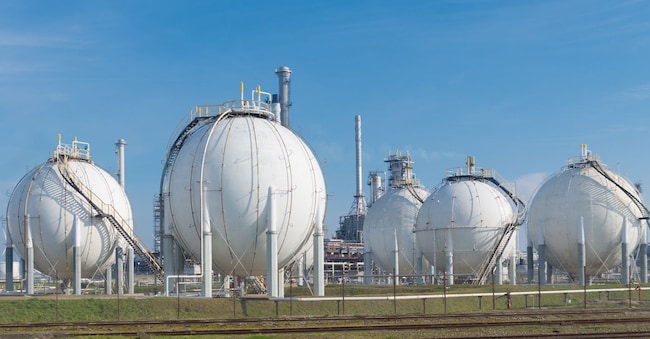
Gas storage levels in the European Union are close to 62 per cent and there are no immediate concerns regarding security of supply ahead of the coming winter. This was stated by the European Commission on 20 August, whilst also highlighting that the filling of storage facilities is proceeding ‘at a slightly slower pace than in previous years’, but overall ‘is going well’. All this whilst there is no shortage of uncertainties on the global and continental stage. From the blockade of the Strait of Hormuz and rising prices to fierce Asian competition for LNG and significant differences in storage levels across individual European countries, the situation must be monitored very closely ahead of winter.
Italia leads the way in storage
But let’s take things in order and start with the trend in storage levels which, as mentioned, is by no means uniform across Europe, showing significant geographical and economic disparities. Italia remains at the forefront and clearly bucking the trend, with a percentage close to 81%. Although slightly behind last year’s figure of 84 per cent, the Italian system benefits from a sharp increase in alternative supply flows and a robust infrastructure network. France and Austria occupy an intermediate position, hovering at around 65.7 per cent and 64.7 per cent of capacity respectively, whilst Germany remains the country under close scrutiny and the weak link this summer. German storage facilities are in fact barely 50.4 per cent full (compared with almost 66 per cent last year). The reason? Europe’s economic powerhouse is suffering from significant vulnerability linked to its long-standing dependence on gas pipelines and the logistical difficulties of structural replacement. Finally, the Netherlands has the most critical figure among the major consumer countries, standing at 43.5 per cent, partly due to management practices heavily tied to the speculative dynamics of short-term markets.
The paradox of the price gap between Italia and Europe
In light of these figures, what might happen this winter and how might this affect the spread between the price on Psv (the wholesale gas market in Italia) and the Ttf (the Amsterdam price)? The spread, as is well known, has historically been positive and represents a negative factor for the competitiveness of the Italia system, which depends on gas more than other EU partners; however, with the onset of the cold season – precisely because Germany ‘hasn’t done its homework’ – things could change significantly. So much so that some experts go so far as to suggest that the spread itself could even disappear. This is because, if the trend in filling storage facilities continues along these lines and the winter turns out to be particularly harsh, Berlin could find itself forced to buy gas on international markets at high prices. Certainly, faced with such an uncertain scenario, countries with a robust and diversified gas import infrastructure, such as Italia, help to ensure price stability across the entire continent, to the benefit of all other European countries. Ergo: on the one hand, the priority is to safeguard infrastructure; on the other – according to some industry experts – it might be appropriate to introduce compensation mechanisms for those carrying out this vital stabilisation role.
European challenges as winter approaches
At European level, the Commission has reiterated that it is continuing to work with Member States to achieve an adequate level of storage before the start of the heating season. Brussels is not aiming to fill the storage facilities to full capacity, but rather to a level of around 80 per cent of capacity: ‘We are currently very close to 62 per cent. There are no immediate concerns regarding the security of gas supply in the EU ahead of the coming winter. The situation is stable and there are no risks to the security of supply.’ Why is the rate of filling lower than in previous years? Mainly for two interrelated reasons. Europe finds itself caught in a double geopolitical and commercial stranglehold: the conflict in the Middle East has caused severe damage to Qatar’s infrastructure, one of the continent’s main suppliers. With the Strait of Hormuz partially blocked, the global market is facing an estimated shortfall of around 27 billion cubic metres for 2026, drastically reducing available volumes. It is therefore unsurprising that European LNG imports have fallen to their lowest seasonal levels since 2024. This is because Asian economies (led by China), despite having reduced their energy consumption, are still paying higher prices, ‘snatching up’ cargoes from LNG tankers bound for European terminals. In recent months, a record proportion of US production – which now accounts for around two-thirds of the EU’s LNG imports – has been channelled towards Asia rather than Europe. At the same time, and as a direct consequence, gas prices have risen on the markets, another factor that has had a negative impact on the filling of storage facilities.
In light of these scenarios, September is likely to be the decisive month for taking stock and determining what gas ‘reserves’ European countries will have as they head into the cold season. This is also because – and we must not forget – there is a further complicating factor on the horizon: the new European regulation imposing a total ban on Russian LNG from 1 January 2027, which will deprive European markets of their second-largest supplier of liquefied gas.


