
Italia has the oldest fleet of agricultural machinery in Europe, with an average age of nearly 30 years
CIA President Fini: innovation is essential but must be accessible to all; new incentives for the scrapping of tractors are urgently needed

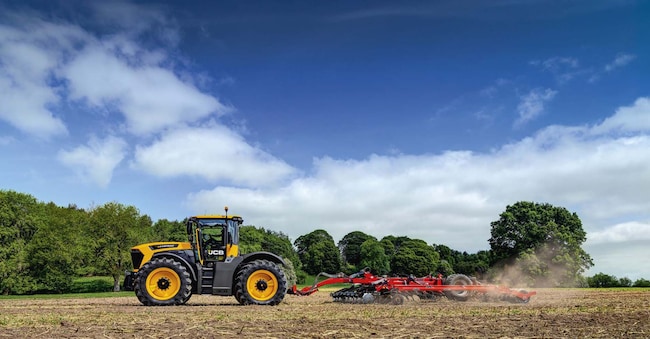
From the increasingly urgent need to renew the vehicle fleet, to access to innovation for small-scale producers, right through to the need to implement the measures announced for Agriculture 4.0 without delay. These are the main topics addressed in the speech by the president of Cia-Agricoltori italiani, Cristiano Fini, at the opening of Eima International 2026, the international agricultural machinery exhibition organised by FederUnacoma, which is taking place in Bologna until 14 November.
‘Never before has innovation and mechanisation been so essential as at this time, marked by climate crises, wars and rising costs, to reduce production costs and restore competitiveness to agricultural businesses. But technological progress – as the CIA president emphasised – cannot remain an opportunity for the few: it must become accessible to all farmers, through appropriate tools and incentives. In a critical global context, which is eroding the profitability of farmland day by day, investing in innovation is no longer simply an option, but an absolute necessity – he added. From precision farming to robotics, from drones to satellite maps and artificial intelligence, new technologies enable us to optimise resources, cut costs and boost productivity. ‘The real challenge now is to ensure that these solutions reach all farms, even the smallest and least organised ones, without wasting any more time.’
Despite the progress made in recent years, the digital divide in rural Italy remains significant: almost 6 in 10 businesses are still lagging behind in the adoption of smart technologies, and just 9 per cent have achieved full digital maturity. These figures highlight the urgent need to accelerate progress, overcoming the economic and structural obstacles that continue to hold back the sector’s modernisation.
In this context, initial practical support comes in the form of a €160 million allocation over the two-year period for Agriculture 4.0, as provided for in the draft Budget Bill approved by the government, along with the extension until 2029 of the tax credit for investments in high-tech machinery, precision farming equipment and digital monitoring systems. “This is a tangible step forward, all the more so at a time when rising costs continue to weigh heavily on farm budgets. Now, however,” said Fini, “we need to move from announcements to action: complete the parliamentary process and make the funds available quickly, through streamlined procedures that are accessible to every farmer.”
The real priority in the Italian countryside, however, is to modernise an increasingly obsolete fleet of machinery, which has a direct impact on workplace safety. Italia’s fleet is amongst the oldest in Europe, with an average age of nearly 30 years. There are still 1.2 million tractors on the roads without built-in seatbelts and almost 670,000 without roll-over protection systems. This situation continues to put farmers’ lives at risk: there are still over 130 deaths a year linked to accidents involving agricultural vehicles, of which around 100 are attributable to tractors overturning or crushing operators. Regulatory delays are also a factor: the sector has been waiting for over 11 years for the implementing decree on the roadworthiness testing of agricultural vehicles.

