
Hotels, Italia in first place for attractiveness: 'made-to-measure' wins
Duco Travel Summit 2026 takes stock of the industry. The country is preferred to France and Spain (according to Cushman & Wakefield) due to its drive for renovation, technological innovation and taylor-made services. Clients are looking for private villas, yachts, jets and hyper-personalised itineraries where privacy is the true luxury commodity

Key points
The hotel market in Italia continues to strengthen, proving to be one of the most dynamic segments of real estate, particularly in this phase of high geopolitical tension that sees investors focus their interest on stable markets.
In the latest annual report conducted by Cushman & Wakefield (European Hotel Investor Compass), Italia ranks first among the most attractive European regions for investment in the hotel sector in 2026, with an attractiveness index of 4.2 out of 5, surpassing the Iberian Peninsula (4.1) and France (3.6). Milan is confirmed as the most sought-after city on the continent, with 55% of investors declaring a very high level of interest, while Rome ranks third among European cities, just behind Madrid. The 15 most attractive cities also include Italian destinations such as Florence and Venice, cited by investors as additional markets on their radar. 86% of the investors surveyed by Cushman expect to deploy as much or more capital in 2026 than in 2025, with an average availability per operator close to EUR 200 million. 58% say they intend to increase their allocation, up 2 percentage points year-on-year. 80% are targeting value-add deals, up 9 percentage points, while 59% are looking at opportunistic deals. High and medium-high-end properties are the most sought-after (81% high or very high interest), followed by the luxury segment (69%). Urban hotels dominate preferences by type (89 per cent), followed by resorts (62 per cent) andservice apartments (46 per cent).
The New Luxury
The latest report by the Virtuoso network also looks optimistically at Italia, placing it first in the world in terms of appreciation, for its ecosystem capable of intercepting both the desire for culture and for relaxation and gastronomy. One of the most disruptive trends is the birth of the "ultraluxe" segment: it is no longer a question of staying in five-star hotels, but of privatising the experience; customers are looking for private villas, yachts, jets and hyper-personalised itineraries where privacy is the true luxury good. The dynamism of national hoteliers, grappling with renovations, technological innovation, the push for quality and personalisation of services, was the focus of the Duco Travel Summit, now in its eighth edition, with its tribute to 'made-to-measure', uniqueness and attention to detail.
Technology for customer profiling
In order to make its service more and more targeted to the guest's needs, the Castello Dal Pozzo di Oleggio, a historic residence dating back to the year 1000 and renovated in the 1800s, has changed its management system and with the help of AI has been able to launch offers, proposals, upgrading automatically, better profiling the customer and anticipating his or her needs. Since last year it has become part of the Preferred Hotels & Resorts circuit and between 2028 and 2029 it plans to open a spa for a clientele that currently includes 40% foreigners and 60% Italians. The connection with the territory is the distinctive feature of Casa di Langa, a structure half an hour from Alba owned by the American group Krause, which also owns Parma Calcio. Immersed in the Langa landscape, with 39 rooms (from 30 to 60 square metres) on seven levels, all with balcony, terrace or garden, a spa and a separate villa with a 100 square metre events room, it focuses on wine tasting, truffle hunting and green food for its guests, 40% Americans and 60% Europeans.
The hotel allies itself with art and fragrances
With Alba's nomination as the Italian capital of contemporary art 2027, the destination's hospitality offer is also adapting to the event, integrating art forms with its food and wine offer, which sees the presence of two Michelin-starred chefs and the arrival of new openings, such as the Ceretto family's project in the famous Brunate vineyard in La Morra. The story of Magna Pars, the hotel à parfum in Milan owned by the Martone family, on the other hand, intertwines taste and smell with the proposals of the new four-course menu à parfum, the launch of the LabSolue Bar for the olfactory aperitif and a new à parfum cocktail menu. Initiatives that have increased the presence of residents. Even the Park Hyatt in Milan, which has a new general manager arriving from Paris, and which during the Olympic period recorded a 95% occupancy rate - with the Middle East, Australia, Canada and Europe as its main markets - is focusing on fine dining and on experiences and predefined packages also aimed at residents to diversify revenues.
From the city of art to the lake
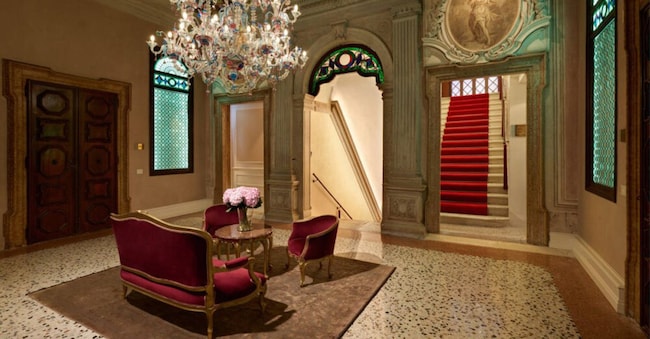
Among the locations where investors' interests are concentrated is the ever-popular Venice. This is where Palazzo Giovanelli, a 4-star boutique hotel that after two years will reopen as a 5-star luxury hotel, will reopen in mid-June. It will be refurbished in terms of furnishings and services with a conservative project by the Gascón studio of Lugano for an investment of EUR 5 million. In addition to 33 rooms, there will be a meeting room for 30 people, a restaurant, a bar, and Venetian experiences will be offered to guests, thanks to partnerships with the historic Tessiture Bevilacqua and the Vetreria Venier glassworks. The hotel has a customer mix of 60 per cent Americans, 30 per cent Europeans and 10 per cent Italians. From the city of art to the lakes. The Laqua Collection, born out of Antonino and Cinzia Cannavacciuolo's desire to offer hospitality of excellence, comprises four structures that embody the idea of wellness that the owners wish to give their guests (to which Villa Crespi is added) and among the most recent investments is the enrichment of the wellness offer with the opening of the new wet area at Laqua by the Lake on the shores of Lake Orta, which complements The Longevity Suite, over 200 square metres dedicated to the care of body and mind. On Lake Maggiore, on the other hand, the Boutique Hotel Stresa, a 250-year-old historic villa, now 5-star luxury, with 28 suites from 45 to 155 square metres, will focus on private spa suites, which can be booked from 2 to 24 hours, and on the gastronomic offer of a restaurant in the Michelin guide. The focus will also be on the panoramic rooftop and outdoor activities.
Brand connect


Newsletter RealEstate+
La newsletter premium dedicata al mondo del mercato immobiliare con inchieste esclusive, notizie, analisi ed approfondimenti
Abbonati