
The Italia of humanistic knowledge relaunches. Open Art Bonus, shared heritage
The enlargement of beneficiaries to new categories of private entities fills a structural gap

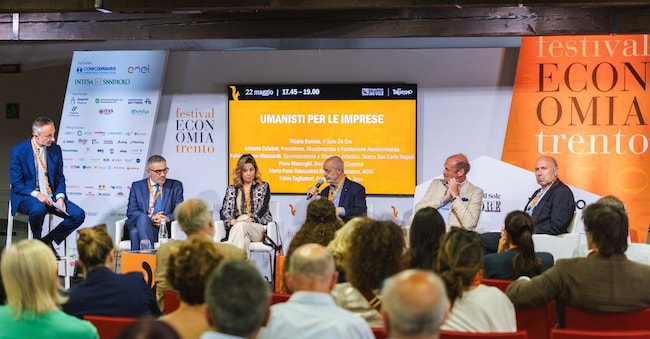
The public resources available for culture are not growing in proportion to the vastness of the heritage to be protected. But what is ultimately lacking is also, perhaps above all, a different governance structure in which public and private share objectives, instruments and responsibilities in the management of the common heritage. In all this, the skills that the productive world brings with it are decisive. And even more so the awareness of memory as a resource for the future, archives and business museums seen not as relics of the past but as laboratories of innovation, in which the Italian polytechnic culture - that synthesis of humanistic knowledge and scientific skills, beauty and functionality - is the true competitive advantage of Made in Italy. This is, moreover, the thinking developed over twenty years of reflection, as a journalist and then as head of Pirelli and president of Museimpresa, by Antonio Calabrò. He explains how the humanities respond to the real and profound needs of organisations and the people who inhabit them.
The protection of heritage
Against this backdrop, the proposal currently being approved by the Chamber of Deputies (first signatory Maurizio Lupi) to extend the tax credit of the Art Bonus for the preservation of the cultural heritage - introduced in 2014, set at 65% of liberal donations - to seven new categories of private entities fills a structural gap. Ales, the in-house company of the Ministry of Culture, is the body that actually manages and promotes the Art Bonus on behalf of the ministry: it collects data, publishes statistics, trains operators, and promotes good practices on the territory. As explained by its president and CEO Fabio Tagliaferri, Ales is ready for the challenge. "Starting with information and awareness-raising campaigns that will have an impact where the perception of the importance of such a crucial tool is lower," as for example in the south of Italy. Also in original ways, such as having focused on the Giro d'Italia with a view to broadening the audience of donors to include ordinary citizens. The revision of the Art Bonus also finds positive support in Maria Pace Odescalchi, who, as president of the Association of Italian Historic Residences (Adsi) recalls the value of over 43,000 castles, villas, palaces and historic gardens scattered throughout every Italian region: an enormous heritage, widely distributed throughout the territory, intimately linked to local identity, but so far excluded from tax incentives as it does not fall into the category of 'public property' in the strict sense. It is precisely in overcoming this logic that the expected qualitative leap lies. "The private sector should invest more in lyrical-symphonic foundations: it is useful for them too. At the moment the total national contribution is 12%, we can go as high as 20% of total revenue,' encourages Fulvio Macciardi, superintendent of the San Carlo Theatre in Naples and president of Anfols.
An Audience of Beauty
Of the need to form an audience for beauty - but in effective ways - insists Piero Maranghi, publisher and creator of platforms dedicated to great music. He starts from the usefulness of 'the stumble', the chance event that perhaps in the occasional visit to an amphitheatre can arouse in everyone untried interests.


