
‘Italia is exposed to hybrid threats, particularly from Russia; we must stay one step ahead’
Guido Crosetto, Minister of Defence, speaks, taking stock of the legislative measures and the timetable for the implementation of the Cyber Space strategy

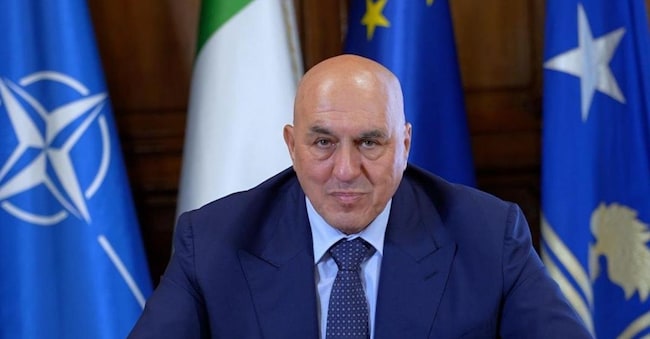
(Il Sole 24 Ore Radiocor) – Italy is ‘particularly vulnerable’ to hybrid threats, and Russia currently poses the most ‘tangible and pervasive’ of these. Faced with these threats, “we cannot simply react after we have been hit; we must be able to anticipate them”. This was stated by Guido Crosetto, Minister of Defence, in an interview with DigitEconomy.24, a report produced in collaboration with Digit’Ed, a group active in training and digital learning. Today, the Minister states, ‘we must continue to shorten decision-making times and integrate civilian and military capabilities: in the context of hybrid threats, understanding and reacting swiftly is in itself a capability for defence and deterrence’. As for the legislation introducing, amongst other things, the Cyberspace of National Interest for Defence, the new measures are expected to be implemented once the parliamentary process has been completed, ‘from the first half of 2027’. In the field of AI, Crosetto notes that work is under way on “the LIAD, the Artificial Intelligence Laboratory for Defence: an AI Delivery Centre to develop and test algorithms and prototypes. The aim is to equip Italia with an autonomous capability to develop, govern and integrate AI for its own security and defence’.
There is increasingly explicit talk of hybrid warfare: what is the actual threat to Italia today, and from which regions and actors does it originate?
Hybrid warfare is one of the most insidious threats of our time because it unfolds largely below the threshold of open conflict. A country can be targeted by attacking its infrastructure, manipulating information, disrupting its economy and undermining confidence in its institutions and alliances.
Italia is particularly vulnerable due to its geographical location, economic clout and membership of NATO and the European Union. Russia currently poses the most tangible and pervasive hybrid threat, but China, Iran and North Korea also employ economic, technological, information and cyber means.
Faced with these threats, we cannot simply react after we have been struck. We must be able to anticipate them, by strengthening prevention and deterrence through an approach that involves the defence sector, the intelligence services, institutions, businesses and civil society, and by building a European capacity to coordinate information, tools and expertise.

