
Italia Team, 70% of athletes from military and civil sports groups
The Army has 35 representatives, the Police Gold Flames 33 and the Guardia di Finanza Yellow Flames 30. The Carabinieri are 23
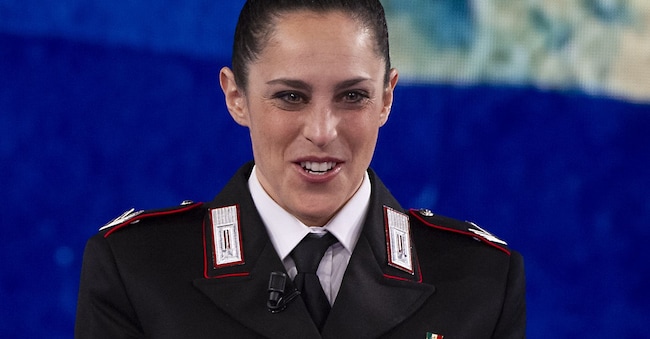
All Italian medallists at the Winter Games in Milan Cortina belong to the Military Sports Groups. Or, to be more precise, to one of the sports 'clubs' that belong to the Armed Forces (Army, Air Force, Carabinieri and Navy) and the Police Forces (Fiamme Oro - State Police, Fiamme Azzurre - Prison Police, Fiamme Gialle - Guardia di Finanza, Fiamme Rosse - National Fire Brigade Corps).
And, after all, from a statistical point of view, the opposite could hardly be the case. In the Italia Team, which has a total of 195 athletes, as many as 133 wear a uniform with the Stars or Flames: 68% of the tricolour expedition. This percentage rises to 95% if the 45 players of the national ice hockey teams who play in 'private' sports clubs are excluded from the count. In practice, all the Azzurri sportsmen and women in the individual disciplines are supported in their preparation and competitive practice by a State military or civilian corps.
At the Paris 2024 Summer Games, the military sports groups and civilian corps had brought a team of 296 athletes, equal to 73% of the entire Italia Team, and at the Tokyo Games, they had 269 represented out of 384, equal to 70%. This is a sign that in winter sports, the support of these structures is even more important to enable sports activities to be carried out at a high level and according to the necessary standards of professionalism.
The substitution of military or police formations remains, therefore, fundamental in a sports system such as the one in Italia, which is traditionally founded on a framework of over one hundred and ten thousand amateur associations and clubs and which does without the university and college circuits that characterise the Anglo-Saxon environment. In order to enhance the Italia model, the Federations have progressively made it possible for athletes to be dual members, who can now be part of both the club in which they were trained and a military or police force group, and Sport and Health allocates an annual contribution (4.4 million in 2026) to the latter as part of the funding for sports bodies. The possibility of being admitted, through a competition, into a military or Police Force sports group was appropriately extended to Paralympic athletes thanks to a reform approved in 2021 (although the Defence Paralympic Sports Group had already been established in 2013).
In the home expedition to Milan Cortina, the largest team is that of the Army with 35 representatives, followed by the Fiamme Oro of the Polizia di Stato with 33 and the Fiamme Gialle of the Guardia di Finanza with 30. The Carabinieri are 23, while the Fiamme Azzurre of the Polizia Penitenziaria and the Aeronautica field 8 and 4 athletes respectively.


