
Italia at the US summit on ‘red terrorism’: controversy ensues
The compromise chosen by Palazzo Chigi: a parliamentary under-secretary rather than a minister, so as not to leave the Italian seat empty at the summit in Washington. The opposition: ‘An undignified move’.

Key points
First came the ‘no’ that had leaked from the Farnesina. Then came the ‘yes’, prompted by Giorgia Meloni. The compromise chosen by Palazzo Chigi – a state secretary rather than a minister – to ensure the Italian seat was not left empty at the Washington summit on the alleged “resurgence of far-left transnational terrorism”, whilst avoiding exposure at the highest levels, has not quelled the controversy.
The opposition’s attack
On the contrary. This change of course, as highlighted in the opposition’s numerous attacks, is more significant than the chosen wording: it confirms that, when faced with a choice between Europe and relations with Donald Trump, the Prime Minister continues to prioritise the transatlantic bond. A ‘disgraceful’ mission, as former Democratic Party Minister for European Affairs Enzo Amendola brands it, speaking on behalf of a broad coalition which – at least on this front – has found a common target following the rifts of recent days. And she launches a direct attack on the Prime Minister, whom – as M5S Senator Alessandra Maiorino argues – is the protagonist of a “desperate attempt to get back into the American president’s good graces, even at the cost of embracing a fascist-like model”.
It’s not just a matter of protocol
It is not merely a matter of protocol. On the agenda of Marco Rubio’s conference is one of Trump’s obsessions: Antifa, categorised as a constellation of collectives and movements with no central command or unified structure, an umbrella term covering very diverse groups, ranging from anti-ICE protests and university marches to the radical left. Last year, the tycoon – who had already made Antifa one of his symbolic enemies during the Black Lives Matter protests in his first term – branded them a “domestic terrorist organisation” via an executive order. This is a definition that has no equivalent in Europe.
Invitations to other countries
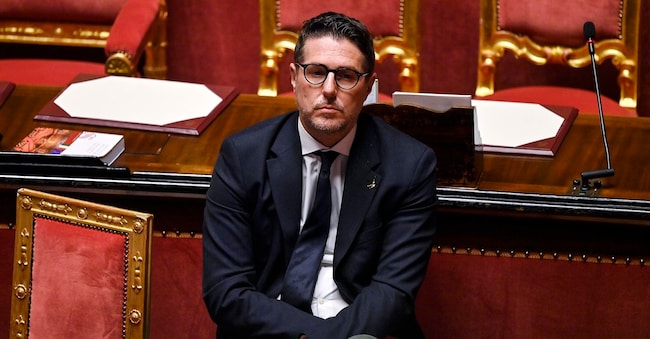
The short notice and the vague invitations sent out to over sixty countries – according to the Washington Post’s account – have prompted many governments to keep a low profile, limiting themselves to diplomatic representation. Italia, however, has chosen a different path, and the favourite to travel across the Atlantic is the League’s Under-Secretary of State for the Interior, Nicola Molteni. This further step is fuelling the row, prompting +Europa to call on the government to backtrack. Or, as Riccardo Magi provocatively suggests, to explain to Rubio that today the real “subversive threat” to liberal democracies is “the illiberal regression of Trump’s United States”.
“Italia should have distanced itself” from an “ideological witch-hunt”, according to the leaders of AVS, Angelo Bonelli and Nicola Fratoianni, who – whilst announcing a parliamentary question – are calling for clarity on the alleged requests received in June from the US administration concerning Italian left-wing groups and associations.

