
Italia stands a good chance if it applies to take part in the AI trial
According to Di Bartolomeo (Airia), sovereignty depends on being able to verify models and monitor the supply chain

Key points
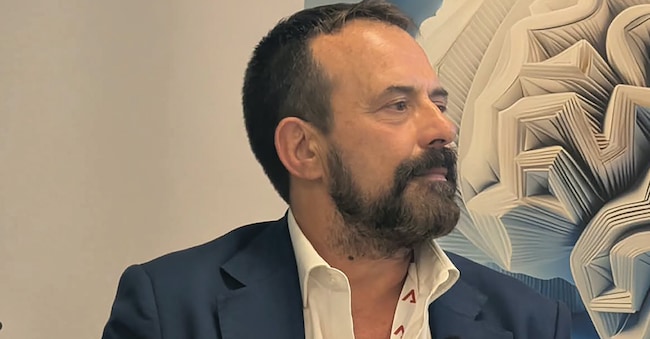
Maurizio Di Bartolomeo has no illusions about the race to develop cutting-edge models. ‘The race to catch up with models is over; it’s not a game we can play any longer,’ says the member of the executive committee of Airia, the association that brings together institutions, academia, law firms and businesses to discuss issues relating to artificial intelligence. On the one hand, there are the American models, accessed via APIs; on the other, the Chinese open-source models, which can be installed and adapted in-house, but which are still third-party products.
Check the model and verify the supply chain
Are we out of the running? “No. I really don’t think so,” he replies. The argument that Di Bartolomeo put forward in early September, alongside Carmelo Fontana, one of the association’s founders, during a hearing before the government-appointed committee on the national AI strategy, shifts the focus: sovereignty does not lie in building the model, but in knowing how to verify it and thus control the supply chain. “We must understand that AI is an ecosystem,” he explains: two countries now produce the models, but on other fronts – starting with security – the game is still wide open.
The argument is based on a concrete fact. Models are finding their way into essential services: energy, transport, logistics and public administration. Those responsible for assessing their safety therefore become strategic players. Di Bartolomeo points out that the European Commission’s AI Office has set up a unit dedicated to the independent assessment of models – a development which, he notes, is rarely discussed. It is in this area, he argues, that Italia should invest in line with the principle of subsidiarity, by building up expertise: to become a major centre for independent assessment of model safety – public and autonomous – without an investor behind it that stands to benefit from the outcome of the assessments.
Europe: the leading consumer market
It is also a way of turning perceptions of European regulations on their head. Not ‘yet another demand’ for compliance, he says, but a means of facilitating things: regulation as the driving force behind an industry built on trust. In his view, the timing is right. ‘When Airia was founded in 2024, everyone was talking about over-regulation,’ he recalls. ‘Today, it is the big names in technology – from Dario Amodei to Bill Gates and Sam Altman – who are talking about regulations. ‘Europe has one point that it tends to overlook: it remains the world’s largest consumer market,’ he emphasises.
Behind this lies an issue that goes beyond the economy. Entrusting energy, transport and public administration to systems that cannot be fully controlled is a decision with political implications. ‘There is also a very important geopolitical issue,’ says Di Bartolomeo. It is one thing for a firm to have an internal policy requiring every document to be reviewed before it is released; it is quite another to build a system that prevents errors at source, when technology is integrated into highly sensitive functions.

