
Italian cheeses, turnover of 28.5 billion: exports rise despite the Strait of Hormuz and US tariffs
Exports, which are set to grow again in 2026, have offset losses in the US with gains in Europe. Assolatte General Meeting: success based on the use of Italian milk, with foreign products accounting for less than 6 per cent. Domestic consumption remains stable.

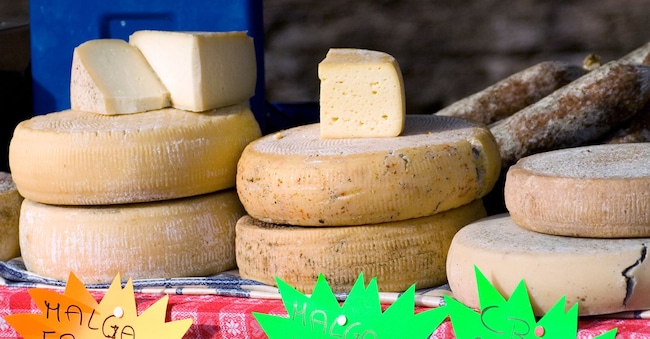
Despite US tariffs and international uncertainties, the Italian cheese sector ended 2025 with record exports (6.7 billion euros, +4.6%). This positive trend – with the challenges remaining unchanged – is continuing into 2026. In the first three months of the year, overseas sales grew by a further 3.8 per cent. This result managed to offset the 11.4 per cent decline in the US with increases in Germany (+7.8 per cent), Spain (+5.2 per cent), the UK (+4.5%), France (+3.3%), Canada (+22.2%) and Japan (+13.6%).
Export figures will be among the key statistics to be discussed at the general meeting of Assolatte (the association of the dairy industry) scheduled for 18 June in Milan.
“On the international front,” comments President Paolo Zanetti, “the competitive strength of the Italian industry is clearly evident. With 2.01 billion in non-EU exports, Italia has overtaken New Zealand and is now the world’s second-largest dairy exporter by value, after the US.” Over four billion in turnover generated abroad is, however, achieved on European markets, which absorb over 479,000 tonnes of cheese. The sector has thus achieved a turnover of 28.5 billion, accounting for 11 per cent of exports and 11 per cent of production turnover for the entire Italian food industry, as well as 9 per cent of the workforce (with over 43,000 employees).
The milk and cheese industry also plays a key leading role in the supply chain, given that in 2025 it processed 13.5 million tonnes of cow’s milk (up 2.1%). The vast majority of this was produced in Italy, given that the proportion of foreign milk used – which had already fallen to 6 per cent of the total by the end of 2025 (thanks to a 7% fall in imports), recorded a further decline of 22.5% in the first quarter of 2026.
The results achieved are the outcome of a clear strategy “which is underpinned by a commitment to supporting and promoting the national livestock sector,” adds Zanetti. “We have, in fact, processed all available Italian milk and ensured that farmers receive (including thanks to the PDO system) a higher value than that offered by our main European competitors. This strategy has enabled us to increase overall production even against a backdrop of domestic consumption that remains essentially stable.” Overall, the Italian industry has been able to capitalise on the greater availability of raw materials by increasing production across almost all key product categories: drinking milk rose by 1.7 per cent, fermented dairy products by 4.8 per cent, butter by 6.8 per cent, cream by 5 per cent and cow’s milk cheeses by 0.5 per cent.


