Media

'Italian cinema has held up, now the rise in production costs must be stopped'

Interview with Rai Cinema CEO Paolo Del Brocco, who takes stock of the sector on the eve of the 81st Venice Film Festival. "Bebe the tax credit reform"


by Andrea Biondi

Campo di Battaglia è uno dei film di Rai Cinema in concorso alla 81esima Mostra del Cinema di Venezia in partenza il 28 agosto

4' min read

4' min read

Italian cinema 'has held up, showing great resilience'. Now however, explains Paolo Del Brocco, managing director of Rai Cinema, in this interview with Il Sole 24 Ore, there is a need to move in a targeted manner so as not to lose the momentum. "The tax credit reform is fine," he stresses, but we need "a greater selection in films" and above all to try to interrupt "the inflationary pressure that has been created on the sector, with a 40% increase in production costs".
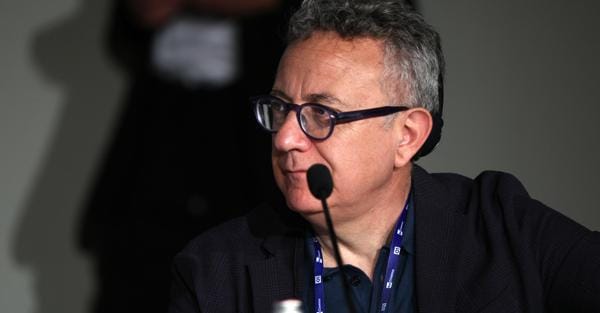
Paolo Del Brocco. (EPA/Mohammed Badra)

As a major player in the Italian market and on the eve of the Venice Film Festival, how do you judge the health of the sector?

Loading...

We have now emerged from one of the most difficult moments in the history of this medium, not only because of the pandemic, but also because a momentous transformation in the modalities of fruition has taken place in recent years. Last year's box office grew by more than 60% compared to 2022, exceeding 70 million tickets sold, and is just below the average of the years before the pandemic: -16% compared to the 2017-18-19 average. We believe it is possible to reach 80-90 million tickets sold each year before the pandemic. If we succeed, it will be an extraordinary achievement. Because in the meantime the world has changed: the platforms were not there or were not so widespread. If we then look only at Italian cinema, from 1 January to 20 August, thanks also to Cinema Revolution, the titles reached 8 million tickets sold, equal to 59 million at the box office, and a market share of almost 21%: better than 2023 and in line with 2019 in which the box office for Italian films was 59 million for 9 million tickets sold and a market share of 17.5% In any case, there is a peculiarity.

Which one?

Our cinema has reached a high level of both production quality and content. The sore point is that the 'average' Italian films, those grossing between 1 and 3 million, have shrunk: 11 titles in 2023 against almost twice as many in 2018 and 2019. The same applies to Italian films grossing over 5 million. A reflection is needed.

Too many films? Is that the problem?

The point to ponder is not whether we produce too much, but what we produce, how many of these films are really 'professional', what is the capacity of these films to interest the public. In 2023, if we exclude event films and documentaries, there were 145 Italian films released in less than 50 cinemas and only 70 released in more than 50 cinemas. This could be thought of as being more related to the benefits obtainable with a theatrical release than to a real theatrical strategy. This figure is worse than in the pre-pandemic period.

What season will the next season be for Italian cinema?

The goal is to improve on the 2023 results. Certainly the overall state of our industry has as a key driver the market share of domestic production, which we must keep high, at least around 25 per cent, also to give our industry the right continuity.

Manufacturers, distributors, actors: who more and who first should move to turn the industry around?

First of all, all components have to work to contain production costs, which have increased by 40%. The large production volumes of the audiovisual sector in general, the investments of the majors and international platforms in Italy, and the increase in public support have, combined, led to inflationary pressures and made budgets no longer compatible with a sustainable development of cinema.

Was the tax credit reform necessary in your opinion?

It is necessary insofar as a dynamic system such as ours cannot be photographed in a static manner. Some aspects of the old regulatory framework had limitations and allowed for excesses that this new reform seeks to mitigate.

The delay in closing the loop on tax credit may have impacted or may impact next season?

There will be some delay, but it is difficult to quantify it a priori. The dimensionally stronger companies have managed to get ahead, perhaps anticipating part of the financial plan. The discourse for smaller and independent production companies is naturally different. However, it must be said that every change introduced in a complex system requires set-up time and there may be repercussions. It will take time to understand the real effects of the change. However, I do not see a catastrophic situation, as portrayed by some, on the horizon.

Rai Cinema is the system's reference player. What prospects for next year?

During the pandemic, we were asked to do our part and give all the support we could to the film industry. We did this by contributing in the four-year period 20/23 to the production of 280 films and 120 documentaries, working with 190 production companies and 330 directors and investing 325 million. These are numbers that make one reflect on the extraordinary moment we have lived through and to which, as a company, we have tried to respond by acting as a real economic driver. Now we will necessarily have to return to a number of productions in line with pre-pandemic levels and sustainable for our film system.

Copyright reserved ©
Loading...

Brand connect

Loading...

Newsletter

Notizie e approfondimenti sugli avvenimenti politici, economici e finanziari.

Iscriviti