
Water, Italian dams do not exploit 6.5 billion cubic metres
Ambrosetti White Paper 2024: poor maintenance and bureaucratic gridlock 'hurt' the resource

3' min read
3' min read
In Italy's large dams almost 6.5 billion cubic metres of water, essential for managing the hottest months of the year, are not exploited due to lack of maintenance and blocked bureaucracy. The figure emerges from the White Book 2024 Valore Acqua per l'Italia by The European House Ambrosetti, which will be presented on 21 and 22 March at the Acquario Romano in Rome together with the Blue Book 2024 by the Utilitatis Foundation and Utilitalia, which collects all the updated data on the integrated water service.
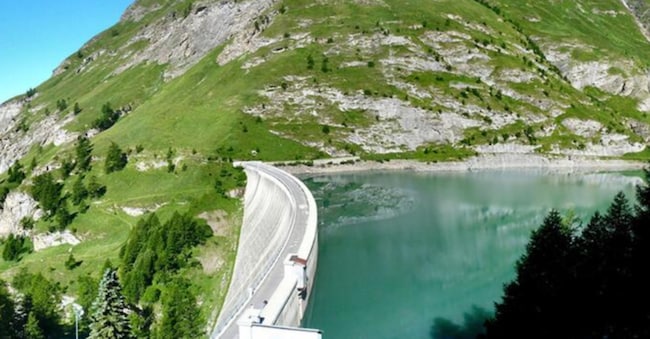
Italy's 532 large reservoirs can potentially collect up to 13.8 billion cubic metres of water, to which are added about 800 million cubic metres from the small reservoirs, but on average 33% (4.3 bcm) of their volume is reduced due to debris accumulating on the seabed (silting), with peaks of up to 48% in the Po River areas. In this context, regulatory uncertainty concerning hydroelectric concessions has limited operators' investments in recent years. In addition to the lack of water accumulation due to silting, there is a further 1.9 billion cubic metres of reservoir capacity already available in the current infrastructure system of dams in Italy, but never authorised.
"The ability to collect water and to retain it for the hottest periods of the year," said Valerio De Molli, managing partner and ceo of Ambrosetti, "is fundamental for the resilience of the main production sectors, in particular for our agricultural and energy system, to which 60% and 32% of the volumes invaded are destined respectively. On 21 and 22 March in Rome," De Molli added, "we will meet with the protagonists of the economy and politics in Italy to plan concrete and immediate responses to the drought emergency that is jeopardising the future of our territory and the resilience of our economy.
According to the analysis conducted by Teha's Community Valore Acqua per l'Italia (Water Value Community for Italy), which represents 37 Partners among the main companies and institutions involved in the extended water supply chain, and deepened within the pages of the White Paper 2024, Lombardy, Sardinia and Sicily host the largest number of large dams, respectively 77, 59 and 46 with a capacity of 4, 2.5 and 1.1 billion cubic metres, i.e. more than 50% of the total national capacity. Due to the shortage of underground water sources, the size of the large reservoirs is on average larger in the South and the Islands. "Small reservoirs are also important," adds Benedetta Brioschi, head of the Valore Acqua Community of The European House Ambrosetti, "which, although of limited volume, offer flexibility to territories. There are 26,288 of them registered in Italy, with Tuscany hosting 62% of them. Overall, their collection capacity is estimated at 800 million cubic metres'.
Although there are peaks of seniority in regions such as Liguria (92 years old), Valle d'Aosta (84) and Piedmont (82), there are also younger dams, such as those in Molise (35 years old on average), Apulia (41 years old) and Calabria (50 years old). The need for modernisation and maintenance is pressing to ensure the safety and efficiency of these crucial infrastructures. In this sense, it is more urgent than ever to ensure regulatory certainty regarding hydroelectric concessions, which have been at the centre of the recent debate with the Energy Decree, in order to guarantee operators' investments.

