
Italian football heads to the polls to elect the new president of the FIGC
In Rome, the showdown between former CONI president Giovanni Malagò and the current president of the National Amateur League, Giancarlo Abete

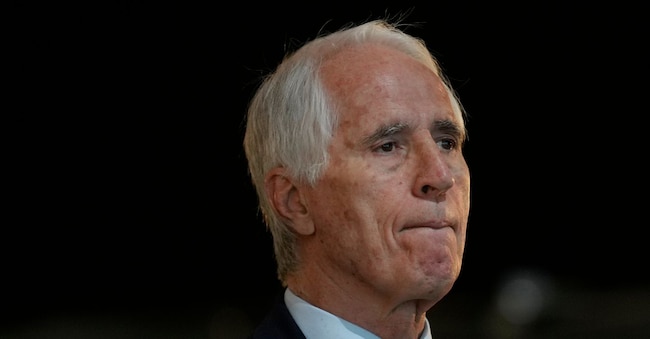
On 22 June, Italian football will go to the polls once again to elect the new president of the FIGC, in a contest that will test the new balance of power resulting from the 2024 statutory reform. The candidates are the current president of the National Amateur League, Giancarlo Abete, and the former president of CONI and the Milano Cortina Foundation, Giovanni Malagò. The latter is lining up at the starting blocks free from any hint of the so-called ‘pantouflage’, following the green light from ANAC, the anti-corruption authority, confirming his eligibility last Thursday.
The 273 delegates will attend the meeting scheduled to take place at the Rome Cavalieri – A Waldorf Astoria Hotel without being bound by the official positions adopted by the bodies to which they belong (voting, with the 516 total votes weighted accordingly, will take place by secret ballot using an electronic system). The fact remains that the indications given in recent months paint a fairly clear picture: in favour of Malagò, in fact, are the Serie A League, which holds 18 per cent of the voting weight, the Serie B League (6 per cent), the Players’ Association, which accounts for 20 per cent, and the Coaches’ Association (10 per cent). On paper, this amounts to 54 per cent of the electoral assembly. Abete can count on the support of a large part of the National Amateur League, which retains the largest share of votes at 34 per cent, whilst Lega Pro – whose share has fallen to 12 per cent following the reform – has not taken a clear stance. The rules provide for a maximum of three successive rounds of voting to determine the winner. In each of these rounds, to be elected, a candidate must secure more than half plus one of the total votes cast.
In the 23-page programme entitled ‘United for the Future of Italian Football’, Malagò focused, amongst other things, on strengthening the financial sustainability of professional clubs, increasing commercial and international revenue, reviewing the model for the distribution of broadcasting rights, the need for greater managerial autonomy for the leagues – particularly Serie A – modernising the federation’s governance with a managerial approach, as well as investing in high-standard infrastructure and modern stadiums.
In his ‘Policy Document on the Activities of the FIGC’, Abete, for his part, reiterated the need to reinforce the central role of grassroots football and the LND, to implement a gradual and sustainable reform of the leagues, to provide support for amateur clubs and local communities, including through an infrastructure plan for small and medium-sized facilities, so as to enhance football’s social role and promote youth sectors and technical training, as well as to safeguard the representation of all federation bodies, by providing institutional mediation between leagues and stakeholders within the system, in the interests of managerial continuity and regulatory stability.


