Environment and Development

Italian forests growing, but climate change is a threat

The 'Forest Day' organised by Afi discussed biodiversity and support for the green transition, but also the valorisation of forests as an economic resource

by Giovanna Mancini

3' min read

3' min read

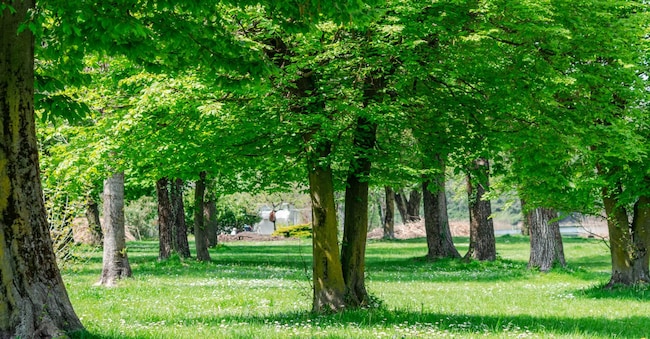
While the surface area of forests around the world continues to shrink - due to illegal logging activities, but also to legal logging to make room for livestock or crops, and due to devastating fires such as the one that is afflicting Canada - in Europe and particularly in Italy, the forests are continuously growing.

They are so in hilly and mountainous areas, but also in urban areas where, after so many years of urban development that paid little attention to this issue, in recent years local government programmes have made building permits conditional on the planting of a certain percentage of green space.

Loading...

The role of wood in the green transition

.

Trees, after all, play a very important role in the health of our environment. To lower its temperature due to global warming (the consequences of which we are already feeling in this early summer), but also to clean the air, reducing the amount of carbon dioxide, and to prevent or repair hydrogeological hazards.

This is why the 'Day of the Forest', which Afi (the Italian Forestry Association) has been organising for the past 13 years and which was held this year on 13 June, has first and foremost a symbolic and ethical value, but also a concrete one, because it proposes to discuss the role of forests and the economy linked to them in the development and wealth of our country.

This year the title chosen by Afi for the conference organised at the Rospigliosi Congress Centre of the Quirinale (with the patronage, among others, of FederlegnoArredo) was: 'Biodiversity and sustainability: the role of Italian wood in the ecological transition'. It was an opportunity to reflect on the importance of forests and the national wood heritage in the light of the European Green Deal and Clean Deal strategies for decarbonisation and the development of a circular bio-economy that is also able to enhance and defend the great social, economic, environmental and cultural values derived from forests and wood.

"Integrating the protection of biodiversity with innovation in the building sector, promoting the use of Italian wood as a key solution for decarbonisation and the development of a circular bio-economy model, is a goal on which we must work in a constant and shared manner," said Claudio Giust, president of Assolegno, as well as of Afi. The patronage of the Ministry of the Environment and Energy Security and the Ministry of Agriculture, Food Sovereignty and Forestry is an incentive to continue our work alongside the institutions with which we share the idea that the use of Italian wood can be a strategic solution precisely for the ecological transition and decarbonisation of construction".

Forests as an economic resource

But wood is also a great economic resource. And while in Italy for years there have been discussions and attempts to rebuild an industrial chain linked to forests that generates wealth and employment, as well as enhancing the value of the forest resource, FederlegnoArredo has also signed agreements with emerging countries (specifically Vietnam and, recently, the Ivory Coast) to start collaborations on the professional training of wood operators in those countries, with the prospect of then developing contacts and agreements of a commercial nature as well.

"Initiatives such as 'Forest Day' are extremely important to bring attention to this precious resource," reiterates Alessandra Stefani, president of Cluster Italia Foresta Legno. "The balance between felling and removal of trees in our country is in surplus both in terms of extension, with an average of 60 thousand hectares more each year, and in terms of volume, as confirmed by forest inventories, except in the areas affected by storm Vaia in and by bark beetles.

Forests and climate change

.

Two phenomena that show how Italian forests are also affected by climate change. "Wind and insect damage are 'disturbances' that have always characterised forests, but which have also always allowed them to regenerate," Stefani explains. "However, the extension of this double phenomenon is a sign that we have a serious problem linked to the climate crisis.

However, Italy's forest heritage is substantial: 'Therefore, in the city and on the plains we must intervene by planting as many new trees as possible, while in the forests we must work by studying the vocations of these woods: some deserve to be left to evolve and grow spontaneously, others must instead be protected, because they contain rare species or habitats. Others, finally, can be economically valorised, respecting established criteria and laws, in order to provide products that are the basis of the circular bio-economy,' adds the Cluster president.

Copyright reserved ©
Loading...

Brand connect

Loading...

Newsletter

Notizie e approfondimenti sugli avvenimenti politici, economici e finanziari.

Iscriviti