
Protecting Italy's heritage: Blue Shield and Red Cross in the front line
On the agenda of the new body more prevention for sites endangered by natural disasters and conflicts, such as application and nomination procedures

4' min read
4' min read
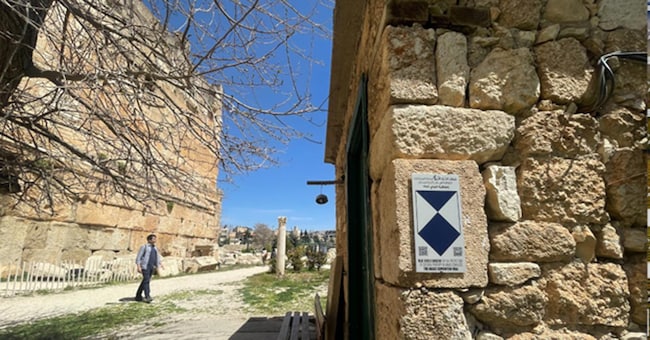
Twenty Blue Shields affixed to the monuments of Brescia and Bergamo in 2023, three Blue Shields for Pesaro and others. In the last two years, Italy has witnessed a proliferation of Blue Shields, the symbol of the 1954 Hague Convention for the Protection of Cultural Property in the Event of Armed Conflict, which is affixed in peacetime to protect property from natural disasters and attacks in the event of conflict. In Italy, until 2024, it was the Italian Red Cross (CRI) with the approval of the Ministry of Culture that was responsible for affixing the shield. Between 2023 and 2024, the display of the Symbol coincided, with a few exceptions, with the nomination of the Capital of Culture: first Brescia and then Pesaro, as indicated on the site of the CRI. The only regions represented in the list of 30 registered properties are Lombardy and Marche (see table). In the autumn of 2024, the situation becomes more complex with the birth of the Italian chapter of Blue Shield, the national office of Blue Shield International, an international organisation founded in 1996, derived from the Convention itself, to protect cultural property from armed conflicts and man-made natural disasters. The national chapters originated in 1996, when Patrick Boylan proposed to complement the Convention with an operational body for the protection of monuments. Article 27 of the Second Protocol to the Convention (1999) identifies the Blue Shield as an instrument, alongside organisations such as the 'Iccrom and the Red Cross, for the protection of cultural property in the event of conflict. There are currently 34 national committees. The activities of the International Blue Shield are coordinated with other organisations involved in the protection of cultural heritage, also collaborating with NATO exercises together with other NGOs. As mentioned, the Italian picture is now more complex because Italy's Blue Shield is also fully entitled to 'shield' assets for protection.
The Italian Blue Shield
.The first meeting of the Italian Blue Shield was held in Rome on 1 October, with greetings from the four founding associations: Anai (Italian National Archival Association), Aib (Italian Library Association), Icom (International Council of Museums) and Icomos (International Council on Monuments and Sites). Leading the proceedings was Alberto Garlandini, current president of the Icom Foundation and former president of IcomItalia and Icom International, who emphasised the Committee's overall vision and the importance of raising awareness, also at administrative level, for the protection of cultural heritage. On the agenda was the constitution of the Executive Board by vote of the General Assembly of members.
The meeting was attended by four delegates appointed by Blue Shield International: Alberto Garlandini for Icom, Paolo Saronia, a director of the National Research Council and delegate of Icomos, Bruna La Sorda a Ligurian professional with experience in disaster management and delegate of Anai, and Laura Ballestra, a librarian in charge of public services at Liuc and president of Aib. They were joined by Daniele Spizzichino, an engineer from the Institute of Environmental Protection and member of Icomos, who worked for two years with the four delegates on the protocol and statute of the Italian Blue Shield.
During the discussion, it was emphasised that the humanitarian needs of people affected by conflicts and man-made natural disasters must also include the protection of cultural heritage. Today there is a broader view of the concept of heritage than in the 1954 Hague Convention, including diffuse, intangible and natural heritage, all of which are worthy of protection. Spizzichino emphasised how the protection of cultural heritage has now been integrated into natural risk management and volunteer activities. Spizzichino, together with others, worked on the definition of the Committee's protocol, regulations and statute, a process made more complex by the involvement of the four founding societies.

