
Italian hotellerie at the halfway mark, now the watchword is management
The model in which property ownership prevails takes a back seat, while a strategy revolving around operational efficiency and branding advances

Key points
The hotellerie world in Italia is in turmoil with international luxury brands increasingly interested in conquering cult locations. Such as the Four Seasons, which in the year of its 65th birthday - after Florence, Milan and Taormina - will reopen the iconic Hotel Danieli in Venice, in the Adriatic Sea it will make a stop with the Four Seasons I, and start opening in Puglia. The Italia context is still characterised by small and medium-sized chains with marked property ownership, but the scenario is changing. "The asset light model is gaining ground. The objective is operational efficiency and profitability," emphasises Giorgio Bianchi, advisor in hospitality, "with a focus on the brand. On the market the choices are composite. Starhotels - one of Italy's largest chains with 34 4- and 5-star hotels - uses direct ownership, co-owner + management, management contracts and lease contracts. The latest 5-star the Gabrielli in Venice is under management (owned by the Perkhofer family) as are the Teatro Luxury Apartments in Florence, owned by Hines and Blue Noble.
Among the growing formulas is the hotel management agreement
Among the formulas growing in Italia is the Hotel management agreement (Hma), entrusting the management to a specialised operator with strong know-how and the benefits of using a brand for the hotel's competitive positioning. "In the last decade in Italia it has recorded the most dynamic trend, with a growth of +8.3% Cagr in the number of establishments and +6.1% Cagr in managed keys," emphasises Maddalena Terrano, head of research in Italia at Horwath HTL. "This formula, which is potentially more profitable for both the owner and the manager, since it is based on a clear separation between ownership of the real estate asset and operational management, will consolidate over the next three years, to the detriment of leasing, ownership and franchising.
Hotelier stories
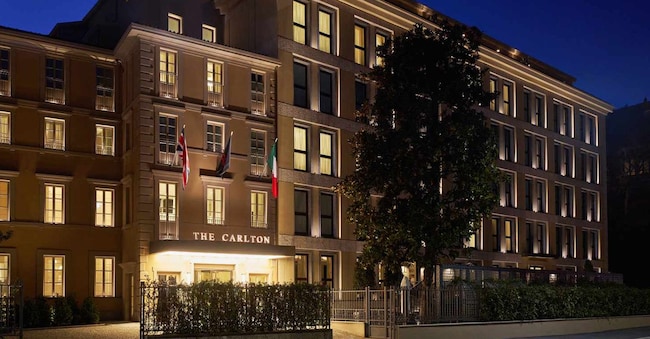
In the luxury world, the case of Rocco Forte Hotels (15 properties, 10 in Italia with the latest The Carlton, Milan opened in November) is interesting. "We are mainly an operator and, most of the time, when we see a property, it already has an owner or an associated developer. So, in these cases we only negotiate a lease or management contract,' explains Charles Forte, development director. - We appreciate the idea of co-investing in properties when it makes sense to do so. We try to acquire or invest on a case-by-case basis, based on the strategic opportunity that arises, the perceived level of risk, the size of the ticket, and the return potential. When acquiring a property, achieving break-even varies depending on the type of transaction and location. There are value-added projects where you may be able to buy cheaply and recover your investment capital much faster than in an established market, where property processes are faster. In the future, we will evaluate Hma/lease/acquisition or co-investment'. "The decision to become a hotel owner stems from a family tradition. My being a hotel entrepreneur has also become a love for hospitality,' echoes Federico Fincantierri, ceo of the Icon Collection Group, which closes 2025 with a consolidated turnover of 20 million euro. - Historically, our properties were derived from the construction of hotels or the recovery of closed hotels. Today we are evaluating third-party management models to seize new opportunities and develop our know-how".
From family history to new business
A young but expanding chain thanks to its know-how is Egnazia Ospitalità (more than 100 million aggregate turnover of managed structures in 2025). "Our story began with Masseria San Domenico, the family home, which then became the first high-end hotel in Puglia," recalls Aldo Melpignano, Founder of Egnazia Ospitalità Italiana. It then continued with Borgo Egnazia and Masseria Le Carrube near Ostuni. It was from these properties that we took our first steps in hospitality, developing a hospitality model that is now recognised internationally. The idea of creating a management company stems precisely from the desire to make our experience available to entrepreneurs and hotel owners with the aim of preserving the nature and identity of independent hospitality, enhancing the territories, far from standardised logics". Among the facilities under management are the recent opening of Castel Badia in the Dolomites; the approaching first season of La Tiara di Cervo in Costa Smeralda, the Ancora and Hotel de LEN in Cortina d'Ampezzo, the Santavenere in Maratea and Ostuni a Mare. Upcoming openings include a new establishment near Rome and the new Hotel Diana in Milan.
The universe of the Falkesteiner group (30 hotels and residences) is also composite, with formulas ranging from management contract (43%) to lease contract (27%), from ownership (17%) to co-ownership + management (13%). The latest is the operational management of the Arbatax Park Resort, one of the largest tourist complexes in Sardinia with a unique concept. "The decision to acquire a property is the result of a structured process of analysis and development conducted by FMTG Development," the top management recalls, "the division dedicated to scouting that negotiates with interlocutors to define acquisition or partnership conditions and evaluates the most suitable intervention between ownership, lease and management.

Brand connect


Newsletter RealEstate+
La newsletter premium dedicata al mondo del mercato immobiliare con inchieste esclusive, notizie, analisi ed approfondimenti
Abbonati