The Eurofighter at the base in Saudi Arabia

Italian fighter jet hit; General Camporini: ‘There’s always a risk, even at a base’

The former Chief of the Defence Staff: there are security measures in place at the bases, but they can never offer absolute guarantees. Minister Crosetto’s move regarding Bab-el-Mandeb? “We need more solidarity from the countries of the North”

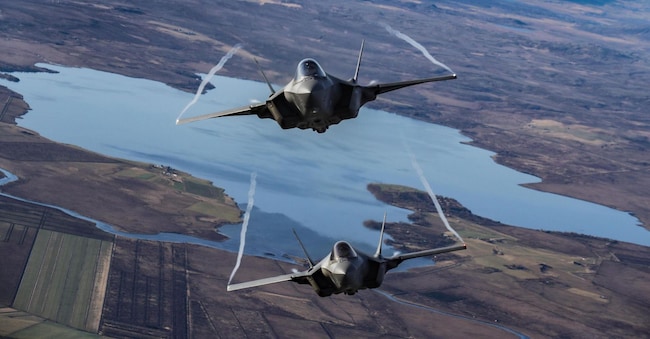
 (Ansa)

5' min read

Translated by AI
Versione italiana

5' min read

Translated by AI
Versione italiana

Question: How is it possible that at an airbase such as the one in Ta’if, Saudi Arabia – used by a multinational coalition combating the terrorist threat posed by Daesh – an Italian Eurofighter F-2000 be hit, when, moreover, at the time of the attack it was located in a remote area of the airfield?

General Vincenzo Camporini rose through the ranks of the military to hold the highest posts of Chief of the Air Force Staff (2006–08) and Chief of the Defence Staff (2008–11). He therefore has the ‘credentials’ to answer.

Loading...

General, what happened at the base in Saudi Arabia might seem ‘strange’, to say the least. A fairly similar situation had occurred in March, when an Iranian drone destroyed an Italian drone worth over 30 million euros at a base in Kuwait. It is thought that these bases have extremely high-level controls and top-tier security measures. Yet the fighter jet was hit.

These things happen because airports are very open spaces – and they have to be, as flight operations take place within them. For decades now – ever since my time – they have normally been protected by shelters built to withstand direct impacts. If you visit a standard Italian airbase, you can see what they look like, and the same is true abroad.

Now, I don’t know the base where this incident took place, but I’m sure there are safety measures in place there too – though they can never offer an absolute guarantee – so when an explosion occurs, it’s clear that it’s quite possible there will be collateral damage. That doesn’t surprise me.

So can any drone simply fly into a base’s airspace and do what it did?

Yes, but you will recall what happened when the Ukrainians destroyed a third of the Russian air force’s strategic capacity – aircraft that were deployed on the flight line and were hit and destroyed. There was probably some degree of decentralisation here anyway, because one of the methods used to minimise risks is decentralisation; so the aircraft aren’t positioned side by side, but they are still in an environment that is, by its very nature, open.

So is it impossible to guarantee complete protection?

No, that’s not possible. The only way to ensure total defence is the approach adopted by the Swiss: they have a number of bases that are ‘underground’, in the sense that they have been dug out of tunnels in the mountains, where the aeroplanes are parked. But this requires a specific, unique environment. In Saudi Arabia, there are no mountains in which to dig.

Let’s change the subject. First, the shooting down of a Russian drone over Lithuania, then our fighter jets taking to the skies because Russian jets had violated Lithuanian airspace. It seems that Russia is doing everything it can to challenge and test the EU’s and NATO’s ability to respond. Do you share this view?

Loading...

Let’s say that Russia is, if you’ll pardon the expression, ‘probing’ to test the Western countries’ capacity to respond, both in the physical domain – with drones and aeroplanes – and in the cyber and cognitive domains. This is happening on an almost daily basis. We shouldn’t even be surprised by it any more.

Italia is often on the front line.

The fact that Italia is on the front line stems from our active participation in the rotation of air defence aircraft that the North Atlantic Treaty Organisation periodically deploys to the Baltic states, which lack this capability, and so, in turn, our countries contribute a temporary deployment which is subsequently relieved by another. The French are there, the French leave and the Italians arrive, after which the Germans arrive, and so on. I believe that, beyond the technical aspects of how the North Atlantic Treaty Organisation operates, all of this is also a matter of considerable political significance.

What do you mean?

In the sense that we are demonstrating our solidarity with the countries of the North in the face of what they perceive as threats. We would expect the same level of solidarity from these same countries regarding the threats directed at us, and this brings me to the issue that has been in the news in recent hours: namely, Defence Minister Crosetto’s decision to draw up a plan to escort Italian merchant ships sailing through the Bab-el-Mandeb Strait.

That would have been my next question.

Exactly, but I brought it up beforehand because these matters are interlinked. We expect the same solidarity from the northern countries regarding the direct threats to our country and freedom of navigation in the Mediterranean – and therefore the navigability of Bab-el-Mandeb is a direct threat that hits us hard economically, because our economy – which is based on processing – relies on receiving raw materials and energy products to transform them into finished goods for export, and 90 per cent of this is transported by sea.

The minister’s move could be interpreted as an attempt to find a national solution capable of ensuring the safety of our merchant ships within a short timeframe, in a context where the European Aspides mission has its hands tied and is hampered by bureaucratic red tape.

Rather than having its hands tied, Aspides has fallen apart somewhat. The decision was taken with a certain degree of calm: four months passed between the moment the Houthi threat became apparent and the moment the European Council decided on the mission – just to give an idea of the speed with which the European Council makes decisions – because the problem is not the Union; the problem is the Union’s Member States.

This operation therefore got off to a late start and, let’s be honest, on a rather modest scale. The initial deployment comprised four ships: one Italian, one Greek, and – if I recall correctly – one German and one French. As is the case today, there is one Italian ship and another from a different country (Greek, ed.). The fact is that the enthusiasm of European states for the protection of this chokepoint (literally a bottleneck, ed.), this key point for international shipping, is, shall we say, very lukewarm, and we need to reinvigorate it.

What do you mean, General?

If the countries of the European Union do not do so of their own accord, at this point it becomes our duty to mind our own business and therefore to intervene directly as a country, flying the Italian flag rather than the EU flag.

Let’s take an example: an Italian merchant ship is being escorted in international waters by an Italian vessel. A small boat approaches, the Houthis open fire and the Italian Navy vessel returns fire. Is there not a risk that this reaction could be regarded as an act of hostility on Italia’s part? Aspides – an EU mission – is one thing; a national intervention is quite another.

No, there’s no risk. Sand I am in international waters, I am sailing and someone approaches me, threatens me, and I return fire in such a way as to neutralise them; this is self-defence, not an act of war, nor is it an act that could fall under the category of belligerence.

Copyright reserved ©
Loading...

Brand connect

Loading...

Newsletter

Notizie e approfondimenti sugli avvenimenti politici, economici e finanziari.

Iscriviti