Asset class

Italian logistics confirms appeal in 2024

Demand for employment decreases in the first half of the year, but product shortages remain. The sector is worth 5.5 billion in turnover and 1.7 billion in investments

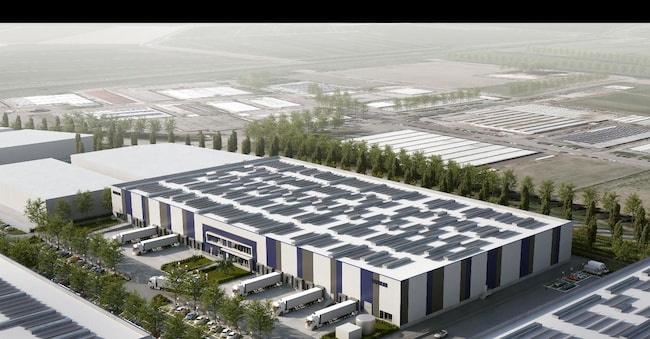
by Evelina Marchesini

7' min read

7' min read

It is a good pace that of Italian logistics after the runs of the last few quarters. The first six months of 2024 are indeed in the sign of consolidation and a certain optimism. Tracing the profile of the sector is the report 'Italian logistic spotlight' by Savills, released in these days.

Logistics confirms appeal

.

According to Savills, the sector recorded an investment volume in line with the first half of the previous year, with an important component of industrial assets: two industrial sale & lease back transactions drove the volumes since the beginning of the year. The market continues to be characterised by a predominance of foreign capital (79%) and transactions of less than EUR 20m. Nevertheless, the average deal size is increasing from EUR 19m in the first half of last year to EUR 27m today. Yield rates have stabilised over the past six months at 5.50% in the Milan, Rome, Bologna and Piacenza markets, but a compression of rates could occur by the end of the year.

Loading...

After two years of record rents, the demand for space fell physiologically in the first half of the year, totalling approximately 1.1 million sqm rented, characterised by a strong component of owner occupiers (33%). The market remained dynamic, with 55 transactions recorded in the first six months of the year and again concentrated in northern Italy, particularly in Lombardy, Emilia-Romagna and Veneto. The Rome cluster recorded good demand, as did the emerging areas of Padua-Vicenza-Rovigo and Eastern Veneto-Friuli. Rents remained stable during the quarter, at a record level of 68 euro/sqm/y in Milan and 66 euro/sqm/y in Rome.

'The sector continues to show solid fundamentals, with investment volumes in line with last year and development activity remaining buoyant,' comments Carlo Walder, head of Industrial & logistics at Savills in Italy. 'Despite the expected drop in demand for space, the outlook remains rosy thanks to stable rents and a possible yield compression expected in the coming quarters.

The sector according to Tecnocasa

Tecnocasa also recently released a detailed report on Italian logistics with the aim of examining the impact of the sector on the Italian real estate market.

"The most recent data released by Randstad Research offer the dimension of this sector in the light of the strong growth after 2020, particularly in the healthcare, food and e-commerce sectors. Logistics in Italy employs 1.16 million people and generates a value of EUR 92.7 billion, or 5.41% of GDP," the analysis begins.

The trends that have come to the fore in recent times, confirmed by the Tecnocasa and Tecnorete Immobili per l'Impresa network of agencies (128 affiliated agencies in Italy), are as follows: the search for new construction solutions, the occupation of secondary locations, the development of last-mile logistics, a development that has also been transferred to central and southern Italy, and a strong focus on environmental impact.

For some time now, the Tecnocasa Group network has been pointing out that logistics companies have to deal with a lack of supply and with properties whose characteristics (in terms of height, size of covered and uncovered areas, proximity to strategic arteries) are not compatible with the needs of companies in the sector. This is why in recent times many of them have proceeded with 'build to suit' operations (projects based on technical specifications indicated by the end user).

On the other hand, the operations of developers appear to have slowed down as they are also confronted with rising construction costs and only proceed if they are certain of renting out the property. The search for secondary locations is due to the saturation of areas close to the most important arteries (e.g. the Brebemi, the A4 motorway) and the shift towards more inland and distant areas where there is space to settle, provided that the urban plans of the municipalities concerned provide for this possibility. The NRP is also moving in this direction, which aims to invest in infrastructure, mobility and sustainable logistics.

The environmental impact of logistics

.

In recent years, one of the most influential aspects on logistics developments has been the environmental impact: many operators have moved to respect the occupied territory. For this reason, many of them have opted for a brownfield strategy and not greenfield (redevelopment of brownfield/abandoned areas in preference to new construction). "The limitation of the latter route lies in the high costs of property conversion," writes Tecnocasa.

The old depreciates

.

According to the Tecnocasa Group's Ufficio Studi, the prices of used warehouses have fallen by 20.4% over the past ten years. New constructions that are increasingly attentive to compliance with ESG criteria have also included the creation of surrounding green areas, the use of photovoltaic panels, low-consumption lighting systems, and the possibility of recharging electric vehicles. The latest data released by the Osil Observatory (Osservatorio Immobili Logistici) of the Liuc Business School/Università Cattaneo confirm that only 15% of logistics buildings in Italy can be considered sustainable (Leed or Bream certified).

The development of the territory, again according to the Tecnocasa Group's network, sees a greater concentration of logistical areas and new developments in the regions of northern Italy (Piedmont, Lombardy, Veneto, Emilia-Romagna), even if more and more interest is being shown in the regions of central and southern Italy, in particular Lazio, Campania and Puglia.

Logistics in 2023

.

Closing figures on the Italian logistics sector in 2023 come from the '2024 Report on the Logistics Real Estate Market in Europe and Italy' by Scenari Immobiliari in cooperation with SFRE. In 2023, 1.7 billion (more than a quarter of the market) are invested for a turnover of EUR 5.5 billion. Assets in 2023 reached an area of 48 million square metres.

In particular, in 2023 in Italy the logistics real estate sector was the one on which the largest real estate investments were concentrated, with over EUR 1.7 billion, or 26 per cent of the total. The Italian market proved to be more active than other countries and a European scenario where logistics had to face macroeconomic challenges that significantly affected the level of investments, down 41% compared to the average level for the three-year period 2020-2022, but still over EUR 33 billion.

"In Italy," said Francesca Zirnstein, managing director of Scenari Immobiliari, "logistics is a well-established market segment, both in terms of construction and type of investors. A result achieved thanks to the corresponding growth of the contract logistics segment, which has increased by 25% in five years".

The players are institutional investors, specialists, developers who are also investors, and others. It should be noted that the segment's activity in 2023 slowed down compared to 2022, resulting in a 43% decrease in volumes, not due to structural issues in the sector, but mainly due to financial and geopolitical uncertainty, with the Italian market nonetheless proving to be more active than other European realities. The segment, in all its declinations, expressed a mature demand for the various types of products, mainly located in Northern Italy. Signs of improvement were evident from the second half of the year, with the last part of 2023 more dynamic than the July-September period and the previous 12 months. This trend was mainly supported by the solidity of interest in the sector and the pressure of demand for space in the main markets, but also in complementary ones. Approximately EUR 630 million in transacted volumes were recorded during Q4 2023.

In 2023 the industrial-logistics sector had a turnover of about 5.5 billion in Italy, down by more than five per cent year-on-year and with a forecast for 2024 of a slight contraction. The production of real estate wealth depends for about one-third on capital allocations in highly characterised properties and for about fifty per cent on allocations in warehouses and small spaces, embedded in the production fabric of each Italian province.


Logistical assets in 2023

.

Real estate in the logistics market totalled more than 48 million square metres at the end of 2023, after developments of around two million square metres per year were completed in 2022 and 2023. At the same time, estimates for 2024 predict a pipeline of just under 1.5 million square metres, says the report by Scenari Immobiliari.

In an inflationary scenario such as that of 2023, the Italian logistics market has developed and seen yields, which had hit lows in 2022, rise between 30 and 50 basis points. Space is considered to be a key element more than in the past, in order to be a 'warehouse' in the most positive sense of the term, gathering adequate stock to cope with new interruptions in the supply process, limit the fallout from rising costs, and compete in the speed of response to demand.

In Italy, market demand in logistics is growing steadily, resulting in a take-up of around 690,000 square metres recorded in the fourth quarter of 2023, broadly in line with the previous quarter, which brought the total volume transacted in the second half of 2023 to over 1.3 million square metres. Today, the demand for space is increasingly focused on efficient and sustainable assets, which real estate operators are trying to meet with development projects exceeding two million square metres.

After the pandemic crisis, the logistics real estate market in Italy has matured, sustained growth in 2021, faced the many risks of 2022 and the economic tightening and geopolitical situation of 2023, and started 2024 with a clear downturn in results compared to previous quarters but as the second best real estate asset class.

The supply chain's ability to adjust is confirmed by the weighted increase, compared to the sharp decline in previous years, of net yields at a national level, which stand at 5.8%, with even lower peaks for prime locations and trophy assets, between 4.8% and 5.7%, and further declines for last-mile properties. The lowest rates are inevitably recorded in prime markets, mainly located in the northern Italian regions, with Milan and its gravitating territories leading the way, growing proportionally towards the centre and in the south of Italy, with Rome recording rates slightly higher than the Lombard capital.

Copyright reserved ©
Loading...

Brand connect

Loading...

Newsletter RealEstate+

La newsletter premium dedicata al mondo del mercato immobiliare con inchieste esclusive, notizie, analisi ed approfondimenti

Abbonati