The crisis in Hormuz

Italian minesweepers, how many sailors and how the ships are equipped

The crews of the units, including the escort and logistic support units, are said to consist of more than 400 of our military personnel. And already in recent days training activities have been held in the Mediterranean

by Andrea Carli
Il cacciamine Gaeta della Marina Militare, Roma, 17 Aprile 2026.  (Ansa)

5' min read

Translated by AI
Versione italiana

5' min read

Translated by AI
Versione italiana

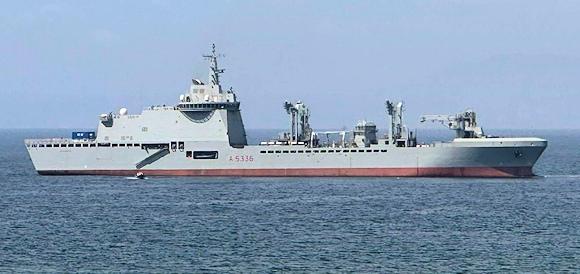
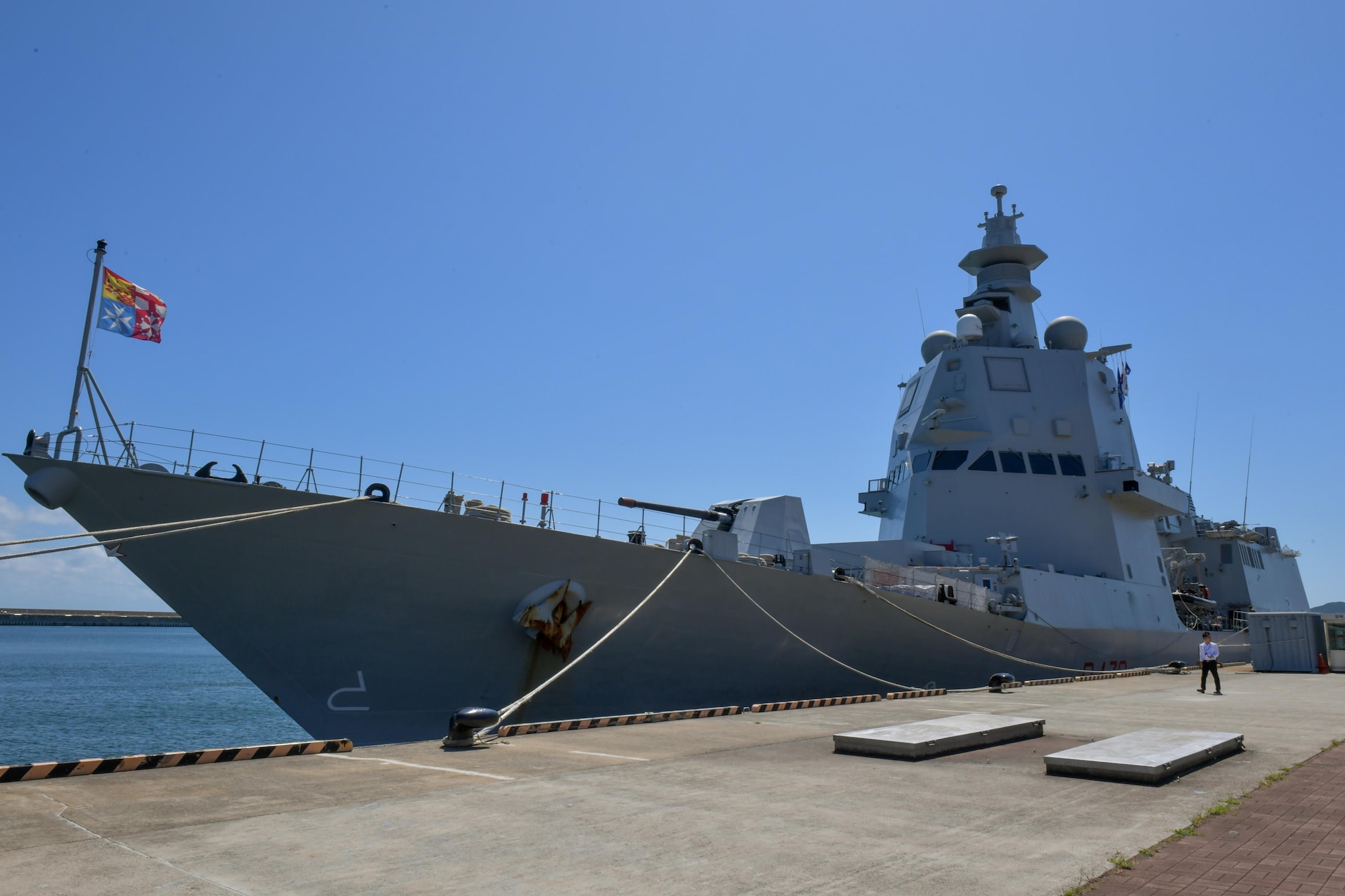
Two destroyers, the 'Rimini' and the 'Crotone', escorted by the 'Montecuccoli', the multi-role combat unit with air defence systems, and flanked by the 'Atlante', the Vulcano-class ship providing logistical support.

This is the Italian fleet that will sail from La Spezia to Djibouti in about twenty days, where it will stop while waiting to set course for the waters of the Strait of Hormuz, once a truce between the US and Iran has matured and the green light has been given by parliament. According to calculations, the crews would consist of over 400 of our military personnel. And training activities have already been held in the Mediterranean in recent days.

Loading...

"Should peace break out," explained Defence Minister Guido Crosetto speaking with Farnesina chief Antonio Tajani on Wednesday 13 May in a hearing before the joint Foreign and Defence committees, "it would take almost a month for all the units of the allied nations to reach the Gulf. As a precautionary measure, we are arranging for two minesweepers to be positioned relatively closer to the Strait: initially in the eastern Mediterranean, then in the Red Sea, as part of the missions already underway such as the Mediterranean Safe and Aspides, and within the framework of Italia's authorised international mission'.

Here are some indications of the ships involved.
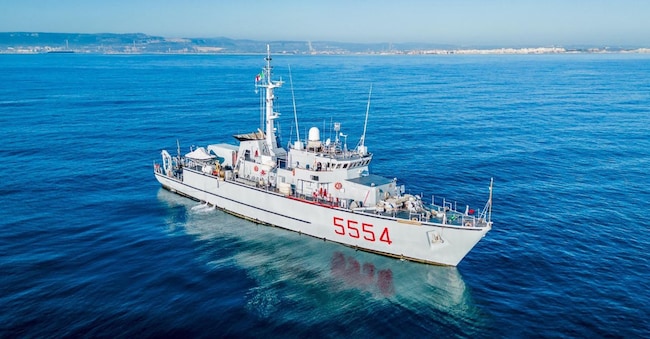
Cacciamine Rimini

Nave Rimini

Nave Rimini is the youngest of the eight Lerici class 2nd series minesweepers. Its usual port of assignment is La Spezia. It is a Mine Hunter Coastal type unit specially designed for the location and deactivation or destruction of naval mines. To carry out these operations, it is equipped with a sophisticated sonar system that can be spun up to 40 metres, and with two wire-guided vehicles (ROV - Remote Operated Vehicle), through which it is possible to detect and investigate any object lying on the seabed down to depths of about 600 metres.
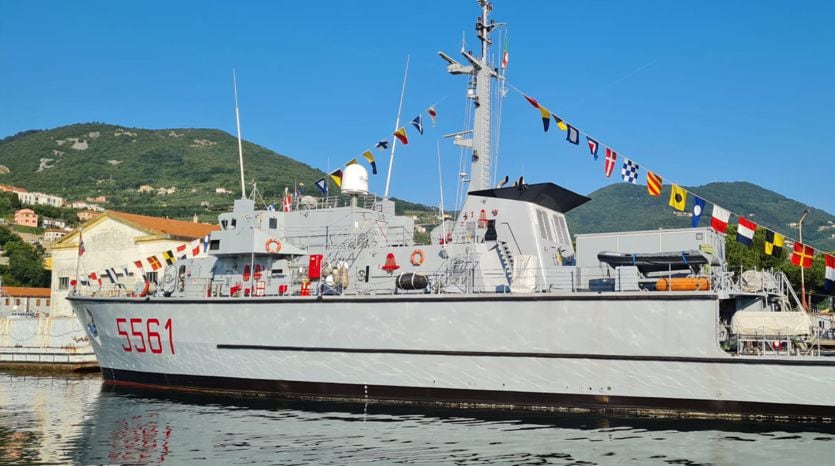
Launched on 17 September 1994 and delivered to the Italian Navy by the Intermarine shipyards of Sarzana at the Pagliari dock in La Spezia on 26 November 1996, she received her operational baptism with Operation Alba Advanced Party in the Port of Durres in 1997, operating in Albanian territorial waters, contributing to the establishment of the humanitarian corridor for the Albanian population, and in 1998 began its training activities in the seas of Northern Europe, at the Mine Hunter Order Sea Training (MOST), a centre of excellence for mine warfare training located in Ostend, Belgium.

The crew consists of 51 people.

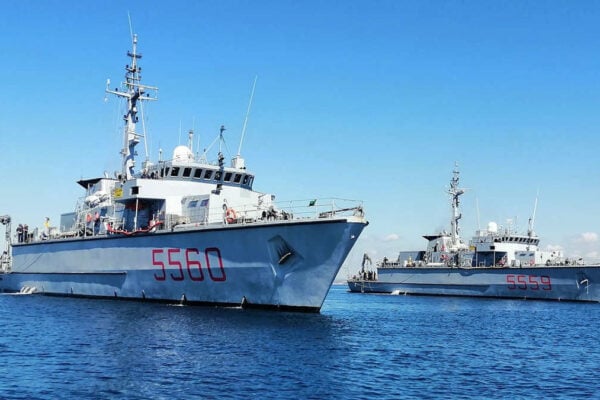
Il cacciamine Crotone

The Crotone minesweeper

The minesweeper Crotone is the fifth of eight units of the Lerici class second series (also known as the Gaeta class), launched on 11 May 1992 and delivered to the Navy on 14 June 1994. Like the ship Rimini, the Crotone's usual port of assignment is La Spezia. Nave Crotone is a Mine Hunter Coastal type unit specifically designed for the location and deactivation or destruction of naval mines.

It is equipped with a sophisticated sonar system that can be spun up to 270 metres, and two wire-guided vehicles (ROVs - Remote Operated Vehicles), through which it is possible to detect and investigate any object lying on the seabed down to depths of approximately 600 metres. Although its main use is in clearance operations in marine areas with the presence of ordnance, it lends itself to dual use.

The 'dual' employment has been achieved over time through collaborations with the Ministry of Cultural Heritage and Activities and Tourism, with the National Magistracy, and with other State Bodies and Departments, all of which are interested in exploring the deep sea for the purpose of searching for and investigating ship or aircraft wrecks, relics of historical interest or any other object lying on the seabed, also for purposes related to the preservation of the marine ecosystem, often for scientific purposes. Moreover, having a multi-place hyperbaric chamber, and medical personnel specialised in underwater physiopathology, the Unit can be usefully employed in support of on-board or external diving personnel, who also operate at deep depths.

The crew consists of 44 people.

Nave Raimondo Montecuccoli

Nave Raimondo Montecuccoli is the third of the seven Multi Mission- Multi Purpose Combat Ship units (first in the Light Plus version) that are part of the plan to renew the operational lines of the Navy's naval units, decided by the Government and Parliament and launched in May 2015 under the auspices of OCCAR (Organisation for Joint Armament Cooperation).

It is a ship with a high degree of operational flexibility, designed to carry out a multiplicity of purely military tasks such as patrols, logistical transport and combat, but also civil and environmental protection thanks to its intrinsic dual capabilities, made evident by its special on-board arrangements. In fact, the two modular aft areas allow for the embarkation of containers suited to the different needs of the mission, such as logistics and medical containers, and at the same time allow for the embarkation of Special Forces or a complex command.

Il Montecuccoli. (Ansa)

Built entirely in Italia, at Fincantieri's Riva Trigoso and Muggiano (SP) integrated shipyard, the patrol vessel is distinguished by its offset double prow, evoking the rostrum of ancient Roman ships, a solution that allows the unit to reduce wave formation and fuel consumption, thus increasing its hydrodynamics and top speed.

Two other iconic and futuristic technological elements are the Naval Cockpit and the multi-clutch gearbox. The former allows the conduct of ship and air-sea operations from an integrated station managed by just two operators. The second, on the other hand, allows a wide range of possible propulsion arrangements adaptable to the tactical situation, from those that guarantee a considerable extension of autonomy to those capable of reaching maximum performance in terms of reaction and speed (32 knots). The new technologies implemented make it a first-class engineering tool.

The crew consists of 140 men.

Nave Atlante

Atlas Ship

Nave Atlante is the second Logistic Support Ship (LSS) of the Vulcano class. Completely built and outfitted at the Castellammare di Stabia shipyard, Nave Atlante is part of an Italian-French cooperation programme in the field of armaments, under the aegis of the European organisation OCCAR, which acted in the programme as Contract Authority, guaranteeing supervision of all contractual, construction and outfitting phases.

Nave Atlante is equipped with the most modern self-defence systems, state-of-the-art sensors, including navigation and surveillance radar, video and infrared systems, anti-obstacle sonar and underwater raid detection. The ship also has a flight deck suitable for the use of all the helicopters in the Italian Navy's fleet, capabilities that greatly extend its logistical and operational reach.

The on-board medical area represents a further distinguishing feature: a modern medical complex, categorised as Role 2 maritime Level 3 in NATO, capable of operating in support of national and international forces, but also in humanitarian crisis, emergencies and natural disasters, thanks to two fully equipped operating theatres, intensive care beds and modern equipment for advanced clinical screening.

The crew consists of 235 people.

Copyright reserved ©
Loading...

Brand connect

Loading...

Newsletter

Notizie e approfondimenti sugli avvenimenti politici, economici e finanziari.

Iscriviti