
Italian model for laying techniques
. This is the last link in the ceramics supply chain and it is crucial: an academy is being set up to train specialised figures, from mosaics to large formats

3' min read
3' min read
It is the last link in the ceramic chain. And it is crucial. With the industry's race for innovation, laying is the key to global promotion. "We produce a semi-finished product," says Andrea Ligabue, chairman of the Laying Commission of Confindustria Ceramica. "If it is laid well, the product is a winner. If not, quality suffers. In Italy we have all the technical and design knowledge for the best production in the world: we must also be central in the laying process".
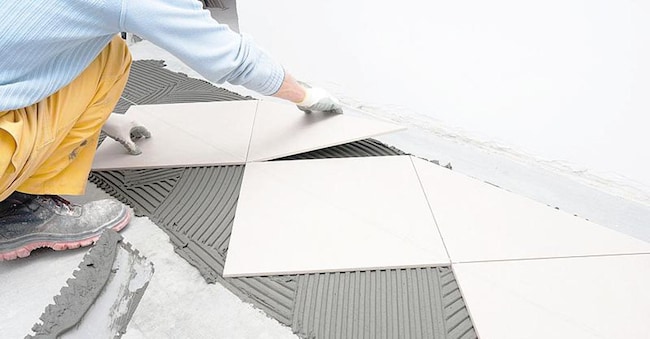
Just how fundamental this last link in the supply chain is is demonstrated not only by the large space that Cersaie dedicates to it with 'La Città della posa' (400 square metres) but also by the international recognition of the skills of Italian tile layers, who, thanks to the impetus of Confindustria Ceramica, have set up Assoposa. The national association of installers and distributors has not only filled a regulatory void (with the laying standard 11493 regulating good practice). It has created a training system that has also led to the certification of the figure of the installer (together with the certifying body Certis), freeing him or her from the macro-family of the building operator.
"We have equipped ourselves with an academy that provides training courses covering the entire world of laying, from mosaics to large formats," explains Luca Berardo, president of Assoposa. And so Italy is now a world leader also in laying techniques, in a scenario that has radically changed over the years. With the appearance of large formats, up to a maximum of 1.60 by 3.20 m2, the national laying world has renewed itself (and with it that of the sales network), also trying to coordinate the training policies of all the foreign associations of layers: it is no coincidence that the Canadian association chose Italy, on the occasion of Cersaie, to celebrate its 80 years of history. The common thread linking this year's layout and demonstrations in the 'City of Laying' (Hall 32) is the relationship between man and technology, the latter being understood as a 'machine' at the service of man for a safer, more sustainable and inclusive working environment.
Here, then, are the exoskeletons that help installers reduce physical wear and tear and regain mobility after accidents, improving working conditions and the quality of operations. Then, the precise and accessible cutting machines that are silent and easy to use. Finally, projection technologies, capable of digitally showing how products fit into environments, improving the buying experience and facilitating the choice of materials. Displays of environments and artefacts that can be realised with products of all formats, on the other hand, in the area dedicated to training.
In addition, seminars on the installation of large slabs will be held in the conference area for architects and planners. Today, training activities are provided in all regions and throughout the year. Thanks to the agreement between Assoposa, Confindustria Ceramica and Formedil, the single national body for training and safety in the building sector, tile layers (it is estimated that there are between 12,000 and 15,000 in Italy) have the opportunity to be constantly updated on the most avant-garde laying techniques. "The most advanced innovation now is the large thin slab: it is a matter of knowing how to work and lay it to enhance its quality," explains Berardo.

