
PDO cheeses, here's how much more Italians are willing to spend
54% of consumers are ready to raise their bill by 10%, 40% by up to 20%. Typical cheeses are on the tables of 9 out of 10 households, sales up 2.3% (value sales up 7%)
by Manuela Soressi
 Aggiungi Il Sole 24 Ore
ai preferiti su Google
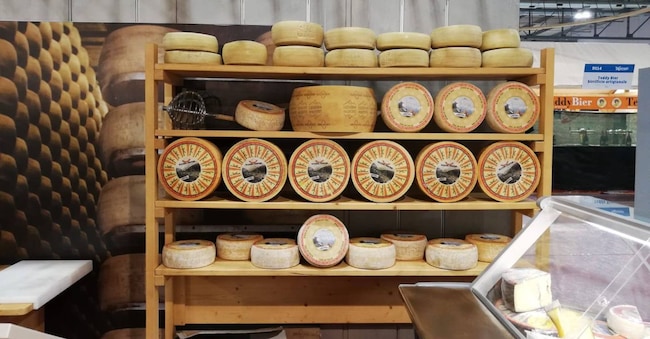
More than one Italian in two is willing to spend an average of up to 10% more to buy one or more of the 53 Italian PDO (Protected Designation of Origin) cheeses, whose values of quality, origin and sustainability they recognise. This was revealed by research conducted by NielsenIQ on behalf of Aecis (European Association for Culture, Innovation and Sustainability), made up of the Consorzi di tutela dei formaggi Dop Provolone Valpadana, Piave and Casciotta di Urbino.
It is a report that puts the spotlight on a key sector of the Italian agri-food economy. In fact, our country holds the European record for dairy products with geographical indications, withas many as 57 cheeses, including PDO, PGI and TSG, to the production of which half of the milk produced in Italy is destined, as emerged from the recent new edition of the Ismea-Qualivita Report.
An important 'size' that makes it the most important sector in economic terms among Italian food products with geographical indication and the second in absolute terms of the entire food & beverage sector behind wine. Adding up the 53 PDO cheeses, the 3 PGI cheeses and the only Stg, we arrive at 583 thousand tons of production 2024, two thirds of which are concentrated in Lombardy and Emilia Romagna. The production value is over 5.8 billion euro (+10.5% per year), which becomes 9.9 billion euro for consumption (+11.5% per year).
Geographical indication cheeses also lead the expansion of Made in Italy food in the world, with 42% of the produced quantities sold on foreign markets. In 2024, the export of Italian cheeses with geographical indication surpassed the record of 3 billion euros (+16% compared to 2023), accounting for 59% of the global turnover of Italy's 331 foods with geographical indication. The protagonists of this success are above all Grana Padano PDO and Parmigiano Reggiano PDO, respectively gold and silver medalists for production value (over 2.1 and 1.7 billion euro respectively).
If foreigners are discovering the richness and variety of typical Italian cheeses, on the domestic market consumers are affectionate buyers since they are present on the tables of 90 families out of 100. Consumption is growing steadily: in the first six months of 2025, quantities sold increased by 2.2% and expenditure by 7%, estimates an analysis conducted as part of the 'Think Milk, Taste Europe, Be Smart' promotional campaign, carried out by Confcooperative.

