
Italian market for phytotherapeutic and nutraceutical products grows
Reached 5.2 billion in value by 2024. Partnership between React4life and Prodeco launched with scientific tests to demonstrate the efficacy of botanicals
Key points
To create greater critical mass among Italian companies operating in the nutraceutical and phytotherapeutic products sector, a sector in which Italy accounts for more than a quarter of the European market in terms of turnover, with a value that has reached 5.2 billion in 2024 and is expected to rise to 7-8 in 2030, but in which companies remain small and medium-sized at the moment. It is with this spirit of aggregation that the partnership was born, aimed at shining a spotlight on botanical products based on scientific evidence, signed between React4life of Genoa and Prodeco Pharma of Castelfranco Veneto.
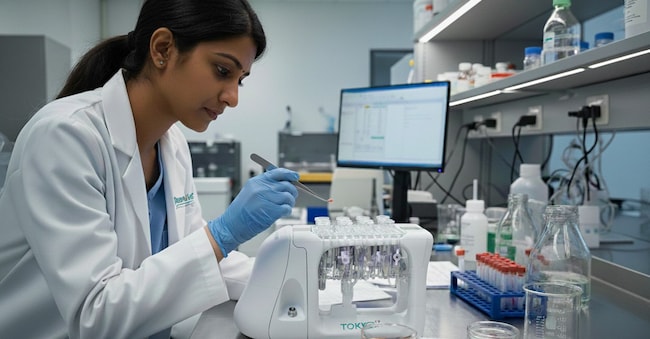
The first is a former small start-up (it has 10 employees) that operates, however, globally, from California to Japan, even with big pharma names, in a completely new market category and with a patented cutting-edge technology: the organ-on-chip Mivo, which makes it possible to recreate, in the laboratory, interconnected human organs and tissues that behave as in the real body and allow complex biological responses to be observed and predicted, without using animals. Founded in 2017 by CNR researchers Maurizio Aiello and Silvia Scaglione, it operates, for example, in pharmaceuticals - with giants such as Roche - in research, creating realistic disease models to discover new therapeutic targets, and in hospitals, such as the Bambin Gesù in Rome and the Gaslini in Genoa.
Artificial oesophagus created to test an anti-reflux product
Prodeco, on the other hand, is a family business, also with an international reach (and offices in Spain and Germany), in the field of natural medicine; it offers a portfolio of more than 150 products, including medical devices, cosmetics and food supplements. The partnership between the two companies aims, as mentioned above, to accelerate research into botanical products based on scientific evidence.
'With Prodeco,' Aiello explains, 'we developed the esophagus on chip, i.e., an artificial oesophagus that was used to test a phytotherapeutic product on gastro-oesophageal reflux. A disease that is normally contained through the use of proton pump inhibitors, i.e. drugs that reduce the production of acid in the stomach but which obviously produce side effects in the long run. Thanks to this gastro-oesophagus, we have scientifically demonstrated that, with a natural product made by Prodeco, we can achieve the same soothing effects as proton pump inhibitors'.
Agreement with Prodeco but also open to other companies
React4life, Aiello continues, 'is one of only a handful of companies in the world, not even 20, developing organ on chip technology. And we realised that this innovation, which we already use in the pharmaceutical field, could also have important implications for the nutraceutical and phytotherapeutic sector. This gave us the idea of joining forces and creating something, 100% Italian, that could not only be dominant in the market, but also extremely innovative. And we are keen to support Prodeco, but also all the other Italian companies in the nutraceutical sector, with the aim of producing scientific proof of the efficacy and actual functioning of these products, to be published in science journals, as was the case for Prodeco's anti-reflux drug. This will also help to mark the difference between botanicals and homeopathy, which is a completely different thing'.


