
Italian rice faces difficulties due to drought and subsidised imports from South-East Asia
The Risò event is taking place in Vercelli from today until Sunday. Production has started early due to the heat, but the area under cultivation is 1,200 hectares smaller than usual. Bobba (Ente Risi): strengthening supply chain contracts

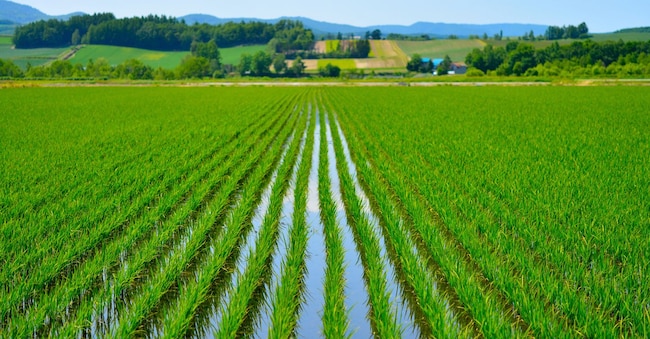
An industry up in arms. The sector on display at Risò, the international rice fair taking place from tomorrow until Sunday in Vercelli (with Prime Minister Giorgia Meloni also expected to attend), is facing difficulties. It is a sector caught between climate emergencies and a surge in imports from South-East Asian countries.
On the one hand, a crop that grows and matures in water is bound to suffer at the end of a hot, dry summer such as that of 2026. On the other hand, the threats to Italian rice (a premium product in which Italia is the European leader) also stem from imports from South-East Asia at reduced tariffs, which are driving down prices and causing difficulties for producers.
“This year, Italian rice has faced every possible challenge,” begins Natalia Bobba, president of Ente Risi. “The market has not been favourable, with farmers in some sectors finding themselves forced to sell below cost. On top of that, there were difficulties linked to the water shortage, which was managed as best as possible but still caused damage in some areas. The snow melted too early this year due to the high temperatures in May and June, which depleted the reserves that normally guarantee water for the rice paddies throughout the summer. Instead, due to the extremely high temperatures, many producers have had to bring forward the harvest. Harvesting has already begun in several areas, whereas it usually starts around 20 September.”
On the subject of climate change, a meeting organised by Ismea will be held during the Risò event, focusing on ‘Tools and prospects for risk prevention and management in the rice supply chain’, at which the new ‘simplified rice insurance policy’ will be presented.
However, the key issues will be those relating to the market, particularly the international market. “The thorn in the side of the sector,” continues the president of Ente Risi, “is imports subject to zero tariffs under the EBA scheme – in particular from Cambodia and Myanmar – which end up influencing our market. Of course, conditions may change. The sharp rise in freight costs could slow down those trade flows, as could the effects of El Niño, which is hampering our production but could also affect that of others. The issue of the European safeguard clause remains. This is a tool that can curb unrestricted imports. It was introduced by Brussels and was an important development for us; however, the threshold required to trigger it has been set too high: in fact, it requires a 45 per cent increase in imports from abroad (compared to the average). We had asked for it to be set at 20 per cent.”


