
Italian ship stopped in France: had malware on board. Latvian sailor accused of espionage
The vessel is owned by GNV, which initiated the investigation with Italian intelligence. Latvian sailor accused of criminal conspiracy for 'interests of a foreign power'
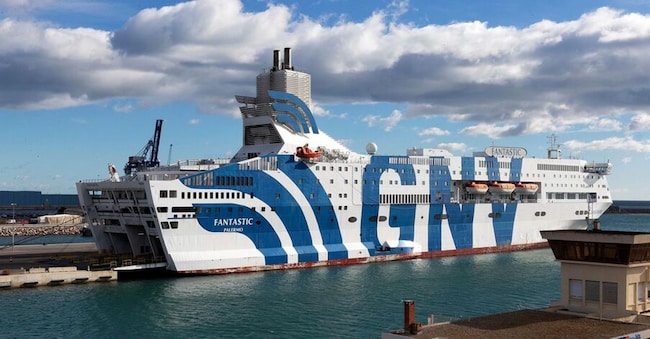
The 650 or so travellers who waited for hours on Friday 12 December to board the Fantastic - a ferry docked at the port of Sète in the south of France - could hardly have imagined that an international intrigue played out between Rome, Paris, Latvia and Russia lay behind the constant delays.
According to an exclusive published by Le Parisien, agents of the DGSI - the French internal intelligence service - boarded the ship and, after a discreet search, detained two people found to be in possession of a device equipped with a RAT-type malware ('Remote Access Tool'), capable of taking control of the Fantastic's navigation and piloting it remotely.
Loading...
The affair actually begins in Italy. The Fantastic is owned by the Genoese shipping company GNV; Italian intelligence agents, on the initiative of GNV itself, send their French colleagues an urgent briefing on two sailors, a 20-year-old Latvian recently hired and a Bulgarian citizen, both suspected of being two undercover spies for an unnamed foreign power.
The investigation by the DGSI led to the Bulgarian's release, while after two days of detention the Latvian was taken to Paris, where the public prosecutor's office formalised the charges today: 'Criminal conspiracy to pursue the interests of a foreign power', 'attempted intrusion into computer systems' and 'unreasonable possession of devices designed to interfere with automatic navigation systems', the documents state.
Although the DGSI has not yet made its suspicions public, and may well never do so, according to Le Parisien the investigation is once again turning towards Russia, which for months has been held responsible for a campaign of hybrid warfare spread throughout Europe and which in recent weeks has intensified in French waters and skies: in early December, the French navy had opened fire on drones of unknown origin detected near the Île Longue base in Brittany, the backbone of Paris's nuclear deterrence, while on 13 October - also in Brittany - they had spotted a broken-down Russian submarine, the Novorossiysk, which was then escorted out of French waters in cooperation with the Danish navy.


Brand connect
Loading...
