Industry

Italian sport: an era of success that went beyond football

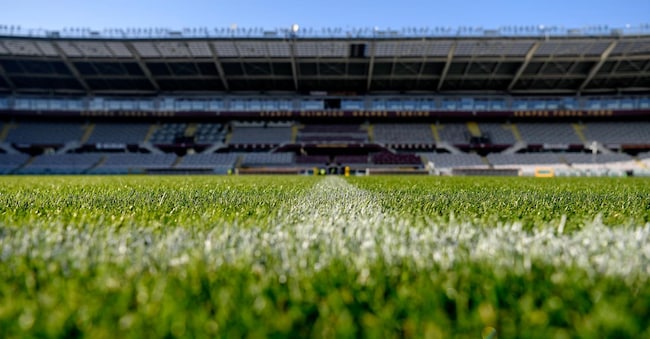
Foto LaPresse - Fabio Ferrari
26 Novembre 2020 Torino, Italia 
Sport
Calcio
ESCLUSIVA TORINO FC
Torino Fc vs Virtus Entella - Quarto turno di Coppa Italia 2020/2021 - Stadio Olimpico Grande Torino.
Nella foto:Stadio Olimpico Grande Torino senza pubblico causa emergenza covid-19

Photo LaPresse - Fabio Ferrari
November 26, 2020 Turin, Italy
sport
soccer
EXCLUSIVE TORINO FC
Torino Fc vs Virtus Entella - Round Fourth Italian Cup 2020/2021 - "Olimpico Grande Torino" stadium.
In the pic:"Olimpico Grande Torino" stadium. LAPRESSE

3' min read

Translated by AI
Versione italiana

3' min read

Translated by AI
Versione italiana

To understand the evolution of Italian sport over the last twenty years, we must start with an apparent paradox: whilst football – which has always been the driving force behind the national sport system – is going through one of the deepest crises in its history, Italian sport as a whole is enjoying increasingly successful seasons.

In 2006, Italia won the World Cup in Germany. It seemed to mark the start of a new phase of growth. In reality, it was the beginning of a slow decline. Outdated stadiums, fragmented governance, a loss of international competitiveness among clubs, and reduced investment in youth academies have gradually eroded the standing of Italian football, which nevertheless remains the most widely played sport in the country. Fortunately, other sports have begun to enjoy success, filling the void and initiating the transition from an almost monocultural model to a more diverse ecosystem.

Loading...

The Olympic results illustrate this transformation better than any analysis. At Beijing 2008, Italia finished with 27 medals; at London 2012 with 28; and at Rio 2016 with 28. Then came the quantum leap. At Tokyo 2021, the Italian team won a record-breaking 40 medals, a feat repeated at Paris 2024. At the same time, winter sports have also consolidated their competitiveness, rising from 10 medals at Turin 2006 to 17 at Beijing 2022, and on to 30 at Milan-Cortina.

Behind these successes lies a structure that is in many ways similar to that of the finest ‘Made in Italy’ products, based on industrial clusters: indeed, the national sport also thrives thanks to genuine ‘sports clusters’, even if these are not always geographically defined.

Tennis provides the most obvious example. Jannik Sinner’s rise to prominence stems from a system that, over the last twenty years, has invested in clubs, technical training and national programme development. The same applies to athletics, which has succeeded in building a system capable of producing Olympic and world champions in disciplines ranging from sprinting to high jump and race walking.

Fencing is perhaps Italia’s oldest and most established sporting discipline. For generations, it has continued to produce medallists thanks to a wealth of technical expertise handed down through the ages. Similarly, swimming – thanks to the growth of national training centres and local clubs – has become a breeding ground for finalists and medallists. Track cycling also provides a significant example. Long considered a niche sport, it has returned to the world’s elite thanks to targeted investment, technology and consistent planning. Not to mention volleyball, the team sport that best exemplifies Italian organisational excellence, in both the men’s and women’s competitions.

As is the case in the real economy, however, these districts are not evenly distributed across the peninsula. The ‘Sportivity Index’ compiled by *Il Sole 24 Ore* has, for twenty years now, shown a geographical pattern that largely mirrors that of economic development. The northern provinces (Trento, Trieste, Bergamo, Varese, Genoa, Bolzano, Treviso) and parts of central Italy (Florence, Parma, Livorno, Bologna, Macerata, Cagliari) consistently occupy the top positions thanks to a greater availability of sports facilities, sports clubs, participants and investment. Southern Italy, on the other hand, continues to suffer from a significant infrastructure deficit.

The issue of sports facilities is probably the main sticking point in Italian sport. For decades, the country has invested far too little in sports halls, swimming pools, athletics tracks and multi-purpose facilities, although in recent years things have been changing, thanks to the resources (admittedly too few) from the National Recovery and Resilience Plan (PNRR), the Milan-Cortina Winter Olympics and greater awareness on the part of local authorities. We are not yet witnessing a revolution, but a more coherent strategy is beginning to emerge. And it is no coincidence that results in international youth competitions are showing a sharp rise. The challenge for the coming years will be precisely this: to consolidate the current golden age by investing in the pathways that produce champions. Italia working as a unified system, making the most of widespread expertise, local areas, federations and sports schools, represents a winning model. This applies to the world of business too.

Copyright reserved ©
Loading...

Brand connect

Loading...

Newsletter

Notizie e approfondimenti sugli avvenimenti politici, economici e finanziari.

Iscriviti

Tutto mercato WEB