
Tourism: Italian visitors on the rise (+1.5 per cent) and more arrivals from Europe
A revival in domestic demand and a decline in non-EU visitors: 255 million visitor arrivals between June and August. A longer season: strong booking figures for September

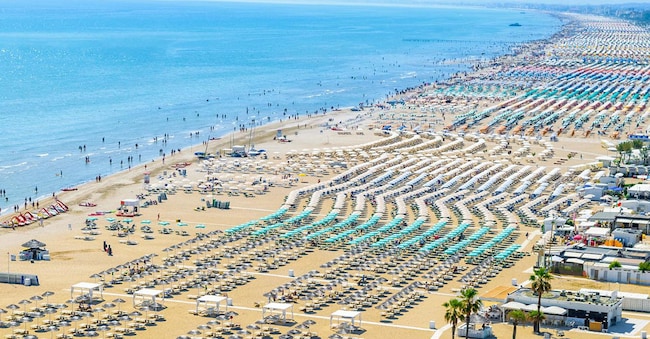
It is a summer of geopolitical instability: the conflict between the United States and Iran, which has reached a fragile truce, has left its mark on the balance of the long-haul holiday markets, slowing down tourist flows from the US to Italy in particular, following a year of growth in 2025, partly thanks to the Jubilee. However, this slowdown has been offset by the revival of the domestic market and demand from Europe. The result: the crucial season for the tourism sector will end on a positive note for 2026.
Meanwhile, it is already possible to take stock of the first half of the year, a period driven by a brilliant first quarter fuelled by the Milan-Cortina Winter Olympics, which offset the effects of the war: according to data from the Ministry of the Interior’s ‘Alloggiati Web’ system, arrivals between January and June rose by 4.3 per cent compared with the same period in 2025 (85.2 million). However, the impact of the war in the Middle East will not even dampen the peak tourist season: forecasts from the Centre for Tourism Studies for Assoturismo Confesercenti point to a 1.1 per cent increase in arrivals and a 1.3 per cent rise in overnight stays. These figures could improve with last-minute bookings. Domestic demand is on the rise (+1.5 per cent, around 121.3 million visitors), whilst the expected increase in international demand is more modest (+1.1 per cent, over 134.5 million estimated visitors).In absolute terms, tourist numbers in accommodation establishments between June and August will rise to over 61.9 million arrivals and around 255.8 million overnight stays. As regards international markets, European markets are leading the way, whilst long-haul markets are showing a slowdown or a decline in bookings. This is the case in the Middle East, with tourists from the Persian Gulf having, according to the Bank of Italia, fallen by 35 per cent in March, 60 per cent in April and 20 per cent in May. France, Germany and the Netherlands, by contrast, are recording strong growth.
The appeal of Italia is also evident from other indicators: according to data from the Ministry of Tourism, flight searches to our country between mid-June and mid-September rose by 26 per cent compared with the same period last year. Here too, international demand is predominantly European: the biggest increases are coming from neighbouring countries such as Poland (+76 per cent), Germany (+66 per cent) and Spain (+48 per cent). Furthermore, regarding flight bookings, analysis by Sojern, a travel marketing platform, reveals a trend towards a longer summer. Flight bookings to Italia from abroad rose by 8 per cent year-on-year in September (falling slightly to 7 per cent when domestic flights are included). This represents a faster rate of growth than in August. As for arrivals from abroad, Isnart forecasts indicate that in July and August, the proportion of international guests was at least 52 per cent, with an upward trend. In 2025, this figure reached 56 per cent, an all-time high.
“Italia remains the top destination of choice for visitors from all over the world. This achievement is the result of constant teamwork between the Government, businesses and industry stakeholders. We are proud of this and look to the future with optimism,” commented Minister Gianmarco Mazzi.
The summer of 2026 could therefore match the record figures of 2025. “Despite geopolitical tensions, the sector has shown good resilience and is currently experiencing sustained demand, particularly from international markets,” explains Elisabetta Fabri, president of Confindustria Alberghi. “ “Italia remains a highly attractive destination for foreign tourists, and the signs we are seeing allow us to look forward with confidence to the summer and, in particular, to September and October.”


