COP31

Soil, the climate’s forgotten ally: Italia is 9.2 million tonnes short of CO₂ absorbed

Restoring degraded land can help reduce emissions. At COP31 in Antalya, the report by Save Soil and the ‘4 per 1000’ initiative

5' min read

Translated by AI
Versione italiana

5' min read

Translated by AI
Versione italiana

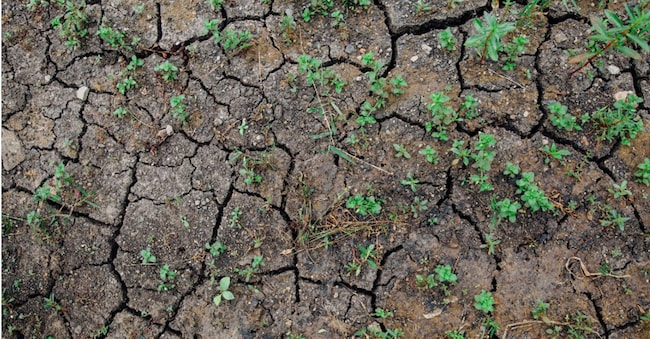
Beneath our feet, in the top metre of soil, there are around 2,822 gigatonnes of organic carbon. The carbon remains in the soil as long as the soil is healthy, if it is eroded, ploughed or left bare, some of it returns to the atmosphere in the form of carbon dioxide. Among the main causes of soil erosion is climate change, which, with rising temperatures and torrential rainfall, causes the earth to crumble and releases greenhouse gases stored underground. In short, the soil is not merely a victim of this global warming. If healthy, it can help to slow it down. This is the evidence on which the latest report by Save Soil and the ‘4 per 1000’ Initiative is based, ‘How Soil Can Save the Paris Agreement and More’, presented at COP31, the climate summit taking place in Antalya until 20 November.

The rates of soil erosion

At current rates of degradation, the report warns, soils could release up to 4.81 billion tonnes of CO₂ a year – around 96 billion tonnes over twenty years. This is an enormous quantity, exceeding the combined emissions of all the cars and vans on the planet. This figure alone would use up more than half of humanity’s remaining ‘carbon budget’ for limiting global warming to 1.5 degrees (estimated at around 170 billion tonnes). The report makes it clear that these are orders of magnitude rather than definitive forecasts, not least because some of these losses may already be accounted for in emissions from land-use change. However, the stakes could be even higher: recent mapping suggests that underground carbon reserves are as much as 45 per cent higher than previously estimated.

Loading...

According to the UN, up to 40 per cent of the world’s land is already degraded. Yet, according to an analysis by Save Soil, over 70 per cent of countries have not included soil restoration amongst the mitigation measures in their national climate plans (the NDCs).

Italia and the absorption deficit

The European Union’s climate plan relies on its own territory – including forests, farmland, pastures and wetlands – to absorb 310 million tonnes of CO₂ per year by 2030. However, projections suggest this figure will only reach 183 million, partly because the contribution from forests is declining. The European Environment Agency warns that, overall, land in the EU is losing carbon rather than storing it. Moreover, according to the European Commission, 60–70 per cent of European soils are degraded, to the extent that drained peatlands alone emit around 108 million tonnes of CO₂ every year.

For Italia, European legislation sets a target of 35.8 million tonnes of CO₂ absorbed per year by 2030. However, according to the research organisations Ecologic and NewClimate, the national plans leave a shortfall of 9.2 million tonnes per year. This shortfall reflects the condition of our soil: according to ISPRA, 28 per cent of Italia’s territory already shows signs of degradation. This summer, amid heat and drought, Coldiretti reported maize losses of over 30 per cent, and as high as 70 per cent in some areas of Piedmont and Lombardy. This is no coincidence: the report points out that, in Europe in 2026, the greatest damage was concentrated on crops reliant solely on rainfall. Degraded soil, in fact, absorbs very little water and loses it rapidly through evaporation. Conversely, every additional percentage point of organic matter enables a single hectare to retain up to 250,000 litres more water.

Solutions: inexpensive but not immediate

The solution to reverse this trend and restore the health of the land already exists. The practices outlined are those of ‘regenerative’ agriculture: cover crops and crop rotations, which keep roots alive in the soil; reduced tillage, which limits carbon emissions; agroforestry, with trees planted amongst crops. Unlike complex technologies for capturing CO₂ from the air, the report explains, these solutions can already be implemented at low cost and are capable of producing tangible results within a single growing season. According to a 2023 estimate by Save Soil, the restoration of degraded agricultural soils could contribute up to 27 per cent of the reductions needed to stay below 2 degrees.

However, the transition is not immediate. According to Rico Rau, lead author of the report and Policy Adviser at Save Soil Movement, ‘it takes a European farmer between three and five years for the economic and soil benefits to become established, with the break-even point generally around the third year’. The initial costs depend on the practices chosen: “cover crops and organic fertilisation require minimal investment, averaging between zero and 150 euros per hectare”. Furthermore, the timeframe “varies depending on soil type, climate, the degree of degradation and the crops grown, and also differs from one region to another”.

Up until the third year, ‘yields may fall or fluctuate whilst the soil’s biological balance stabilises’. For this reason, he explains, ‘support is needed to facilitate the transition, such as yield compensation funds, guarantees and public-private contributions’. These measures are ‘necessary to cover losses before the reduction in expenditure on fuel, fertilisers and pesticides finally translates into profitability’.

Resources for the transition

However, there are few resources available to support this transition. The Italian CAP plan provides for an eco-scheme worth around 163 million euros a year for crop rotations aimed at carbon sequestration, and supports pilot projects such as ‘Life agriCOlture’. But this amounts to just 2 per cent of a total budget of 35–37 billion, in a context where Italia has yet to set a national target for soil carbon. Globally, less than 2 per cent of climate finance is allocated to agriculture.

Save Soil is calling for the next CAP (2028–2034) to be linked to the new EU law on soil monitoring, which comes into force on 16 December 2025, so as to reward farmers for measurable improvements. The EU directive already requires the monitoring of soil condition, including organic carbon, but does not set binding targets.

Loading...

According to Rico Rau, the future CAP ‘must move away from rigid, one-size-fits-all compliance rules in favour of a more flexible, results-oriented framework, given the specific nature of individual transition projects, which vary according to region, climate, rate of degradation and crops’. It is therefore necessary to link “financial incentives directly to verified results rather than merely subsidising basic practices”. Furthermore, ‘dedicated funding streams for the transition to cover the costs of machinery and analyses, a fairer distribution of aid that protects small and mixed farms, and reliable monitoring tools, so that those who regenerate the land receive stable rewards over time’.

Copyright reserved ©
Loading...

Brand connect

Loading...

Newsletter

Notizie e approfondimenti sugli avvenimenti politici, economici e finanziari.

Iscriviti