
The hidden treasure of biogas: 15 billion cubic metres by 2050 for Italia
A study by Snam-Cib identifies significant potential for development that could contribute to our country’s decarbonisation and energy independence

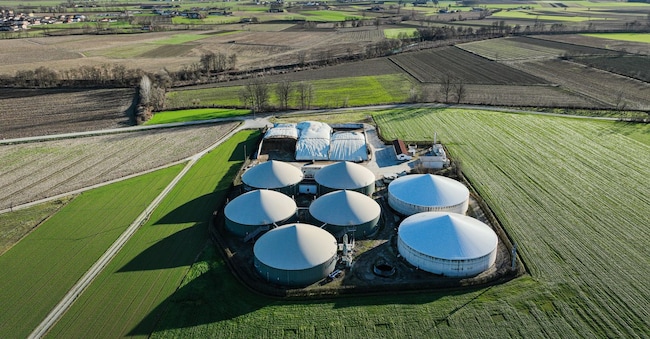
A country that is more energy-independent, rooted in its local areas and driven by a circular economy fuelled by agriculture and technology, with the potential for lower energy bills. This is the snapshot – or perhaps the vision – of 2050 presented in the official report ‘The potential of biomethane in Italian provinces’, drawn up jointly by Snam and the CIB (Italian Biogas Consortium). The study maps out the green future of the Italian peninsula, revealing an ambitious yet technically achievable target: by mid-century, Italia will be capable of producing as much as 15.3 billion cubic metres of biomethane available for the market. This is an impressive figure, which not only represents the peak of the national supply chain’s development but also revises upwards the estimates of previous major European energy scenarios (such as the ‘Gas for Climate 2022’ study, which put the figure at 13.6 billion). Achieving this target would mean covering a strategic portion of the country’s gas requirements with a fully renewable, programmable and locally sourced resource.
Moreover, whilst awareness of the urgent need for decarbonisation has grown in Europe and Italia in recent years, thanks to the Green Deal, geopolitical tensions and recent energy crises have highlighted the need to strengthen energy security through greater diversification of sources and a reduction in dependence on imports. In this context, biomethane represents a strategic resource for the national and European energy systems, capable of combining energy security, environmental sustainability, industrial competitiveness and regional development. For a country like Italia — which produces less than 5 per cent of the gas it consumes — the development of domestic production of renewable gases is, in fact, a key lever for strengthening energy self-sufficiency and accelerating the path to decarbonisation. All this whilst encouraging figures are emerging from Europe: installed production capacity on the Old Continent has exceeded 8 billion cubic metres for the first time, reaching 8.2 billion at the end of the second quarter of 2026, representing an increase of over 1 billion cubic metres (+17 per cent) compared with 2025.
Areas of application
But in which sectors can biomethane be used, both now and in the future? It can certainly replace natural gas in the various applications where it is currently used. First and foremost, therefore, the ‘hard-to-abate’ sectors, particularly in industrial sectors that cannot access electrification-based solutions and must therefore necessarily rely on green fuels. Electricity can find opportunities for adoption in low-temperature sectors, where requirements below 200 degrees are compatible with heat pumps and heat recovery. High-temperature sectors account for over 70–80 per cent of consumption above 500 degrees and represent around 60 per cent of industrial energy. And then there is the residential sector, where biomethane represents an important resource that can be fully utilised immediately in existing appliances and is capable of reducing emissions in this sector.
According to some studies, of the more than 16 million homes in the lowest energy efficiency classes (F–G), fewer than 6 million could technically accommodate an electric heat pump. When economic and social factors are also taken into account, the number of homes falls to fewer than 2 million. An analysis of the various possible solutions for decarbonising residential energy consumption has shown that replacing a traditional boiler with a new-generation boiler is the most efficient solution and, when fuelled by renewable gas, is also environmentally sustainable.
Experts therefore emphasise that, given the potential of biomethane, it is essential to consolidate and institutionalise the measures supporting the energy transition, moving beyond the emergency phase of the PNRR.


