
Italy challenges Norway: how a small nation became a global sports powerhouse
Tonight at the San Siro at 20.45 the decisive challenge against the Scandinavian national team, symbol of a country's sporting excellence

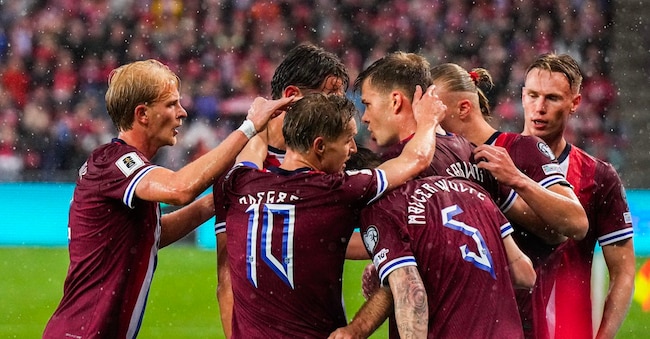
After Bodø Glimt, who in April had eliminated Lazio from the Europa League in the quarter-finals by fielding almost all native players, Valerenga Oslo's all-Scandinavian players also took to the field on Tuesday, defeating Roma in an away match on the third day of the Champions' League. On Sunday at the San Siro it is the turn of Rino Gattuso's Azzurri: heavily defeated in June, they are called upon to regain at least their sporting dignity, waiting for the play-offs to win the coveted qualification for the 2026 North American World Cup. Nor is football the most popular sport in Norway.
Population of legendary athletes
Mind you, it is hard to speak of surprise when it comes to the nation that with less than 6 million inhabitants - a tenth of Italy - has won 405 medals, 148 of them gold, in 24 editions of the Winter Olympics. Numbers that earned Norway first place in the all-time medals table, ahead of the USA (330), and that correspond to the exploits of legendary athletes such as three-time figure skating champion Sonja Henie, cross-country skiers Marit Bjørgen (15 medals, including eight gold, from 2002-18) and Bjørn Dæhlie (12 and 8 in 1992-98), or biathletes Ole Einar Bjørndalen (13 and 8 in 1994-2014) and Johannes Thingnes Bø. And it is easy to predict an excellent performance at Milan Cortina 2026 - after all, at the last Olympic event in 2022 Norway set a new all-time record for golds in one edition (16), accompanying that of the overall number of podiums (39 in 2018).
Not only winter sports
What is recent and unexpected is seeing so many Norwegian athletes excel in summer disciplines. They range from Jakob Ingebrigtsen and Karsten Warholm in athletics (winners in the 1.500 and men's 400 metres hurdles in Paris 2024) to Premier League stars Erling Haaland (twice top scorer) and Martin Odegaard, from footballers Ada Hegerberg (six Champions League titles to her credit with the French OL) and Caroline Graham Hansen to tennis player Casper Ruud (second in the world in September 2022) and golfer Viktor Hovland (member of the European team that won the Ryder Cup 2025). Not forgetting the Håndballjentene, the reigning Olympic and European champion women's handball team, or, in a non-Olympic discipline, chess player Magnus Carlsen, the best of all time according to the Fédération internationale des échecs.
What explains this almost irresistible rise, beyond the possible randomness of the simultaneous appearance of so many natural talents?
Friluftsliv and money
There is a cultural element, symbolised by the Ibsenian concept of the friluftsliv, the life in the open air, that has progressively overcome the purely individualistic dimension to acquire a collective one, of sharing experiences and best practices. This kind of mutual growth began in the 1980s, when Norway was in a sporting crisis, and coincided with the preparation for the 1994 Lillehammer Winter Games.


