
Italia third in the world in supercomputing, but there are challenges: here are the challenges
Italia is third in the world in terms of declared computational power, behind the United States and Japan, and at the end of the year it could be second, with Germany close behind and China as the great unknown, because it does not disclose its numbers

Key points
- A future already present
- Ambassador Sessa: technological transformation changes balance of power
- Pansa (Sparkle): Italia runs for quantum computing, but we must develop technologies to not be slaves
- "Geopolitical Mail"
- "Italia is second to none, but buys out"
- Ubertini (Cineca): the ability to turn innovation into products and services is lacking
- "One billion euro infrastructure investment"
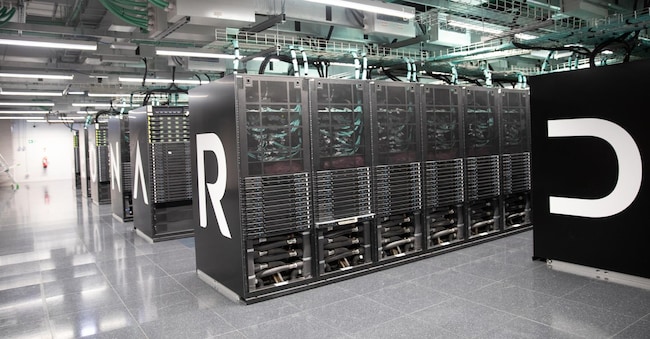
- The Leonardo supercomputer
- The Italian (and European) challenge
- Emanuele (Sioi): from technological sovereignty to strategic autonomy
- Calarco (Unibo): "Italia is the European leader in quantum communications"
- The transition from the first to the second quantum revolution
- Brasioli (Maeci): 'Diplomacy becomes a weapon of technological sovereignty'
- Farnesina's strategy
Italia already has one foot in the future. It is third in the world in supercomputing, in terms of computational power but, if this is the good news, the slightly less good news is that it must take the road to strategic autonomy. Put another way, it should develop technologies in order not to be a slave. It lacks the ability to transform innovation into products and services.
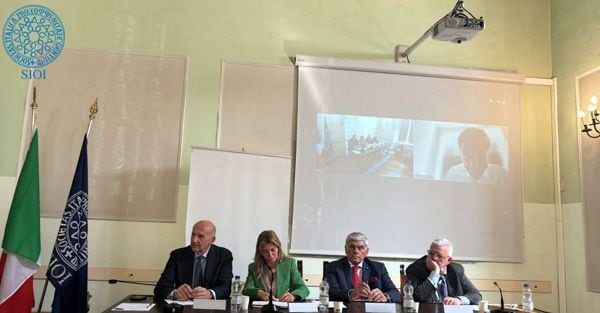
This is the picture that emerged from the conference organised by Sioi on: 'The future already here: transformative technologies and digital sovereignty. Data Centres and Quantum Revolution, new challenges for Italia and Europe'. The meeting took place in Rome on Wednesday 29 April, at the headquarters of the Italian Society for International Organisation.
A future already present
At the centre of the debate is a future that looks like science fiction, but is already topical. Quantum computers in Bologna that perform in a hundred seconds what a traditional supercomputer would calculate in a million years. Autonomous robots, brain-computer interfaces, nuclear fusion at our fingertips. And an artificial intelligence that, within a decade, will be able to think like a human being, only 'infinitely more powerful'. In short, there is no shortage of ideas.
The meeting was addressed by Alessandro Pansa, president of Sparkle, Francesco Ubertini, president of Cineca, Marco Emanuele, senior researcher SIOI, Tommaso Calarco, professor of Physics and Astronomy at the University of Bologna, and Diego Brasioli, deputy director general of the DGCT and central director for cyber diplomacy at MAECI (Ministry of Foreign Affairs and International Cooperation). It was an opportunity to chart Italia's course. With a common message: our country is in the running, it has the cards to compete. And the game is still to be played.
Ambassador Sessa: technological transformation changes balance of power
Ambassador Riccardo Sessa, President of the Italian Society for International Organisation, opened the proceedings. He opened them by clarifying from the outset where we stand. "We are immersed in a moment of profound technological transformation that affects our identity, our everyday life, but also, taking into account where we are, international relations, changing the balance of power, war and its instruments, and also peace-building mechanisms," he said.

