
It's back to school, this year AI is also in the chair
Start of an experimental project in 4 regions and 15 institutes. Minister Valditara: a useful tool for personalising teaching and unbureaucratising
by School Editorial Board
 Aggiungi Il Sole 24 Ore
ai preferiti su Google
2' min read
2' min read
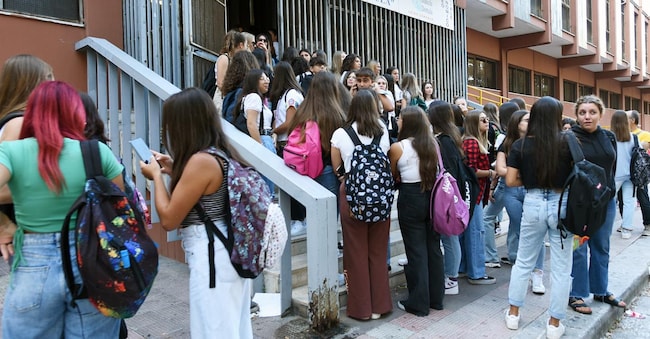
Having put aside holiday books and beach towels, in 12 regions, from Trentino to Sardinia, the first bell will ring this week for the new school year, which promises to be full of novelties, including artificial intelligence and the debut of the new and innovative technical chain.
The calendar
Opening the race to the desks today, Monday 9 September, are the pupils of the Autonomous Province of Trento. Then on the 11th it will be the turn of Friuli Venezia Giulia, Marche, Piedmont, Umbria, Valle d'Aosta and Veneto. And on the 12th to Campania, Lombardy, Molise, Sicily and Sardinia. While the first to note down homework on the pages of their diaries - which will once again be paper-based - were the pupils of the Autonomous Province of Bolzano, on 5 September. The last to return to class will instead be the students of Abruzzo, Basilicata, Calabria, Emilia-Romagna, Lazio, Liguria, Puglia and Tuscany, on 16 September.
AI arrives with an experimental project
This year, therefore, there will be numerous innovations for girls and boys. Starting with the extra support in the teacher's desk, for now, in four regions where artificial intelligence will be experimented "for the personalisation of teaching": Calabria, Lazio, Tuscany and Lombardy, for a total of 15 classes involved. Artificial intelligence that if 'properly guided by the teacher', according to the Minister for Education and Merit, Giuseppe Valditara, can 'play a significant role. If the model works we plan to extend it further,' he added, illustrating the innovation at the Cernobbio Forum.
Central figure of the teacher
.Last July, during a conference at Palazzo San Macuto, the minister had already explained the aim of this experiment, which is to "assess the effectiveness of Ai assistants in improving student performance", and also to reduce "the administrative workload for teachers, thus enabling them to concentrate more on teaching and on their relationship, including a personal one, with individual students", as well as "greater inclusion for those with special educational needs". A tool, therefore, 'of support while always keeping the teacher at the centre'.
Brand connect


Newsletter Scuola+
La newsletter premium dedicata al mondo della scuola con approfondimenti normativi, analisi e guide operative
Abbonati