
AI is convenient to use, but privacy is the price we pay
Glasses, brooches, rings and other small wearable devices bring AI into our everyday actions. It’s all much more convenient, but what about those who don’t want to be filmed or monitored?

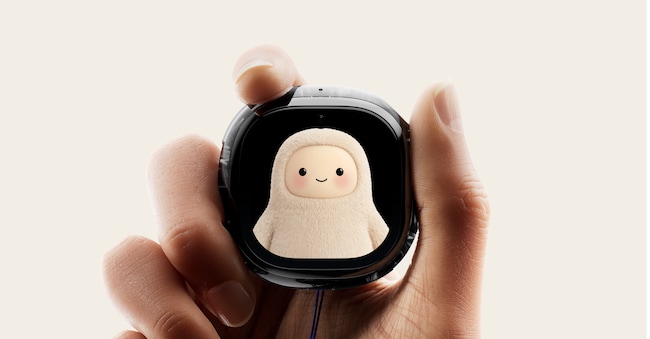
Following the initial failed experiments such as the Rabbit R1 and the Humane AI Pin – which were probably launched too soon and failed to win over the market – artificial intelligence is beginning to shift from our smartphone-filled pockets to the clothes we wear: AI is literally climbing all over us.
Press a button on the handle and the modern genie of the lamp appears
Whilst we wait for Samsung and Google to provide more details this autumn on their wearable AI, Meta is leading the way, having been producing smart glasses in partnership with Ray-Ban and Oakley for some time now. The simplest new offering is the Ray-Ban Meta Audio. They have neither a camera nor a display: they look like ordinary glasses, but the arms conceal open-ear speakers and microphones. They allow you to listen to music and podcasts, answer phone calls and, above all, talk to Meta AI without having to pick up your phone. It is perhaps the least spectacular version of AI glasses, but also the one easiest to imagine in everyday life: you can talk to the AI whilst walking, without constantly having a camera pointed at the people you meet.
When glasses start to see
The third-generation Ray-Ban Meta, on the other hand, are something else entirely: they feature a 12-megapixel camera and, most importantly, are set to be the first to receive Muse, the new personal AI assistant. The difference compared to a chatbot is significant: the assistant can see what the wearer sees and use this information as context. You can look at a supermarket shelf and ask which product is best for a vegan snack or the most refreshing drink if you don’t like fizzy drinks. Furthermore, Muse isn’t just designed for quick answers, as it’s capable of carrying out tasks in the background. We can ask it to carry out complex searches (such as comparing flights or compiling rankings) and it will work quietly in the background, returning with the result once it has finished.
Plaud: it just takes notes, but with AI
Not all wearable AIs aim to become universal assistants. Plaud NotePin and the more recent NotePin S essentially do just one thing: they take notes. They can be clipped onto clothing and, when you press the device, they record a conversation which is then converted by the AI into transcripts or summaries and saved as notes on your smartphone. Simple, extremely useful and with minimal privacy risks: Plaud also states that it does not use recordings, transcripts or summaries to train its AI models.
Scople wants to monitor our lives
Far more ambitious – and potentially controversial – is Scople, a device developed by the start-up Moxiebyte. It is a small wearable device equipped with a camera and computer vision technology that observes what is happening around us and turns it into data about our lives.

