
How lovely it is to lose one’s way whilst looking for mushrooms
Amidst fir and beech woods, following in his father’s footsteps and performing acts of ancient wisdom: the quest – writes Matteo Righetto – is a path towards contemplation

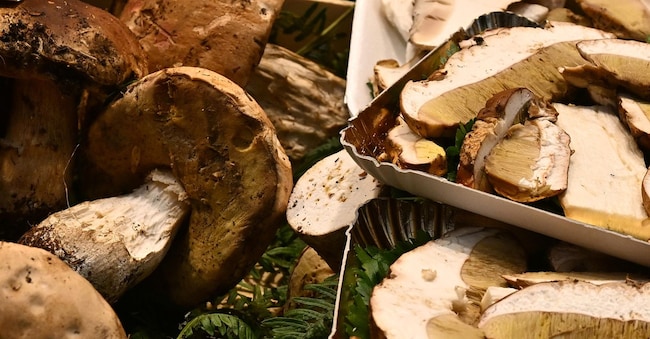
Returning to the mountains to return home. Matteo Righetto, philosopher of the peaks and champion of slow living, once again—as in The Call of the Mountains—blends these two worlds. He understands their sacredness and power, and even mushrooms become Ariadne’s thread, allowing one to lose oneself and awaken to wonder. Thus, Zen and the Art of Mushroom Hunting ‘does not teach how to find them, but how to be present whilst searching for them. Because the search is the highest form of living’.
For millions of years – roughly 99 per cent of our existence on Earth – humankind has lived by hunting and gathering, by necessity and prayer: something ancestral within each of us. There is nothing more ancient or remote in our DNA: gathering to survive, and ‘with this book I hope to help you understand that seeking does not necessarily mean finding and gathering, but remembering who we were and understanding who we are’. Righetto’s writing always returns to this, stark and luminous like dolomite rock: reaching the innermost self and foraging for mushrooms is a simple pastime that takes us right back there. The chapters follow one another like those in a handbook – who to go with, where to look, how to cook the mushrooms – but they are paths to drawing closer to the Earth’s pulse. And Righetto walks along these trails, which are a philosophy of life, also present in his recent film Per silenzio e vento, directed by Marco Zuin (in cinemas on 12, 13 and 14 October 2026): it is in the hands of every person to save the mountains by rediscovering the poetry of selvaticus and the sacredness of Nature, in the hope of saving ourselves.
Going mushroom-picking means, only incidentally, coming home with a basket of chanterelles or porcini. It is everything else that interests the writer. Gathering means setting out to accumulate experiences, encounters and moments of wonder, because ‘going mushroom-picking is a form of sacred remembrance: a humble, secular rite of reconciliation between our biological past and our corrupt, artificial present. Going mushroom-picking means searching for oneself, telling the Earth that we have not forgotten it, but it also means feeling alive because we still know how to seek’. We set off in the morning; the woodland welcomes us – the song of the yellowhammer, the shape of the stone, the smell of rain, the softness of the moss. We shed our routines and habits. Thus, stripped bare, it is easier to listen, to be free to seek. Mushrooms, of course, but above all ourselves; being able to listen to ourselves – a subversive act that frightens us and which we almost avoid. We always have too many other things to do. Mushrooms are like Pollicino’s pebbles, leading to the soul, to the heart of nature. And what are we, if not pure nature?
One step at a time, through fir and beech woods, perhaps following in the footsteps of a father, a grandfather or a friend: mushrooms embody ancient wisdom, shaped by the seasons, cycles, mistakes and memory, always capable of forging connections and revealing the semantic and ontological distinction between ‘seekers-gatherers’ on the one hand and ‘mushroom hunters’ on the other: ‘The woodland has become an inner mirror: the more I search, the less I find; the less I search, the more the things around me reveal themselves. And it is in the woodland that the most important questions arise spontaneously within me, those that pin me down, shaking and reawakening my consciousness’. To try to breathe more slowly and allow oneself to be surprised: ‘The mushroom is not an object; it is an encounter. It comes into being when you stop wanting it; it reveals itself when you no longer demand it. It is like a clear thought that comes only when you stop thinking.’ Zen would put it this way: ‘Seek without desiring to find.’ Righetto crafts haiku of the woodland, with a simplicity that lays bare the truth. After reading these pages, you will never again be able to see a mushroom as merely a mushroom.
Time expands, and everything is contained within it: ‘Every day in the woods is a lesson in the presence of presence: even the most unproductive day becomes a form of the fullness of Time’, to be savoured, held onto, and filled with meaning and the senses. Spotting a mushroom is a moment of grace, which ‘simply arrives when we are ready to recognise it’. Just like in life. After all, Righetto writes about mushrooms, but simply replace the word ‘mushrooms’ with ‘life’ and you’ll find lessons on how to be better, how to breathe slowly, how to have faith and how to find a contemplative dimension – one that often frightens us.


