
It’s not just Hormuz: following Saudi Arabia’s attack on the Houthis, there are also risks for Bab el-Mandeb
On 13 July 2026, Saudi Arabia carried out an air strike on the airport in Sana’a, the capital of Yemen, with the aim of preventing an Iranian flight carrying the Houthi delegation – which was returning from the funeral of Iran’s former Supreme Leader Ali Khamenei – from landing

Key points
The risk is that, ultimately, international trade will have to contend not only with the closure of the Strait of Hormuz, a strategic chokepoint for around a fifth of the world’s oil flows, but also with that of Bab el-Mandeb. Should this scenario come to pass, Europe – and therefore Italia as well – would find itself deprived of two strategic supply routes.
The Strait of Bab el-Mandeb is situated in a strategic geographical position between north-eastern Africa and the Arabian Peninsula. It is one of the world’s most important commercial waterways (and an oil route), as it is the only passage for all vessels travelling between the Indian Ocean and the Mediterranean Sea via the Suez Canal.
The straits of Bab el-Mandeb and Hormuz encircle the Arabian Peninsula and represent the most critical ‘lifelines’ for global maritime and energy trade. As shown on the map of the world’s main chokepoints, a double blockade would bring all trade between East and West to a standstill.
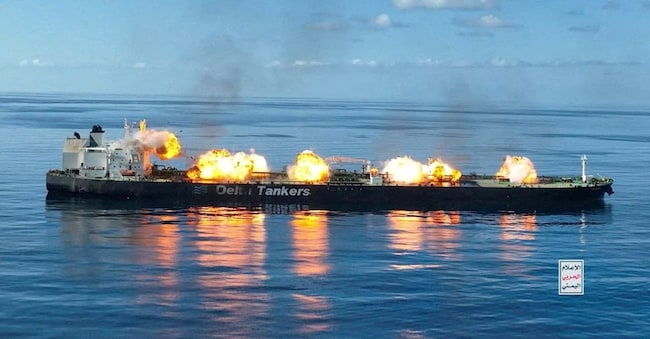
As for Hormuz, on Thursday 16 July the United States launched attacks against Iran for the fifth consecutive day, following on from the previous night’s raids which had struck an oil tanker near Iran’s main export terminal. Meanwhile, Reuters reported that Tehran had ordered Yemen’s Houthi rebels to block Bab el-Mandeb — a key passageway to the Red Sea and a vital artery for Saudi Arabia’s oil exports — should Iran’s energy infrastructure come under attack. A two-pronged squeeze is thus taking shape.
The price of crude oil has risen to just below last month’s highs, regaining ground following the fall of around 30 per cent recorded in the second quarter.


