

Un Paese sempre più vecchio e sempre più ignorante
di Francesco Billari

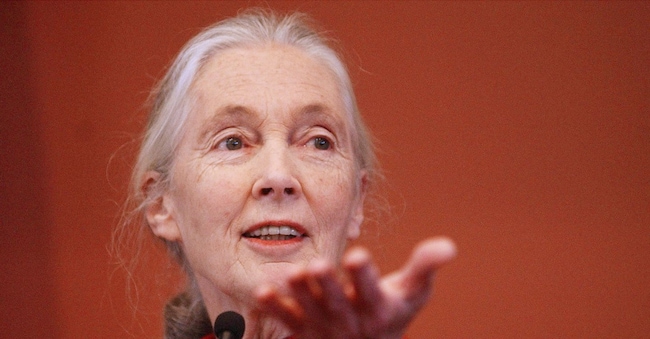
The famous British primatologist, ethologist and activist Jane Goodall, known internationally as "the woman who talked to chimpanzees" and as "the mother" of modern ethology, the science that studies animal behaviour, died at the age of 91, of natural causes, on the morning of Wednesday 1 October, while she was in California, on a stop on her last US lecture tour. Announcing her passing was the Jane Goodall Institute, founded by her in 1977 and now active in 25 countries, including Italy. With her passing, the world loses one of the most influential figures of the second half of the 20th century in science and the environment, famous for her fight against the extinction of chimpanzees. A woman who, armed with binoculars, notebook and uncommon patience, revolutionised our understanding of the animal world and our own place in nature. It was 1960 when a young English woman, with no academic qualifications in zoology, arrived in Gombe Stream National Park in Tanzania. Jane was 26 years old, a childhood dream cultivated by reading Tarzan and Doctor Dolittle, and the unwavering encouragement of her mother Vanne, who accompanied her on her first expedition to secure permission from the colonial authorities. There, in the middle of the African jungle, Goodall began to observe a community of chimpanzees at close quarters. He did not use numbers to identify them, but names: Fifi, David Greybeard, Goliath. He treated them as individuals, with emotions, characters and stories. A practice then heretical in the academic world, where objectivity was also measured by impersonality.
The scientific world was initially sceptical, but could not ignore the magnitude of her findings for long. Jane showed that chimpanzees use tools - twigs modified to 'catch' termites -, hunt in groups, communicate with affectionate gestures but can also be aggressive, even lethal. "We are not as different as we thought," he repeated. And this truth changed anthropology, ethology and the very philosophy of man forever. Over the years, Goodall's work changed from scientific observation to a civic mission. The 'Understanding Chimpanzees' conference in 1986 was a turning point for her. Faced with disturbing data on deforestation and illegal trade, Jane realised that she could no longer remain a spectator. She then founded concrete conservation projects: the Jane Goodall Institute (1977), the environmental education programme Roots & Shoots (1991), the sanctuary for orphaned chimpanzees Tchimpounga in Congo (1992), and the Tacare initiative for reforestation in Tanzania. With a pioneering vision, Goodall has always placed local communities at the centre of environmental solutions.
For decades she travelled the world tirelessly, speaking to students, heads of state and multinational corporations, always with the same calm authority and that slight English accent that has become iconic. Even in old age, Jane never stopped: at 85, she was still giving dozens of lectures a year. Her voice spoke for the Earth. She denounced factory farming, the abuse of animal experimentation, savage deforestation. She was a staunch vegetarian and animal rights activist, often criticising the hypocrisy of those who 'love animals' but consume products derived from cruel systems. During the Covid-19 pandemic, Goodall pointed out that the health emergency was also a result of our bad relationship with nature: 'We have despised the natural world,' she said. "We have created the perfect environment for the transmission of viruses from animals to humans."
Alongside activism, Jane has never stopped writing and narrating. Her autobiographical work 'In the Shadow of Man' is a classic of scientific literature, also translated in Italy as 'L'ombra dell'uomo' (Orme Editori, 2012). She has published more than thirty books, many of them dedicated to young people. In 2022, Mattel dedicated a Barbie in her honour - the first in recycled plastic - dressed in a khaki shirt, shorts, notebook and binoculars. A symbolic gesture to inspire new generations of little girls to become scientists, explorers, activists.
Among the many honours she has received, Jane Goodall was made a Dame of the British Empire in 2003, a United Nations Messenger of Peace in 2002, and received the Presidential Medal of Freedom in the United States. In Italy, she was awarded the title of Grande Ufficiale dell'Ordine al Merito della Repubblica in 2011. Over time, she has become a pop icon, a symbol of the union between science and conscience, between empathy and rigour. But she never lost her simplicity: the simplicity with which she would sit silently for hours in the forest, waiting for a chimpanzee to decide to trust her. Jane Goodall believed in change. Despite everything, she remained optimistic. 'Yes, the planet is in danger. But we still have time,' she said. "Every day we have a choice: contribute to the destruction or regeneration of the world."

