
Japan launches $140 billion stimulus package to support the economy
Ishiba, for years a critic of Abenomics, is about to launch measures to support wages, distribute resources to poorer households and finance investments in strategic sectors

2' min read
2' min read
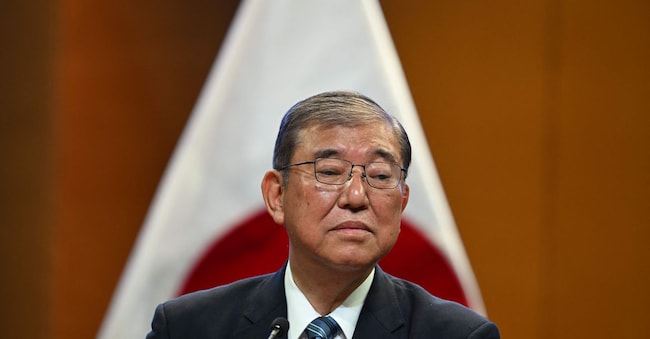
Japanese Prime Minister Shigeru Ishiba is preparing to announce a USD 140 billion stimulus package for the economy intended, among other things, to finally dispel the feeling that, under his leadership, the country's economic policy is set to change.
The measures - expected to be approved as early as Friday - aim to support wages, distribute resources to poorer households, and finance investments in strategic sectors such as semiconductors and artificial intelligence. Initiatives not without solid economic and political justification, but in stark contrast to the rhetoric exhibited by Ishiba over the years and which recently led him to win - as a candidate of discontinuity with the recent past - the leadership contest to take over the leadership of the Liberal Democratic Party (Ldp) and the country.
The current prime minister has for years been one of the harshest critics of the doctrine labelled Abenomics, based among other things on expansive fiscal and monetary policies. As soon as he became prime minister, Ishiba contradicted himself a first time by effectively asking the Bank of Japan to freeze the rate hike policy it had just undertaken. Now, he seems to be preparing to do so a second time, increasing government spending compared to what his predecessor Fumio Kishida did, despite a less worrying macroeconomic picture.
In the PM's partial exoneration, it must be said that, after last October's elections in which his coalition lost its majority in the lower house of parliament, making compromises, both within and outside his party, became indispensable to avert the executive's downfall.
A foretaste of what awaits Ishiba in the coming months may already be contained in the text to be approved on Friday, where a reference to the need to raise the level below which taxpayers do not have to pay taxes should appear.


