
Japan, government: urgent need to change the law on imperial succession
The throne will probably remain a male prerogative, despite polls saying that an empress would be well accepted by the Japanese
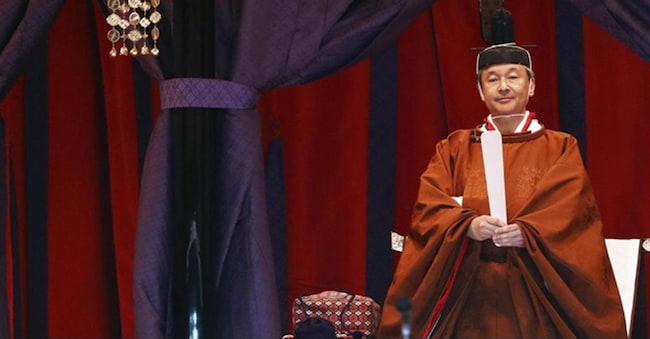
The Japanese government today reiterated the need to urgently address the issue of imperial succession, considered a key issue for the state in light of the shortage of male family members. However, the proposals on the table do not include the possibility of female succession, which is widely accepted in Japanese society, judging by polls on the subject.
Chief of Cabinet Yoshimasa Kihara, who serves as the executive's spokesman, stated that the stability of the line of succession and the preservation of the number of members of the imperial family 'are essential issues that cannot be postponed', expressing the hope that Parliament would make progress in the debate.
Loading...
The issue remained unresolved in the last regular session of the Diet, when representatives of the parties and parliamentary groups had started consultations under the leadership of the presidents of the two chambers without being able to reach a synthesis. The main problem concerns the gradual decrease in the number of members of the imperial house, which is also due to the law that provides for princesses who marry ordinary citizens to leave office. A condition, the latter, in fact necessary, given the shortage of male members of the imperial family.
Currently, besides Emperor Naruhito (65), the male members are Crown Prince (Crown Prince) Fumihito (60), Prince Masahito (90) and Prince Hisahito (19). The latter, although not formally the crown prince, will probably be the next emperor. The Imperial Household Law does not provide for female succession, which was ruled out by the Meiji Restoration (1868), whereas historically there have been eight reigning empresses.
In the recent coalition agreement between the Liberal Democratic Party and the Nippon Ishin no Kai (Japanese Innovation Party), the possibility of adopting male descendants in the patrilineal line of the former collateral branches abolished after the Second World War into the imperial family was indicated as the 'first option', with the aim of amending the Imperial Household Law by the end of the year.


Brand connect
Loading...
