
Japan, magnitude 7.1 earthquake: 10 people missing in a shopping centre. One fatality
The hypocentre, at a depth of 10 kilometres, was in Kumamoto Prefecture, south-west of the archipelago. A tsunami warning has been issued. An evacuation order has been issued for 300,000 people.

Key points
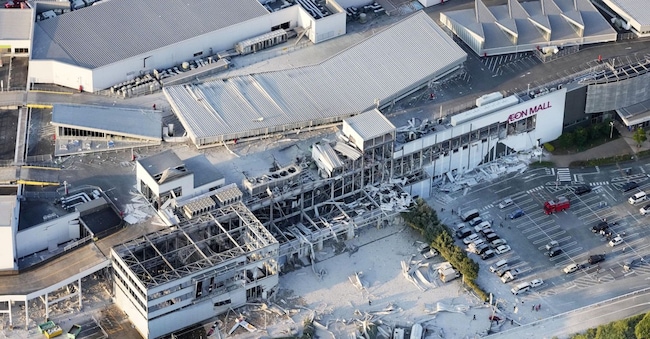
An earthquake of magnitude 7.1 has struck southern Japan, with the epicentre located in Kumamoto Prefecture, some 900 kilometres south-west of Tokyo. One person has died following the collapse of a house, whilst several others are reported to be missing after the collapse of a chimney at a paper mill. Ten people are believed to be trapped following the collapse of the second floor of an Aeon shopping centre in the town of Kashima, whilst four others have been rescued. The victim was found in a collapsed house in the city of Yatsushiro and taken to hospital, where they died.
The earthquake struck at 16:27 local time (09:27 in Italia), with a hypocentre at a depth of 10 kilometres, according to the Japan Meteorological Agency (JMA), which has issued a tsunami warning for the coasts of the Ariake Sea and the Yatsushiro Sea. The US Pacific Tsunami Warning Centre has stated that there is no risk of a tsunami outside the local Japanese coastline.
No abnormalities were immediately detected at nearby nuclear power stations, according to the country’s Nuclear Regulatory Authority. The local electricity company, Kyushu Electric Power, stated that the three nuclear reactors operating in the region continued to operate normally.
Japanese Prime Minister Sanae Takaichi – in a message posted on X – has urged residents to stay away from the coast, where a tsunami with waves up to 1 metre high is forecast. “In connection with this earthquake,” she writes, “a tsunami warning has been issued for Ariake Bay and the Yatsushiro Sea, with waves forecast to reach around 1 metre in height. Please do not go near the coast.”
Meanwhile, she said, the government has set up a task force to gather information, assess potential damage and prepare for rescue operations, if necessary. “People’s lives are our top priority,” said Takaichi, urging residents in the worst-affected areas to remain vigilant in the event of possible strong aftershocks.

