
Japan, Takaichi aims to rewrite economic security to cope with China and global instability
Premier Sanae Takaichi aims to strengthen supply chains, defend critical infrastructure and assert the country's autonomy between China and the US, in what she called 'the most complex and dangerous since the end of World War II'

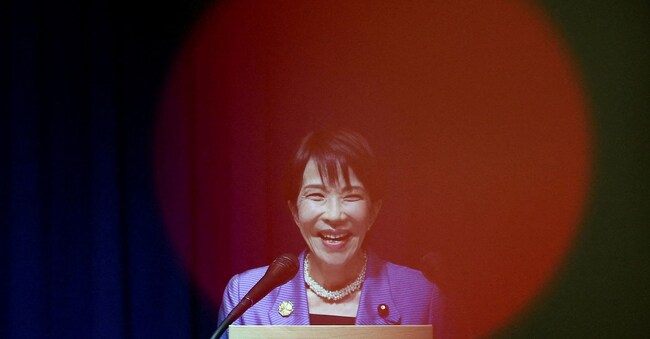
Tokyo changes its skin. Seventy years after the end of the war, Japan once again sees itself not only as an economic power, but also as a strategic power. On Friday, 7 November, in the country's capital, Premier Sanae Takaichi instructed her cabinet to evaluate the revision of the Economic Security Promotion Act, passed in May 2022 and fully effective in 2023, but above all one of the pillars of the national 'integrated security' strategy, which considers the economy part of defence. A decision that is perhaps the most concrete act of the country's new policy line: transforming economic security from a defensive tool to an active pillar of international projection. The law, for Takaichi, will have to be rewritten to adapt to a global scenario, which the premier described as 'the most complex and dangerous since the end of World War II'.
For years, Tokyo has been going through a process of strategic redefinition necessitated by fractures in the global order. The instability of the East China Sea, the technological competition with Beijing, the Russian war in Ukraine and the uncertainties linked to the alliance with Washington have pushed the Japanese leadership to reconsider the very concept of security. The new vision, championed by the Minister of Economic Security Onoda Kimi, starts from a simple but radical premise: in the interconnected economy of the 21st century, industrial and technological autonomy is an integral part of national sovereignty.
Takaichi ordered the immediate start of consultations with experts and ministries to update the regulatory framework and build a think tank dedicated to economic security. With a twofold objective: rto strengthen supply chains of strategic materials, such as rare minerals and electronic components, and to protect critical infrastructure - from undersea communication cables to digital networks - from hostile interference and takeovers. In essence, Japan wants to shift from a logic of mere defence to one of active resilience, including public incentives, industrial alliances and technological surveillance tools.
The context that prompted the government to move so quickly is related to the changing geography of global economic power. Since the pandemic, Japanese supply chains have shown a surprising fragility: dependence on Beijing for gallium, germanium and rare earths has slowed semiconductor and battery production. Chinese restrictions on the export of these materials have highlighted Tokyo's vulnerability and the urgency of securing alternative channels. And it is precisely through this lens that the agreement signed last October between Takaichi and the Trump administration for the joint exploration of mineral resources in the Pacific Ocean, near the Minamitori Atoll, should be read: an economic cooperation project but, in fact, also a political deterrence manoeuvre towards Beijing.
In parallel, the Ministry of Finance announced the revision of the Foreign Exchange and Foreign Trade Act, the law governing the control of foreign investments. The new version will reduce bureaucracy, but strengthen selectivity: not all IT companies will have to undergo prior screening, but those deemed 'critical' in terms of cybersecurity will be subject to stricter controls. In addition, Tokyo intends to close regulatory loopholes that allow foreign investors to acquire stakes through intermediary companies. The aim is to create a Japanese version of CFIUS, the powerful US committee that assesses the impact of foreign investments on national security.


