Currencies

Japan and the United States step in to support the yen

Statement from Tokyo: we will not hesitate to repeat this. Japan also plans to make use of the Federal Reserve’s ‘FIMA Repo Facility’ in future

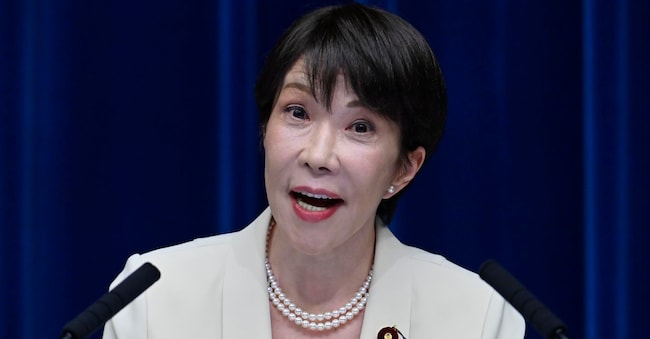
Il primo ministro giapponese Sanae Takaichi tiene una conferenza stampa presso la sede del Primo Ministro al termine della 221ª sessione straordinaria della Dieta, a Tokyo, in Giappone, il 27 luglio 2026.  EPA/DAVID MAREUIL / POOL EPA

4' min read

Translated by AI
Versione italiana

4' min read

Translated by AI
Versione italiana

Joint intervention by the United States and Japan in the foreign exchange market to support the value of the yen. The intervention, which is very rare, was confirmed today by Tokyo. Last Friday, ‘the Japanese Ministry of Finance purchased yen in coordination with the US Treasury Department.’

This joint action was taken in accordance with the joint statement by the finance ministers of Japan and the United States issued in September 2025, with the aim of countering the excessive volatility and disorderly movements of the yen observed in recent months,” said Japanese Finance Minister Satsuki Katayama in a statement.

Loading...

The Japanese Ministry of Finance is keeping a close watch on the situation and remains in close contact with its counterparts at the US Treasury. “We will not hesitate to carry out further joint interventions.”

Japan also plans to make use of the Federal Reserve’s FIMA Repo Facility (Foreign and International Monetary Authorities Repo Facility) in the future.

Yen intervention: up to 37 billion euros spent

Intervention in the yen market, costing up to 37 billion euros. Against this backdrop of rising public spending, a few days ago the Japanese authorities intervened in the foreign exchange market, buying yen and selling dollars, after the Japanese currency had slipped to its weakest level in 39 years, reaching almost 164 to the US dollar. According to estimates based on data from the Bank of Japan (BoJ), the value of the operation is thought to be between 6,000 and 7,000 billion yen, equivalent to approximately 32–37 billion euros. This is the first direct intervention since the one carried out between April and May, when Tokyo spent a record 11,700 billion yen. Once again, the move had Washington’s backing: US Treasury Secretary Scott Bessent described the yen as ‘significantly undervalued’, noting that excessive volatility ‘is not healthy’ for the markets. Against this backdrop, overnight between Thursday and Friday, the Japanese currency hit 157.80 against the dollar in around 50 minutes, before weakening again in Asian trading. Finance Minister Satsuki Katayama did not confirm the intervention but assured that the authorities were exercising “the utmost vigilance”.

Prime Minister Takaichi speeds up plans to cut VAT on food and drink from 8 per cent to 1 per cent

The Japanese government has presented a plan aimed at reducing the VAT rate on food and drink from 8% to 1%, effectively bringing it down to zero for two years from April 2027. This move was strongly championed by Prime Minister Sanae Takaichi.

The government’s plan

At the end of July, the Conservative Prime Minister officially announced the plan, aiming for a government decision next week, with the bill due to be passed by Parliament in the autumn. The measure would cost around 10,000 billion yen (55.10 billion euros), and the Prime Minister has ruled out using government bonds to finance it, promising that the cut will remain temporary, with no clauses allowing for its extension. Within the Liberal Democratic Party (LDP), however, consensus is not unanimous, reports the progressive newspaper. At a meeting of the internal tax committee on 31 July, opposition to the plan outnumbered support by a ratio of around 6 to 4. Among the critics is the former Defence Minister Tomomi Inada, who argues that ‘no financial provision has been found’ for the measure. Before reaching the plenary session, the bill will in any case have to secure the unanimous approval of the LDP’s General Council.

Media: a short-sighted choice for Japan

According to the newspaper Mainichi Shimbun, the programme proposed by the Tokyo government is a short-sighted move that risks leaving the country with new problems without resolving the current ones. According to the newspaper, the measure – the first reduction in consumption tax since its introduction in 1989 – is not the result of an in-depth debate on the structural challenges facing Japan, starting with the falling birth rate and the ageing population. The Mainichi points out that VAT is an essential source of revenue for funding ever-increasing social spending, and that reducing it risks fuelling, rather than curbing, inflation: producers and distributors could in fact take advantage of it to raise prices, as has already happened in some European countries that have adopted similar measures.

The Bank of Japan leaves interest rates unchanged

Meanwhile, the Bank of Japan has left its key interest rate unchanged at 1 per cent – a 31-year high following the June rise – but Governor Kazuo Ueda announced the possibility of ‘accelerating’ future increases, citing the weakness of the yen as one of the risk factors, alongside demand linked to artificial intelligence and tensions in the Middle East. Rising energy costs continue, in fact, to have an inevitable impact on import-dependent economies, such as Japan’s, where the rise in crude oil prices, combined with the weakness of the yen, is already fuelling inflationary pressures on consumer prices. The BoJ forecasts inflation “clearly above 2%” from the second half of the 2026 financial year and economic growth of 0.6 per cent. The markets are betting on a further rate rise by the end of the year.

Copyright reserved ©
Loading...

Brand connect

Loading...

Newsletter

Notizie e approfondimenti sugli avvenimenti politici, economici e finanziari.

Iscriviti