
Jazz that holds its own: the long march of Palermo's Brass Group
From its birth in a basement to the management of a historic theatre, the Foundation led by Ignazio Garsia has become a stable cultural infrastructure: over 50 employees, 1,500 subscribers and a budget largely supported by its own revenues
by Nino Amadore
Key points
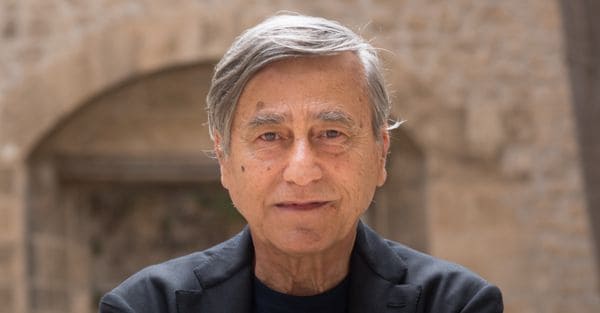
It was born in a basement, in the perfect tradition of many ingenious things. And today the Brass Group, the Palermo Brass Group Foundation, is proof that stubbornness and passion can turn into a model: a cultural and, consequently, an economic one. No one would have imagined that it could go like this, least of all the protagonists of that birth in 1974 and the enthusiasts who crowded the first evenings. World jazz was arriving in Palermo, but few people were fully aware of this, in years marked by the blood and terror that ran through the streets of the city. Ignazio Garsia, 80 years old in April, understood this. 'It was a dream I had as a boy,' he recounts today, 'I imagined producing music with an orchestra. Coming back from Scandinavia, where I worked as a pianist, I felt that jazz was the music of our time'. Not a concert venue, but an idea of cultural production: creating music, training musicians, speaking to the present.
Born to Resist
The first step was a basement in Via Duca della Verdura, not far from the Ucciardone prison, a very poor cellar converted into a jazz club out of necessity before being transformed by vision. 'We played to prevent the orchestra from disbanding, in the hope of paying the utilities,' recalls Garsia. Yet the city responded. "Lines of people were created, to the point that we started repeating concerts three times a week." Musicians destined to go down in the history of international jazz passed through that place. Palermo, almost without knowing it, had become an important stop. The archive of the great Palermo photographer Letizia Battaglia preserves evidence of that time: there is a beautiful photo of Chet Baker (you can also see it on Instagram) playing at Brass in 1976. 'Letizia took a lot of photographs at the club in Via Duca della Verdura in the 1970s,' says Garsia. 'I told her nephew that we should organise an exhibition with those photos taken at Brass in that period.
The conquest of a theatre
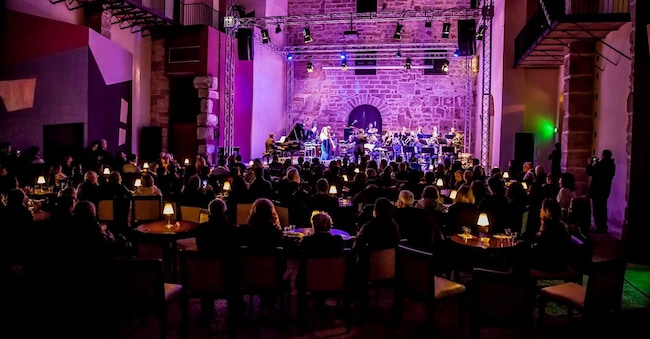
The leap in scale, however, came in the early 2000s with the encounter - not to be taken for granted - with one of the city's historical sites: the Real Teatro Santa Cecilia, a seventeenth-century building that had long lacked a stable cultural function. The Region was considering generic, indistinct destinations. Garsia, on the other hand, had a plan to make it the headquarters of Brass. 'At first they talked about making it a multipurpose, multifunctional centre. When I hear those words, I realise they don't know what to do,' Garsia observes. The answer is concrete, almost stubborn: 'I took the Foundation's piano and placed it there, in Via Piccola Teatro Santa Cecilia. I said: let's put the piano there'. The permanent concert activity started in 2015, after the theatre was granted accessibility. Since then, the Santa Cecilia has become the atmospheric heart of the project: there is no banal stalls, but tables where one sits for the entire performance and can even order a drink. The Brass Group's history is also marked by harsh clashes with the institutions. "They were zeroed out for two financial years," recalls Garsia. "In 2013 and 2016 twice the Foundation's budget was literally zeroed out: zero contributions. The board of auditors told me: take the books and take them to court, because you can liquidate the foundation. I replied that Brass would never cease to live: as long as I have breath I will guarantee with my personal assets'. This is the borderline between the end and the survival of the project.
Numbers that overturn clichés
The results are coming in steadily. "We started with shows two days a week, today we are up to four, with double concerts," explains Garsia. "One at 7 p.m. and one at 9 p.m., just to change the audience. We have exceeded 1,500 subscribers. Between orchestra and administrative staff, more than fifty people work there'. Numbers that, he points out, 'no Italian city, neither Rome nor Milan' does for similar productions. Figures that challenge the idea of an audience disinterested in non-commercial music. The Sicilian Jazz Orchestra is a unique case on the national scene. 'It is the only orchestra with public participation that we have in Italy,' claims Garsia. 'And it is the only one recognised by the Ministry. The Sicilian Region is part of the founding consortium and a regional law established the Foundation. Yet the production model remains fragile. 'After fifty-two years, this orchestra is still on call. For each production, the necessary instrumentalists are contracted'. A limitation that tells of the immobility of the Italian music system.
A cheap model that holds
Today, the Foundation operates with an annual budget of between 2 and 2.5 million, supported by an ordinary contribution of 750,000 euro plus 300,000 from the Regional Single Fund for the Performing Arts and 90,000 from the National Fund for the Performing Arts, as well as its own revenue from ticketing, training and jazz projects. A dimension that places the Brass Group among the city's main stable cultural infrastructures. The most significant figure remains the composition of revenue. "Our box office is worth between 30 and 40 per cent of the budget," emphasises Garsia. 'In the lyric-symphonic institutions it fluctuates between 5 and 9 per cent'. A scissor that tells how the cultural offer, when it intercepts the present, can also hold up economically. Alongside the Teatro Santa Cecilia, the Brass Group looks after the activities held in the premises of the monumental complex of S. Maria dello Spasimo, with the Blue Brass, a space dedicated to young people, jam sessions and informal training. 'On Tuesdays and Wednesdays it is full of students from the conservatories playing,' says Garsia. For over fifty years, The Brass has also run a jazz school. Many Sicilian musicians have trained here, others have found a place for further training after the conservatory. In-house production - arrangements, orchestrations, new performances - is an integral part of the project.


